



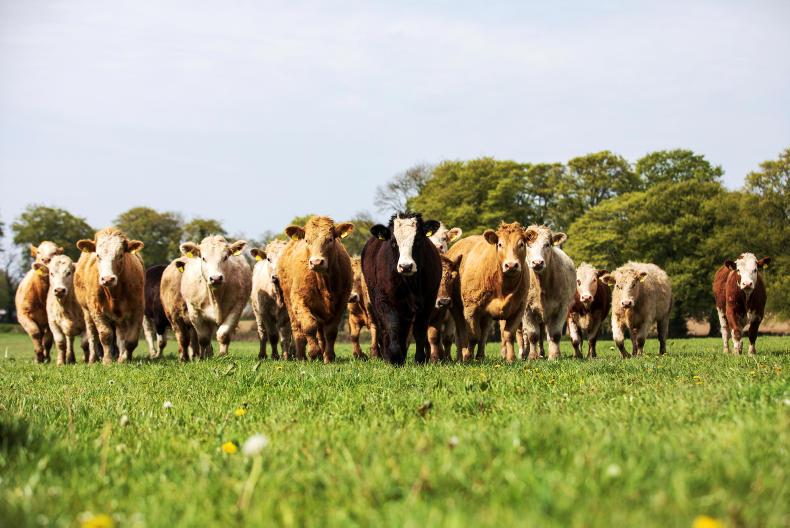
Supplies of factory-fit beef cattle will remain relatively tight in the medium term, the latest Department of Agriculture Animal Identification and Movement (AIM) data released this week shows.
There were 5,066 fewer cattle on farms in the 24- to 30-month age category on 1 June 2020.
This drop was driven by a fall of 5,420 in beef-bred heifers and cows, and 616 fewer beef-sired males, while there were 970 extra dairy males present.
Given the strong factory appetite in recent weeks and the fact that 9,164 more cattle have been slaughtered since 1 June, the shortfall is likely to be even bigger now.
There were 12,703 fewer cattle in the 18- to 24-month category and 51,966 fewer cattle aged 12 to 18 months (a total of 1.2m) on farms on 1 June. It points to potentially tighter supplies of factory-fit cattle in the system over the next 10 months.
The reduction in numbers is partially due to strong live exports of calves last year, exceeding 200,000 head, and live exports are also having a big influence on longer-term cattle numbers.
AIM figures show 109,374 extra calves aged up to six months on farms on 1 June. Calf exports to date, at 136,106 head, are 52,322 head lower than in the same period last year.
Dairy expansion
Meanwhile, expansion in the dairy herd continues apace. There were 1,586,280 dairy cows on farms on 1 June. That’s an increase of 65,402 head when compared to 1 June 2019.
The latest ICBF statistics show dairy calf registrations of 1,384,000, running 42,689 head above 2019 levels.
In contrast, calf registrations to suckler cows have slowed and are now 6,720 lower at 656,223 head. The number of suckler cows on farms on 1 June was 963,386 head, a drop of 10,726 in suckler cow numbers in a year.



SHARING OPTIONS