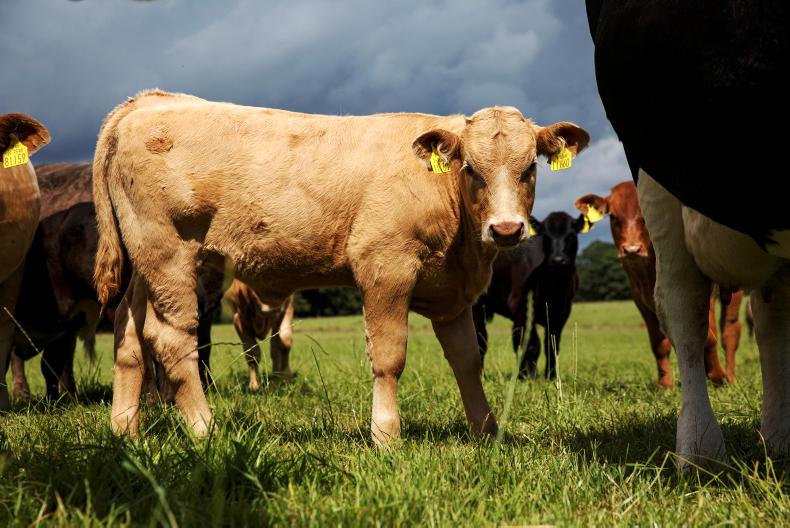
Buying weanlings: While numbers are small at weanling sales, cattle are starting to come out and there have been a few special sales already around the country. Trade is good, especially at the top end of the market, but there is value out there. Buying weanlings early is a big advantage if you can graze them outdoors for the next few months. Allowing animals to settle before the stressful housing period also has major advantages. Buying a 350kg weanling now, as opposed to buying a 350kg weaning in October, means you could have a weanling going into the shed 60kg heavier at minimum cost. Grazing a 400kg weanling on grass will cost €0.80/day, as opposed to costing €1.80/day indoors. That’s a saving of €60 on feed costs and could be the difference in a positive or negative margin. If buying weanlings, try to look for store animals not pumped up on meal – these will perform best at grass for the next few months. Allow bought-in weanlings to settle before dosing or handling and keep a close eye for any signs of pneumonia.
First-calving heifers: Cows or heifers that have calved at 24 months for the first time need preferential treatment around this time of year, as they are still growing animals and need to be treated accordingly. These animals should be weaned first, to allow them regain some condition before housing. Trying to put on condition indoors will cost more and calving problems can occur if you do this too close to calving. Where these heifers are very thin, with condition score less than 2, they should get 2-3kg of concentrates and good-quality grass to allow them pick up again.
BEEP dates: I’ve had a lot of enquiries around meal feeding in the BEEP scheme. You don’t need to notify the Department of Agriculture when you intend to start meal feeding or when you are weaning calves. You do need to keep a record of when you started meal feeding and when you weaned calves. If you get an inspection, you must provide evidence that you have been meal feeding for the required number of weeks. Meal feeding must begin four weeks before weaning and continue for two weeks after. If you are selling weanlings, the Department will have the date of sale and will be able to work back six weeks from this date to look for meal dockets. Meal must be purchased from a Department of Agriculture approved meal stockist. A list of these can be found at www.agriculture.gov.ie. Table 1 outlines a few important dates for meal feeding, weaning and selling.
ADVERTISEMENT
Register for free to read this story and our free stories.
This content is available to digital subscribers and loyalty code users only. Sign in to your account, use the code or subscribe to get unlimited access.
The reader loyalty code gives you full access to the site from when you enter it until the following Wednesday at 9pm. Find your unique code on the back page of Irish Country Living every week.
CODE ACCEPTED
You have full access to the site until next Wednesday at 9pm.
CODE NOT VALID
Please try again or contact support.
Buying weanlings: While numbers are small at weanling sales, cattle are starting to come out and there have been a few special sales already around the country. Trade is good, especially at the top end of the market, but there is value out there. Buying weanlings early is a big advantage if you can graze them outdoors for the next few months. Allowing animals to settle before the stressful housing period also has major advantages. Buying a 350kg weanling now, as opposed to buying a 350kg weaning in October, means you could have a weanling going into the shed 60kg heavier at minimum cost. Grazing a 400kg weanling on grass will cost €0.80/day, as opposed to costing €1.80/day indoors. That’s a saving of €60 on feed costs and could be the difference in a positive or negative margin. If buying weanlings, try to look for store animals not pumped up on meal – these will perform best at grass for the next few months. Allow bought-in weanlings to settle before dosing or handling and keep a close eye for any signs of pneumonia.
First-calving heifers: Cows or heifers that have calved at 24 months for the first time need preferential treatment around this time of year, as they are still growing animals and need to be treated accordingly. These animals should be weaned first, to allow them regain some condition before housing. Trying to put on condition indoors will cost more and calving problems can occur if you do this too close to calving. Where these heifers are very thin, with condition score less than 2, they should get 2-3kg of concentrates and good-quality grass to allow them pick up again.
BEEP dates: I’ve had a lot of enquiries around meal feeding in the BEEP scheme. You don’t need to notify the Department of Agriculture when you intend to start meal feeding or when you are weaning calves. You do need to keep a record of when you started meal feeding and when you weaned calves. If you get an inspection, you must provide evidence that you have been meal feeding for the required number of weeks. Meal feeding must begin four weeks before weaning and continue for two weeks after. If you are selling weanlings, the Department will have the date of sale and will be able to work back six weeks from this date to look for meal dockets. Meal must be purchased from a Department of Agriculture approved meal stockist. A list of these can be found at www.agriculture.gov.ie. Table 1 outlines a few important dates for meal feeding, weaning and selling.
If you would like to speak to a member of our team, please call us on 01-4199525.
Link sent to your email address
We have sent an email to your address. Please click on the link in this email to reset your password. If you can't find it in your inbox, please check your spam folder. If you can't find the email, please call us on 01-4199525.
ENTER YOUR LOYALTY CODE:
The reader loyalty code gives you full access to the site from when you enter it until the following Wednesday at 9pm. Find your unique code on the back page of Irish Country Living every week.






SHARING OPTIONS