


We are now well inside the final 100 days before Brexit transforms the trading relationship between Ireland and the UK. The only issue that remains to be sorted is just how extensive that transformation will be.
If the EU and UK cannot agree even a basic no tariff, no quota trade deal, then vast quantities of Irish agricultural produce will be simply uncompetitive in the UK and UK consumers will face a surge in food prices. Similarly, Irish consumer goods will experience price increases given the huge amount of processed food consumed in Ireland which is sourced in the UK.
Change in sourcing
The period in the lead up to the new trading terms with the UK is inevitably going to be filled with uncertainty. Stockpiling took place ahead of previous Brexit deadlines that created some increased demand in advance but led to market chaos afterwards as produce was released from stocks on to the market. What we can be reasonably certain of this time round is that there will be a new, less-favourable trading relationship in place after 1 January so any produce shipped to Britain ahead of that will have a more straightforward journey.
Asda
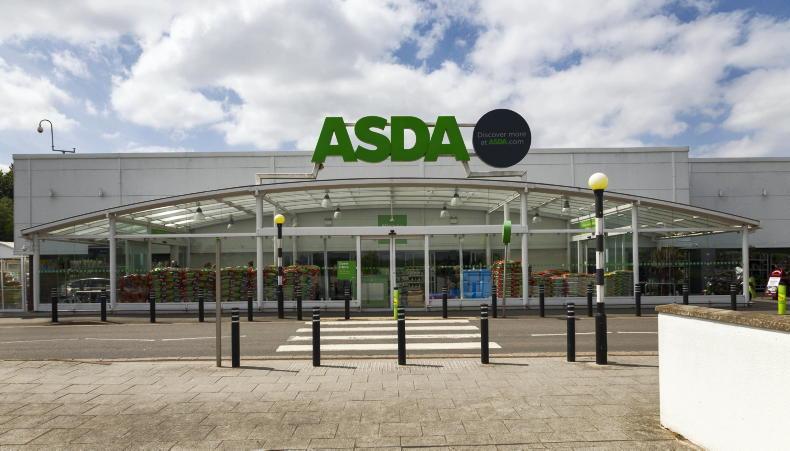
UK customers of Irish agri food produce are also exposed to this uncertainty. One of the major retailers, Asda, has announced that they will go 100% British with their bee. This is a major customer for Ireland to lose and is a big gain for beef producers in Britain and Northern Ireland. ABP is the main supplier and given its locations across the British isles it will mainly mean shunting the business from one location to another within the group.
UK global trade
The other big difference next year is that the UK will have a separate trade policy to Ireland and the EU27. This means it is likely the UK market will open to imports from major beef and sheep meat exporting countries, currently blocked from the EU by tariffs.
Japan has already agreed a trade deal with the UK, but is not an exporter of agri food products and therefore will have little impact. The UK will export some produce to Japan as they have secured access similar to what they had as part of the EU, though only to whatever amount of quota is not filled by the EU27.
Australia and New Zealand remain the favourites to quickly conclude deals with the UK. Both have huge interest in access for agricultural produce, beef and lamb in the case of Australia, with dairy added to these in the case of New Zealand.
Prospects of a US-UK trade deal appear cooler, as there is now way the USA will conclude a deal with the UK without the acceptance of US production standards on agri produce. That means chlorine-washed chicken and hormone-treated beef, both of which seem unacceptable in the UK at present.
Uncertainty for Irish exports
With the UK outside the EU orbit completely after 1 January, Irish exports for agricultural produce are facing into the unknown. There is a reality that the UK will focus on internal suppliers first and the likelihood is that they will have greater import options as a result of trade deals. None of this is good for Irish exports whatever the trading terms.



SHARING OPTIONS