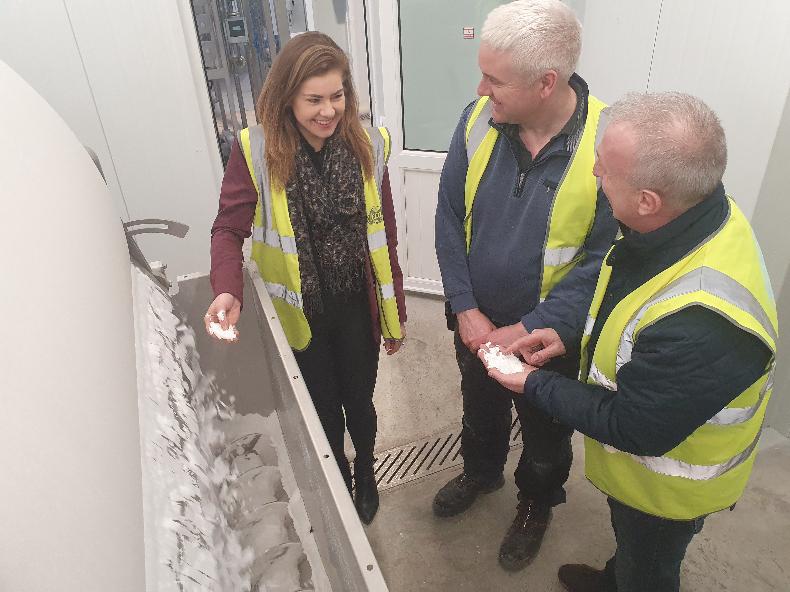
Meade Potato Company has launched an innovative food grade potato starch extraction operation at its farm and food production facility in Lobinstown, Co Meath.
The state-of-the-art plant represents a multi-million euro investment and is the first and only one of its kind in Ireland.
The plant uses ‘wonky’ or surplus potatoes, as well as peelings, to produce food grade starch for sale in Ireland and the UK. It is the only indigenously-produced starch for sale on the island.
The company is aiming to produce a substitute for the 4,000t of potato starch imported from mainland Europe and North America for the Irish market.
We believe we can fill a real gap in the market
The UK, which is also a prime market for the company, currently imports around 65,000t of potato starch.
Speaking on the launch of the plant, Meade Potato Company business operations manager Eleanor Meade said: “Given that it is such a vital ingredient for food manufacturers and there is no indigenously produced food grade potato starch available for sale in Ireland or the UK, we believe we can fill a real gap in the market.”
Potato starch
Speaking to the Irish Farmers Journal, R&D manager Cliona Costello said: “Potato starch is guaranteed to be gluten free and is known for its very high viscosity. This, along with its colourless and odourless characteristics, makes it the perfect binding and thickening agent for food products.”
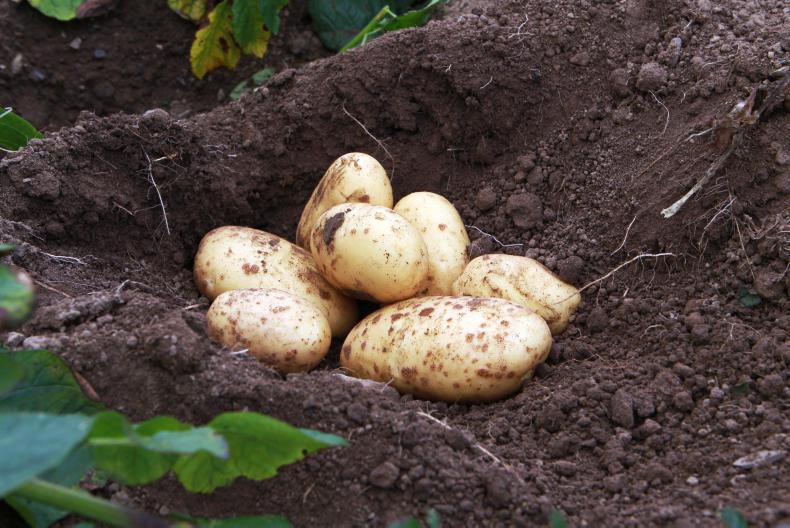
The majority of the country's potato starch is imported from mainland Europe.
The world starch market grew by 9% year on year for the past six years due to its increased use in sustainable packaging and meat and sugar-free foodstuffs. The potato starch market has grown by 11% since last year.
The potatoes which they will use to make the starch will come from surplus-to-requirement crops, as well as from potato byproducts from crisp manufacturers and other processors.
The enterprise has added 10 direct jobs and 50 indirect jobs to the company.
However, it is envisaged that there will soon be new opportunities for farmers to produce purpose-grown varieties with a high DM content.
“We are trailing a small area of starch varieties this year,” Cliona said.
Process
It takes a potato one hour and a journey through approximately 300m of machinery before it is turned into starch.
It can take from 7t to 8t of potatoes to make 1t of starch, depending on the dry matter content, variety and time of the year.
Along the way, the potato undergoes 22 stages before it is turned into pure food grade starch.
The various processes include washing, de-stoning, grading, rasping, sieving, de-sanding, hydro-cycloning, vacuuming, drying, cooling, vibrating and bagging.
The rasping stage uses 102 knives at 2,500 revolutions per minute and the gas burner reaches 180°C.
Currently, output from the plant is around 2,000t of finished product, but this is expected to be increase substantially over the coming years.
The plant will initially be part-powered by a wind turbine, with planning in place for 300kw of solar panels which will make the entire process carbon neutral.
Research is also currently being undertaken to use Meade potato starch in the manufacture of its 100% compostable paper bags that are used to pack its potatoes for Lidl Ireland.
Meade Potato Company has launched an innovative food grade potato starch extraction operation at its farm and food production facility in Lobinstown, Co Meath.
The state-of-the-art plant represents a multi-million euro investment and is the first and only one of its kind in Ireland.
The plant uses ‘wonky’ or surplus potatoes, as well as peelings, to produce food grade starch for sale in Ireland and the UK. It is the only indigenously-produced starch for sale on the island.
The company is aiming to produce a substitute for the 4,000t of potato starch imported from mainland Europe and North America for the Irish market.
We believe we can fill a real gap in the market
The UK, which is also a prime market for the company, currently imports around 65,000t of potato starch.
Speaking on the launch of the plant, Meade Potato Company business operations manager Eleanor Meade said: “Given that it is such a vital ingredient for food manufacturers and there is no indigenously produced food grade potato starch available for sale in Ireland or the UK, we believe we can fill a real gap in the market.”
Potato starch
Speaking to the Irish Farmers Journal, R&D manager Cliona Costello said: “Potato starch is guaranteed to be gluten free and is known for its very high viscosity. This, along with its colourless and odourless characteristics, makes it the perfect binding and thickening agent for food products.”
The majority of the country's potato starch is imported from mainland Europe.
The world starch market grew by 9% year on year for the past six years due to its increased use in sustainable packaging and meat and sugar-free foodstuffs. The potato starch market has grown by 11% since last year.
The potatoes which they will use to make the starch will come from surplus-to-requirement crops, as well as from potato byproducts from crisp manufacturers and other processors.
The enterprise has added 10 direct jobs and 50 indirect jobs to the company.
However, it is envisaged that there will soon be new opportunities for farmers to produce purpose-grown varieties with a high DM content.
“We are trailing a small area of starch varieties this year,” Cliona said.
Process
It takes a potato one hour and a journey through approximately 300m of machinery before it is turned into starch.
It can take from 7t to 8t of potatoes to make 1t of starch, depending on the dry matter content, variety and time of the year.
Along the way, the potato undergoes 22 stages before it is turned into pure food grade starch.
The various processes include washing, de-stoning, grading, rasping, sieving, de-sanding, hydro-cycloning, vacuuming, drying, cooling, vibrating and bagging.
The rasping stage uses 102 knives at 2,500 revolutions per minute and the gas burner reaches 180°C.
Currently, output from the plant is around 2,000t of finished product, but this is expected to be increase substantially over the coming years.
The plant will initially be part-powered by a wind turbine, with planning in place for 300kw of solar panels which will make the entire process carbon neutral.
Research is also currently being undertaken to use Meade potato starch in the manufacture of its 100% compostable paper bags that are used to pack its potatoes for Lidl Ireland.






SHARING OPTIONS