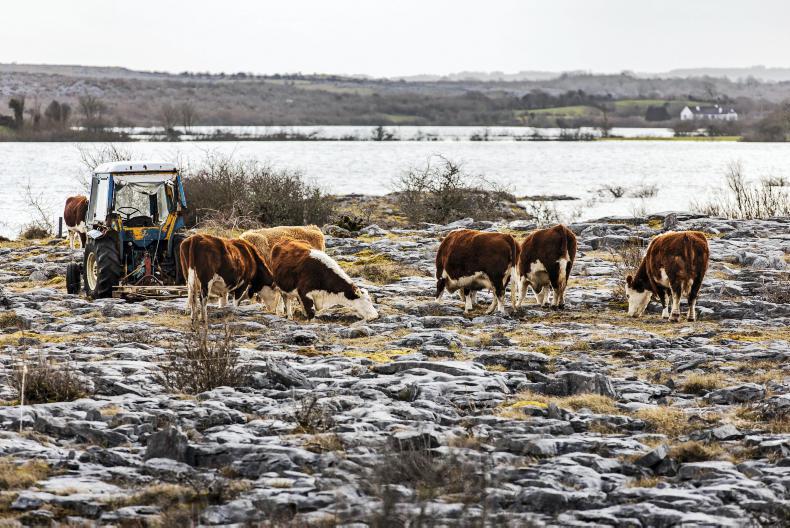
New Teagasc figures show that suckler and finishing enterprises continue to struggle financially, with just 18% categorised as economically viable.
The figure is compounded by the additional information that 41% of cattle farms have been deemed as vulnerable in the Teagasc National Farm Survey, meaning that they have poor long-term futures, with low economic returns and farmers at risk of isolation? and that 22% of cattle farmers live alone.
This was also the case on sheep farms, where 23% of farmers were classed as being at risk of isolation, and this figure was again significantly higher on poorer economically performing farms.
A high age profile, where farmers were over 60, was also taken into account and results showed a gradual increase since 2016 in the number of aging farmers on cattle farms, with 39% over 60.
The report was authored by Cathal Buckley and Trevor Donnellan, who said the results are in line with results seen in previous surveys.
They said the social indicators were vital signs of farms that were at risk of exiting the system.
Where farms were more economically viable, farmers were less likely to be isolated. This was apparent in the wide disparity between sectors.
A farm was economically viable if it returned the minimum wage plus a 5% return on non-land assets.
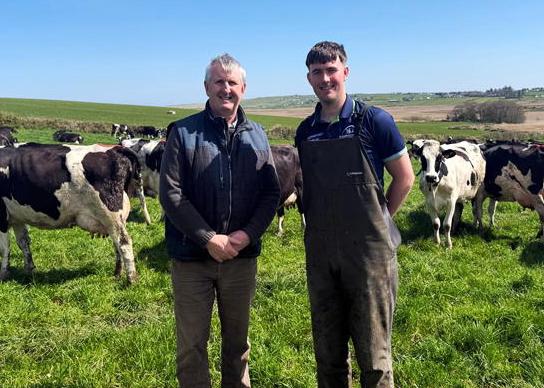
Notably, over 70% of dairy farms were classed as viable and a comparatively low 6% of dairy farms were classed as being at risk of isolation. Only 15% were identified as having a high age profile, where the farmer is over 60.
New Teagasc figures show that suckler and finishing enterprises continue to struggle financially, with just 18% categorised as economically viable.
The figure is compounded by the additional information that 41% of cattle farms have been deemed as vulnerable in the Teagasc National Farm Survey, meaning that they have poor long-term futures, with low economic returns and farmers at risk of isolation? and that 22% of cattle farmers live alone.
This was also the case on sheep farms, where 23% of farmers were classed as being at risk of isolation, and this figure was again significantly higher on poorer economically performing farms.
A high age profile, where farmers were over 60, was also taken into account and results showed a gradual increase since 2016 in the number of aging farmers on cattle farms, with 39% over 60.
The report was authored by Cathal Buckley and Trevor Donnellan, who said the results are in line with results seen in previous surveys.
They said the social indicators were vital signs of farms that were at risk of exiting the system.
Where farms were more economically viable, farmers were less likely to be isolated. This was apparent in the wide disparity between sectors.
A farm was economically viable if it returned the minimum wage plus a 5% return on non-land assets.
Notably, over 70% of dairy farms were classed as viable and a comparatively low 6% of dairy farms were classed as being at risk of isolation. Only 15% were identified as having a high age profile, where the farmer is over 60.






SHARING OPTIONS