Could smart buffers benefit water quality and the farmer?
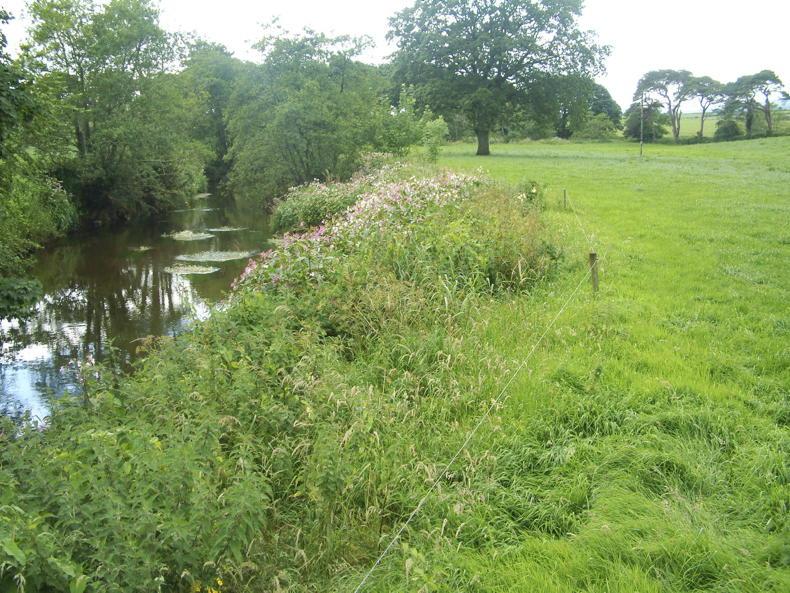
Smart buffers would mean that the buffer would target an area susceptible to overland flow, rather than having a standard area fenced off around a whole field.
Smart buffers could offer a more targeted approach to protecting water quality.
Speaking at one of Teagasc’s Signpost Series Webinars last week, Patrick McCabe of the National Federation of Group Water Schemes (NFGWS) explained that if you want to intercept phosphorus, you need a sufficient size buffer.
Buffers
ADVERTISEMENT
However, Patrick noted that a lot of schemes have standard buffers of 1.5m or slightly greater and he commented that this is not enough to intercept overland flow in certain cases.
“I think there needs to be more consideration given to a smart buffer or a dynamic buffer approach, where in certain parts of the land the buffer is extended out and can be relaxed in other areas,” Patrick explained.
He added that this prevents the farmer from losing a uniform set of land, and could allow buffers to be designed on a site-by-site basis, possibly with the help of an agricultural adviser.
Water quality
Seán Corrigan, also of the NFGWS, stated that it is important that measures introduced work for the farmer and the environment and added that farmers should not be financially penalised due to water quality regulations.
Register for free to read this story and our free stories.
This content is available to digital subscribers and loyalty code users only. Sign in to your account, use the code or subscribe to get unlimited access.
The reader loyalty code gives you full access to the site from when you enter it until the following Wednesday at 9pm. Find your unique code on the back page of Irish Country Living every week.
CODE ACCEPTED
You have full access to the site until next Wednesday at 9pm.
CODE NOT VALID
Please try again or contact support.
Smart buffers could offer a more targeted approach to protecting water quality.
Speaking at one of Teagasc’s Signpost Series Webinars last week, Patrick McCabe of the National Federation of Group Water Schemes (NFGWS) explained that if you want to intercept phosphorus, you need a sufficient size buffer.
Buffers
However, Patrick noted that a lot of schemes have standard buffers of 1.5m or slightly greater and he commented that this is not enough to intercept overland flow in certain cases.
“I think there needs to be more consideration given to a smart buffer or a dynamic buffer approach, where in certain parts of the land the buffer is extended out and can be relaxed in other areas,” Patrick explained.
He added that this prevents the farmer from losing a uniform set of land, and could allow buffers to be designed on a site-by-site basis, possibly with the help of an agricultural adviser.
Water quality
Seán Corrigan, also of the NFGWS, stated that it is important that measures introduced work for the farmer and the environment and added that farmers should not be financially penalised due to water quality regulations.
If you would like to speak to a member of our team, please call us on 01-4199525.
Link sent to your email address
We have sent an email to your address. Please click on the link in this email to reset your password. If you can't find it in your inbox, please check your spam folder. If you can't find the email, please call us on 01-4199525.
ENTER YOUR LOYALTY CODE:
The reader loyalty code gives you full access to the site from when you enter it until the following Wednesday at 9pm. Find your unique code on the back page of Irish Country Living every week.







SHARING OPTIONS