




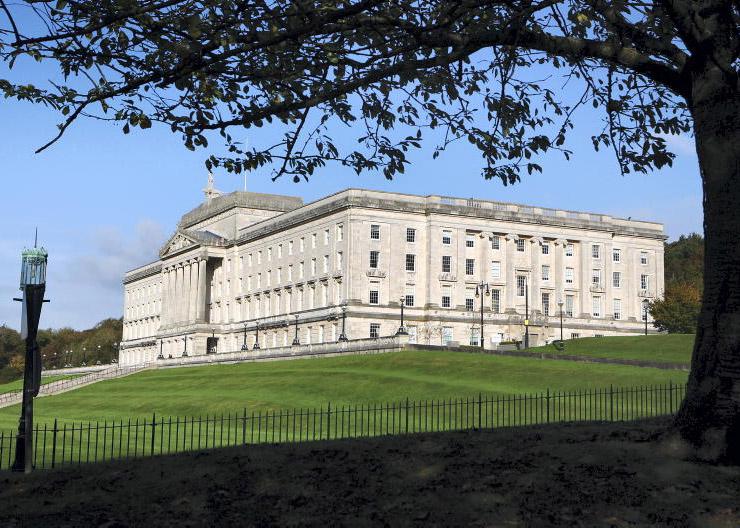
An amendment to the Executive’s climate change bill, which changes the headline target to a 100% reduction in greenhouse gas emissions by 2050, was passed by MLAs at Stormont on Tuesday.
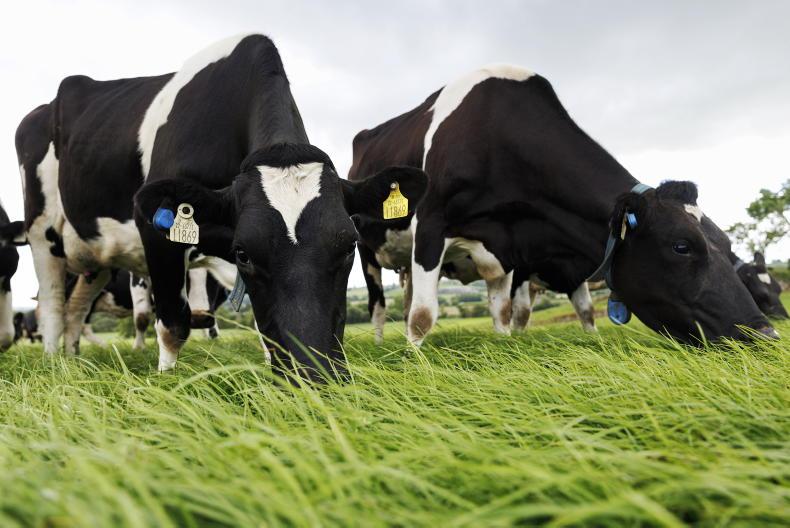
The only impact assessment of the target effectively concluded that it would wipe out livestock farming in NI. The analysis by consultancy firm KPMG found net zero would require an 86% cut in cattle and sheep numbers, and 98% of beef and sheep farms in less favoured areas would go out of business.
The amendment, brought forward jointly by Sinn Féin and the Green Party, was supported by 50 MLAs, with 38 MLAs voting against it.
The net zero target was backed by Sinn Féin, the SDLP, Alliance, the Green Party, People Before Profit’s Gerry Carroll, the DUP’s Jim Wells, and independent MLA Trevor Lunn.
All other representatives from the DUP, the Ulster Unionists, the Traditionalist Unionist Voice’s Jim Allister, and independent MLAs Claire Sugden and Alex Easton, voted against it.
Analysts from KPMG also stated that current technologies and improved on-farm efficiencies could only deliver an 18-20% drop in emissions from agriculture
The original target in the Executive’s bill was for emissions to fall by at least 82% by 2050. This was based on expert advice from the UK government’s Climate Change Committee.
At a press briefing on Monday, the CCC were clear that the at least 82% target was “absolutely compatible” with both the UK reaching net zero by 2050, and the United Nation’s Paris agreement goal to limit global warming to under 1.5°C.
Analysts from KPMG also stated that current technologies and improved on-farm efficiencies could only deliver an 18-20% drop in emissions from agriculture. Anything after that will require reductions in livestock numbers, they said.
Stormont debate
At Stormont, the focus for most of Tuesday’s debate was the impact that a net zero target would have on family farms and the wider agri-food industry.
Sinn Féin’s main argument was that any detrimental effects would be offset by another amendment which requires “a just transition fund for agriculture” to be established. However, there were no details of how much money would be required, or where funding would come from.
Ulster Unionist MLA Roy Beggs argued that the UK government is unlikely to be forthcoming with extra money if the emissions target for NI is beyond the recommendations of their advisers in the CCC.
I fear that there will not be much more money and that mitigation is easier said than provided
Likewise, Minister for Agriculture Edwin Poots said there would be limited scope for more money from within the NI block grant, as it would require taking funding away from other departments.
“From where is this wonderful fund to come? I fear that there will not be much more money and that mitigation is easier said than provided,” he said.
UFU rally at Stormont as SDLP decide
A rally was held by the Ulster Farmers’ Union (UFU) at Stormont on Tuesday as part of its final push to persuade MLAs to support the at least 82% emissions reduction target.
Several hundred farmers from across NI were in attendance and the crowd heard from the UFU presidential team, as well as representatives from the dairy and meat processing sectors.
“I listen to the experts. Our MLAs don’t seem to do that. As farmers, we demand action on climate. We want legislation that supports us, not eliminates us. There are few out there that are more vulnerable to extreme weather than we are,” said UFU president Victor Chesnutt.
There is a major, major strength of feeling within the party on this issue
At that stage, all political parties had already declared how they would vote, except for the SDLP. It is understood the party’s MLAs from rural areas were under significant pressure from their constituents not to back the net zero emissions target.
“We are still having discussions. There is a major, major strength of feeling within the party on this issue,” the SDLP’s Justin McNulty told the Irish Farmers Journal.
In the end, all SDLP MLAs were told to support the net zero target and their votes proved vital in getting the amendment through the Assembly late on Tuesday evening.
Limited options to overturn net zero vote
With two more stages left in the legislative process before the Executive’s climate change bill becomes law, there is still scope for more amendments to be added.
Minister for Agriculture Edwin Poots has said he will explore how new amendments could be used to limit the impact that the net zero target has on the farming and food industries.
But it is clear from Tuesday’s vote that most MLAs want all sectors to contribute to net zero, so there could be limited support in the Assembly for an amendment that reduces the demands on agriculture.
The nuclear option for Minister Poots is to withdraw his bill completely, so the net zero by 2050 amendment would not become law.
There is still the Green Party’s private members bill, which aims for net zero by 2045, but this is unlikely to make it through Stormont before the Assembly is dissolved ahead of a May election.
However, a new climate change bill would almost certainly be tabled once MLAs return to Stormont, and the farming lobby could quickly find itself with less influence over how targets are set under a new bill.




SHARING OPTIONS