


As Russia moved troops into Ukraine, the EU, UK and the US hastened to impose economic sanctions on Russia and Russian entities.
What exactly these and possible future sanctions will mean for business is surely occupying minds in boardrooms, businesses and farms across the world. The consumer is somewhat oblivious to the fact that Russia, the Ukraine and indeed the wider Black Sea region has a significant impact on the cost of their weekly shopping and all of the energy they consume.
Agricultural commodity prices have surged globally in the past 12 months. Far from being able to capitalise on this, farmers are struggling with increased costs.
The weight of supply chain cost increases presses firmly at the bottom of the chain.
Farmers will inevitably be concerned about the impact the growing conflict and retaliatory sanctions will have on farm incomes.
The first tranche of sanctions has been tough, with Germany taking the lead by halting certification of the new Nord Stream 2 gas line between Russia and Germany.
The EU announced measures targeting two large banks and precluding Russia from raising money and trading debt on EU and US markets while the UK targeted smaller banks and two billionaires linked to Vladimir Putin.
Russia is the world’s leading fertiliser exporter accounting for 25% of global nitrogen exports, 16% of global phosphate exports and 20% of global potash exports. It is critical to global food supply.
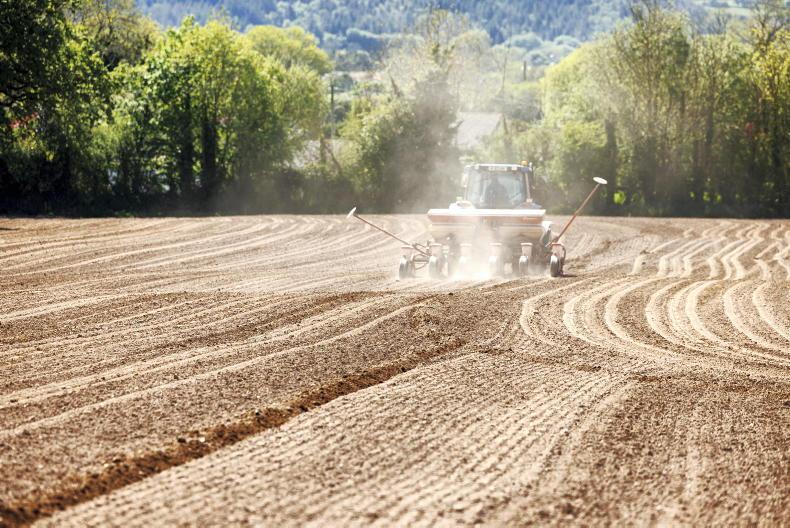
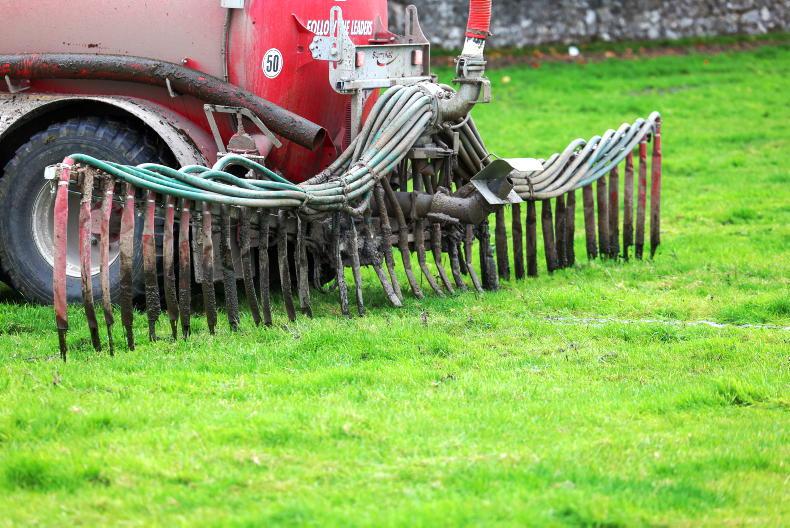
The dependence on Russian fertiliser, and indeed the gas into Europe to produce nitrogen, is raising significant concern about availability of fertiliser in late spring/early summer.
As urea prices have continued to fall since the start of the year, analysts report that demand in wholesale markets has been slow with buyers waiting until the market finds a floor.
Egyptian granular urea is currently trading at $651/t (€573/t), the same level as last October. This is roughly €330/t below the price farmers are paying in Ireland.
Allowing roughly €100/t for supply chain costs and margin suggests that at current prices there may be value in the market.
On that basis, the uncertainty and shifting dynamics in Russia are likely to stimulate importers across Europe to transact.
From a farmer perspective, current wholesale prices are unlikely to push farmgate prices higher and from the supply chain perspective the downside price risk appears somewhat lower.
While there is currently no obstacle in the market to international fertiliser trade, the impact of further sanctions is unclear.
It seems unlikely that sanctions would be directed at food or fertiliser commodity businesses. However, any sanctions that limit Russia or Russian entities access to the international payments systems would greatly hamper the continuity of trade.
The shelving of Nord Stream 2 will likely strengthen gas futures prices. As gas accounts for 80% of nitrogen production costs, it is likely to stabilise fertiliser prices at higher levels than usual, albeit not necessarily at peak prices.
Once referred to as the bread basket of Europe, Russia and the Black Sea region have a significant impact on global grain trade, availability and price. Russia alone accounted for almost 20% of world wheat exports in 20/21. Ukraine accounts for 8% of global wheat exports, and 13% of corn exports. Together Russia and Ukraine account for 60% of sunflower production and are a key sunflower oil exporters.
The current situation poses a number of challenges. Similar to fertiliser, sanctions have the potential to render trade from Russia impossible at worst or at least very challenging.
Conflict in the Ukraine could be very disruptive to grain production and consequently affect export availability.
Freight into and out of the Black Sea would likely be constrained and those that do continue to operate would be justified in charging a premium in the region.
In addition to Ukraine, grain flows down the Danube from Eastern Europe including Poland and Romania to the port of Constanta in the Black Sea.
Market analysts report some opportunistic selling within the region, as exporters seek to move product in the event that trade becomes challenging.
Any conflict in the Black Sea could limit the availability of shipping in the region, disrupting the wider Black Sea trade.
The heightened risk is currently feeding into global grain markets and is likely to continue as this situation evolves.
Germany’s move to halt certification of the new gas line between Russia and Germany has huge significance for European consumers and businesses.
Ironically Europe’s energy dependency on Russia places us squarely in the frame of our own sanctions
Some European politicians had accused Russia of withholding gas supply to Europe over the past 12 months to pressurise Germany to approve this gas line which is complete.
The gas futures market responded positively to signals and commentary that indicated approval was forthcoming.
Europe has a significant energy dependency on Russia for gas, coal and oil.
It is a powerful weapon in Russia’s arsenal against Europe and is likely to be played strongly. It has huge capacity to disrupt business activity in Europe and literally leave consumers feeling the cold. While alternative supplies may be secured, the price is likely to strengthen.
Brent crude oil prices climbed to almost $100 / barrel due to concerns over Russian availability.
Negotiations are under way to secure alternative gas supplies for Europe. However, Europe doesn’t appear to be in a strong negotiating position on price. Dutch TTF Gas Futures were up 16% to €84/MWh on Wednesday over Monday’s price.
Prices for winter 2022 have also strengthened, however, they are likely to remain volatile.
It is unprecedented in most people’s lifetimes that two countries that have such a significant impact on global food production are on the cusp of war.
Conflict in the Ukraine could have a profound impact on global food availability and price.
While food price inflation is starting to bite across the world, it will be felt most acutely by those in low-income countries where food constitutes a higher proportion of disposable income.
Of course, European sanctions do not mean that Russian trade will be entirely shuttered.
In the past month, China and Brazil have both received and been received by Russian President Vladimir Putin.
Indeed, Brazil secured an agreement to double fertiliser imports from Russia and the return boats look set to be filled with beef and pork.
Russia appears to have visibly reaffirmed its allegiances over the past few months and it is no surprise to see food as a central theme.
For consumers accustomed to an abundance of food availability at reasonable prices, the coming months may be a real leveller.



SHARING OPTIONS