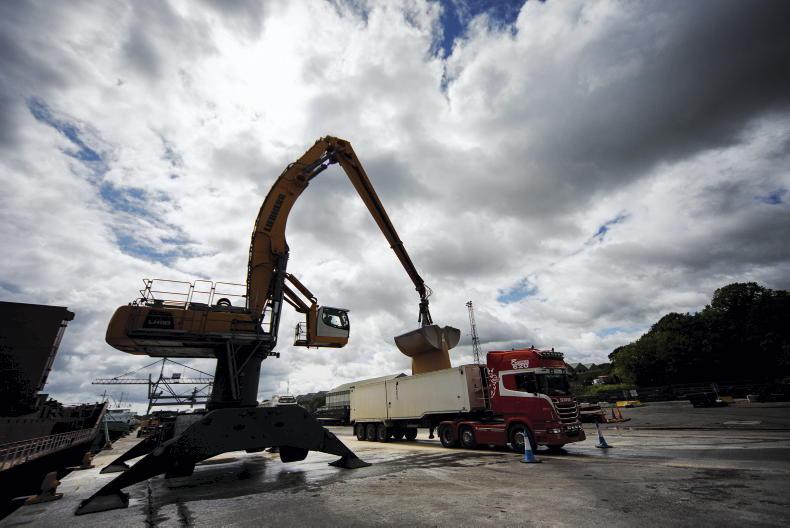
The docking of two shipments of Russian fertiliser into Waterford port this week by Nitrofert has sparked debate as to whether or not Ireland, or indeed the EU, should be sourcing product from Russia. The concerns are understandable given the horrific war Russia is waging on Ukraine.
But in the same way member states cannot afford to stop sourcing Russian energy, with shipments of Russian LNG soaring as pipeline gas is restricted, they cannot afford to stop sourcing Russian fertiliser. The establishment of a 1.58m tonne EU quota on Russian fertiliser was an acknowledgement of this by the Commission.
Also it has to be acknowledged that much of the European fertiliser production continues to be fuelled by Russian gas imports.
This uncomfortable dependence on Russia is as a result of a failed EU energy policy – one that sacrificed energy sovereignty by winding down domestic fossil fuel-based energy production without investing in renewable capacity. This move has given Vladimir Putin huge influence over both EU energy and food markets.
The key role Russia and its fertiliser industry play in global food security has been recognised by the UN FAO. As Anne Finnegan reports, its director general has called for greater co-operation with Russia to ensure farmers have access to fertiliser. The need for Ireland to import fertiliser is no doubt an uncomfortable reality, but it reflects a global trading landscape that prior to the invasion of Ukraine was being promoted by EU policy.
Little progress
in Food Vision dairy report
Since the interim report was published in May, it seems little or no progress has been made with the final Food Vision dairy report published this week.
The dairy industry stakeholder grouping gathered since January aimed to build a vision for the future of the industry. The overriding direct impact measures suggest a very significant reduction in chemical nitrogen usage and a dairy cow cull scheme.
If implemented, both mean a smaller Irish dairy industry, the one sector that is making a profit.
It seems the potential for what was called a “cap and trade” model where environmental rights could be established and traded between farms has been binned. This was one of the direct measures proposed in the interim report published in May.
Support
The final report, which runs to 90 pages, deserves a very detailed review, but, when this is all boiled down, what merit does a report like this have when those sitting around the table do not back it?
Without the support of the main farming organisations it’s unclear what real impact it can have. The industry now has a very clear sector emissions reduction target, but, yet we await how this can actually happen.
We await the Minister for Agriculture’s response in the hope that this does not become another report gathering dust.
Broad brushstroke approach is deeply flawed
While the Food Vision dairy group proposes a cut in the usage of artificial nitrogen on dairy farms, the other hugely significant move to reduce the actual stocking rate on dairy farms is also happening.
This double whammy move for some dairy farms which uses the broad brush approach to try and solve a local and regional problem must be called out as deeply flawed.
To think that the Department might actually assign all herds to the top band of organic nitrogen and force the farmers to respond to the Department and prove otherwise beggars belief.
We know the majority of Irish farms will be in the middle band. Surely this is the assumption the Department should make rather than use the big stick approach assuming all farmers are in the higher band?
The docking of two shipments of Russian fertiliser into Waterford port this week by Nitrofert has sparked debate as to whether or not Ireland, or indeed the EU, should be sourcing product from Russia. The concerns are understandable given the horrific war Russia is waging on Ukraine.
But in the same way member states cannot afford to stop sourcing Russian energy, with shipments of Russian LNG soaring as pipeline gas is restricted, they cannot afford to stop sourcing Russian fertiliser. The establishment of a 1.58m tonne EU quota on Russian fertiliser was an acknowledgement of this by the Commission.
Also it has to be acknowledged that much of the European fertiliser production continues to be fuelled by Russian gas imports.
This uncomfortable dependence on Russia is as a result of a failed EU energy policy – one that sacrificed energy sovereignty by winding down domestic fossil fuel-based energy production without investing in renewable capacity. This move has given Vladimir Putin huge influence over both EU energy and food markets.
The key role Russia and its fertiliser industry play in global food security has been recognised by the UN FAO. As Anne Finnegan reports, its director general has called for greater co-operation with Russia to ensure farmers have access to fertiliser. The need for Ireland to import fertiliser is no doubt an uncomfortable reality, but it reflects a global trading landscape that prior to the invasion of Ukraine was being promoted by EU policy.
Little progress
in Food Vision dairy report
Since the interim report was published in May, it seems little or no progress has been made with the final Food Vision dairy report published this week.
The dairy industry stakeholder grouping gathered since January aimed to build a vision for the future of the industry. The overriding direct impact measures suggest a very significant reduction in chemical nitrogen usage and a dairy cow cull scheme.
If implemented, both mean a smaller Irish dairy industry, the one sector that is making a profit.
It seems the potential for what was called a “cap and trade” model where environmental rights could be established and traded between farms has been binned. This was one of the direct measures proposed in the interim report published in May.
Support
The final report, which runs to 90 pages, deserves a very detailed review, but, when this is all boiled down, what merit does a report like this have when those sitting around the table do not back it?
Without the support of the main farming organisations it’s unclear what real impact it can have. The industry now has a very clear sector emissions reduction target, but, yet we await how this can actually happen.
We await the Minister for Agriculture’s response in the hope that this does not become another report gathering dust.
Broad brushstroke approach is deeply flawed
While the Food Vision dairy group proposes a cut in the usage of artificial nitrogen on dairy farms, the other hugely significant move to reduce the actual stocking rate on dairy farms is also happening.
This double whammy move for some dairy farms which uses the broad brush approach to try and solve a local and regional problem must be called out as deeply flawed.
To think that the Department might actually assign all herds to the top band of organic nitrogen and force the farmers to respond to the Department and prove otherwise beggars belief.
We know the majority of Irish farms will be in the middle band. Surely this is the assumption the Department should make rather than use the big stick approach assuming all farmers are in the higher band?








SHARING OPTIONS