The revelation by Peter McCann in the Northern edition of this week’s Irish Farmers Journal that the veterinary medicines grace period will be extended avoids a major problem and will come as a relief to farmers.
Therefore, an end-of-year crisis has been avoided again by the worn-out cliché of 'kicking the can down the road', as has so often been the case before.
While it isn’t a particularly elegant solution, it is nevertheless practical and it works, so farmers won’t be obsessed with the political nuances.
Business as usual
Further evidence of business as usual is to be found in the Northern Ireland Statistics and Research Agency (NISRA) data on trade between Britain and Northern Ireland released this week.
This shows that the value increased by £1bn in 2021, the first year of the protocol, compared with 2020 with a £2bn or 13% increase in trade from Northern Ireland to Britain. North-south trade increased by £1bn to £5.2bn - a 23% increase.
This shows that large industries and traders have adapted to the new trading arrangements and the grace periods for many elements of the protocol have prevented a disruption of trade overall.
However, the statistics don’t tell the story of issues that affect a significant number of people that trade on a much lower level.
Garden centres bringing plants in from Britain or farmers looking to source seed potatoes or cattle in Britain will not be reflected in the overall statistics, but, at a personal and local level, the disruption can be significant.
Pragmatism the key
Grace periods and last-minute solutions show that with co-operation, solutions can be found that may not fit the best ideals of the single market or constitutional sovereignty, but work at a practical level.
Issues such as veterinary medicines or seed potatoes are big for farmers, but the wider problem with the protocol to deliver Brexit on the island of Ireland is that it is politically unacceptable for several people.
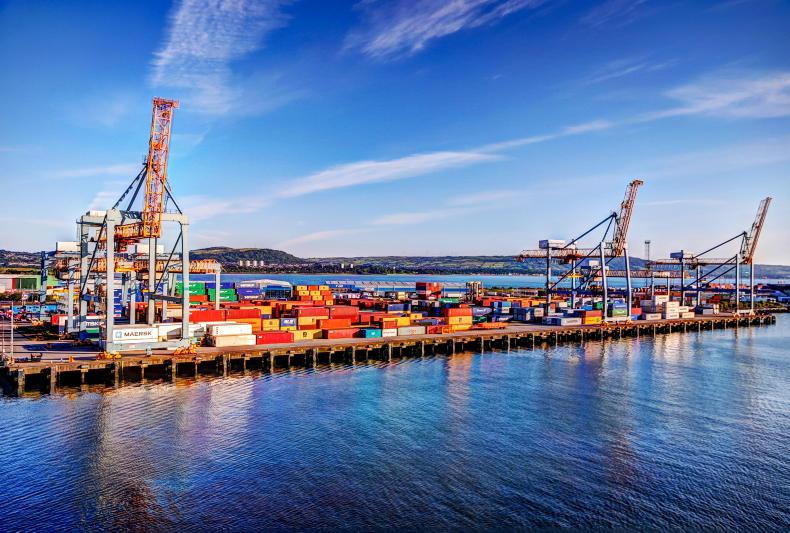
Belfast Port, where EU checks on goods entering Northern Ireland take place.
To move from crisis management, as was the case this week with veterinary medicines, the EU and UK need to move to replace the protocol with a Brexit implementation agreement that reflects Northern Ireland’s dual status as part of the UK alongside participating in the EU single market.
This should adopt most, if not all, of the issues that have been granted a grace period, as there is no evidence they have damaged the EU single market in any way in almost two years of operation.
Protection could be built in through a monitoring system and any agreement subject to a review or even a break clause if it was ever found to be an issue.
Single market x2
Above all, what farmers either side of the border need is a model as close as possible to what was there before Brexit, and a way can be found to keep Northern Ireland operating within the EU framework based on what has been in place since January last year.
It is an arrangement that would be very attractive for farmers in the rest of the UK and, in time, the UK may develop a veterinary agreement with the EU that would solve all the problems.
In the meantime, farmers need what former Northern Ireland First Minister Arlene Foster described as a sensible agreement and it doesn’t even need to be called a protocol.
Read more
NI set to avoid vet medicine shortfall
UK seeks EU derogation for seed potatoes
The revelation by Peter McCann in the Northern edition of this week’s Irish Farmers Journal that the veterinary medicines grace period will be extended avoids a major problem and will come as a relief to farmers.
Therefore, an end-of-year crisis has been avoided again by the worn-out cliché of 'kicking the can down the road', as has so often been the case before.
While it isn’t a particularly elegant solution, it is nevertheless practical and it works, so farmers won’t be obsessed with the political nuances.
Business as usual
Further evidence of business as usual is to be found in the Northern Ireland Statistics and Research Agency (NISRA) data on trade between Britain and Northern Ireland released this week.
This shows that the value increased by £1bn in 2021, the first year of the protocol, compared with 2020 with a £2bn or 13% increase in trade from Northern Ireland to Britain. North-south trade increased by £1bn to £5.2bn - a 23% increase.
This shows that large industries and traders have adapted to the new trading arrangements and the grace periods for many elements of the protocol have prevented a disruption of trade overall.
However, the statistics don’t tell the story of issues that affect a significant number of people that trade on a much lower level.
Garden centres bringing plants in from Britain or farmers looking to source seed potatoes or cattle in Britain will not be reflected in the overall statistics, but, at a personal and local level, the disruption can be significant.
Pragmatism the key
Grace periods and last-minute solutions show that with co-operation, solutions can be found that may not fit the best ideals of the single market or constitutional sovereignty, but work at a practical level.
Issues such as veterinary medicines or seed potatoes are big for farmers, but the wider problem with the protocol to deliver Brexit on the island of Ireland is that it is politically unacceptable for several people.
Belfast Port, where EU checks on goods entering Northern Ireland take place.
To move from crisis management, as was the case this week with veterinary medicines, the EU and UK need to move to replace the protocol with a Brexit implementation agreement that reflects Northern Ireland’s dual status as part of the UK alongside participating in the EU single market.
This should adopt most, if not all, of the issues that have been granted a grace period, as there is no evidence they have damaged the EU single market in any way in almost two years of operation.
Protection could be built in through a monitoring system and any agreement subject to a review or even a break clause if it was ever found to be an issue.
Single market x2
Above all, what farmers either side of the border need is a model as close as possible to what was there before Brexit, and a way can be found to keep Northern Ireland operating within the EU framework based on what has been in place since January last year.
It is an arrangement that would be very attractive for farmers in the rest of the UK and, in time, the UK may develop a veterinary agreement with the EU that would solve all the problems.
In the meantime, farmers need what former Northern Ireland First Minister Arlene Foster described as a sensible agreement and it doesn’t even need to be called a protocol.
Read more
NI set to avoid vet medicine shortfall
UK seeks EU derogation for seed potatoes







SHARING OPTIONS