Teagasc Grange trials multi-species swards for beef production
A new beef trial started in Teagasc Grange in 2022 looking at multi-species swards from a beef system's perspective, with some preliminary findings for the first year’s grazing published recently.
Multi-species sward in its first year after establishment.
ADVERTISEMENT
Multi-species swards (MSS) have become quite topical in recent years, as farmers look at opportunities to reduce the amount of chemical nitrogen being applied for both environmental and financial benefits.
A significant trial comparing the performance of grass/white clover swards and MSS across a range of measures was established in 2022.
This trial will look at how MSS would fit into an entire beef system, both for grazing and ensiling for winter feed.
ADVERTISEMENT
Benefit
Previous work carried out at Grange from field cutting-only plots would have shown that herbage yield is primarily driven by the clover component of the MSS.
This means that much of the benefit in yield (>80%) is coming from the introduction of clover, while herbs such as chicory and plantain are adding the remainder of the yield benefit.
After the first year of the grazing and ensiling, trial findings indicate:
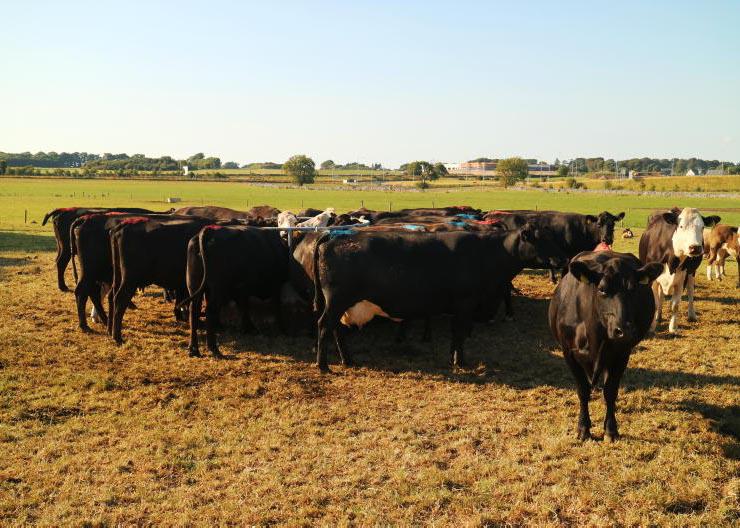
Herbage yield and steer daily liveweight gain was similar for both sward types (MSS and grass/white clover).
Visual appearance of the MSS is quite different to what grassland farmers are accustomed to seeing and this will take getting used to, especially during the flowering season.
MSS had a lower dry matter content than the grass/clover mix due mainly to chicory. This led to significantly longer wilting times with the MSS before being fit to be conserved for silage.
Increased vigilance is required when introducing cattle to these swards initially, as instances of bloat were recorded on both sward types.
The trial continues, with animals being fed over winter with ensiled forage from the trial ground last year. The persistency of each sward type will also be measured over the coming years.
Register for free to read this story and our free stories.
This content is available to digital subscribers and loyalty code users only. Sign in to your account, use the code or subscribe to get unlimited access.
The reader loyalty code gives you full access to the site from when you enter it until the following Wednesday at 9pm. Find your unique code on the back page of Irish Country Living every week.
CODE ACCEPTED
You have full access to the site until next Wednesday at 9pm.
CODE NOT VALID
Please try again or contact support.
Multi-species swards (MSS) have become quite topical in recent years, as farmers look at opportunities to reduce the amount of chemical nitrogen being applied for both environmental and financial benefits.
A significant trial comparing the performance of grass/white clover swards and MSS across a range of measures was established in 2022.
This trial will look at how MSS would fit into an entire beef system, both for grazing and ensiling for winter feed.
Benefit
Previous work carried out at Grange from field cutting-only plots would have shown that herbage yield is primarily driven by the clover component of the MSS.
This means that much of the benefit in yield (>80%) is coming from the introduction of clover, while herbs such as chicory and plantain are adding the remainder of the yield benefit.
After the first year of the grazing and ensiling, trial findings indicate:
Herbage yield and steer daily liveweight gain was similar for both sward types (MSS and grass/white clover).
Visual appearance of the MSS is quite different to what grassland farmers are accustomed to seeing and this will take getting used to, especially during the flowering season.
MSS had a lower dry matter content than the grass/clover mix due mainly to chicory. This led to significantly longer wilting times with the MSS before being fit to be conserved for silage.
Increased vigilance is required when introducing cattle to these swards initially, as instances of bloat were recorded on both sward types.
The trial continues, with animals being fed over winter with ensiled forage from the trial ground last year. The persistency of each sward type will also be measured over the coming years.
If you would like to speak to a member of our team, please call us on 01-4199525.
Link sent to your email address
We have sent an email to your address. Please click on the link in this email to reset your password. If you can't find it in your inbox, please check your spam folder. If you can't find the email, please call us on 01-4199525.
ENTER YOUR LOYALTY CODE:
The reader loyalty code gives you full access to the site from when you enter it until the following Wednesday at 9pm. Find your unique code on the back page of Irish Country Living every week.
SHARING OPTIONS