Since Russia invaded Ukraine just over a year ago, one of Ukraine's strongest supporters has been Poland. It has opened its borders to fleeing refugees and backed up strong political support by providing military equipment.
The friendship and co-operation between the countries appeared to be cemented this week when the Ukrainian president visited Poland and was given the country’s highest honour.
Ukraine has also been spoken of as a future member of NATO and there have been multiple calls for fast-track entry for Ukraine to membership, with the Irish Government supporting the proposal.
Not so fast
Politically and diplomatically, this would make sound sense. EU members, the UK, US and other NATO members have been vociferous in their support for Ukraine, as has the European Union.
However, in the midst of the outpouring of goodwill towards Ukraine, there is a cloud growing on the horizon that threatens to thwart the evolving relationship with the EU and bordering countries in particular.
This week, as the Ukranian president was travelling to Poland for his award, the Polish agriculture minister Henryk Kowalczyk was in the process of resigning from the government.
This was in response to increasing protests by Polish farmers against an inflow of cheaper, tariff-free Ukrainian grain that has been bought up by Polish merchants filling the grain silos rather than exporting it to other countries.
Suspension of tariffs
This time last year, the EU granted tariff-free access to Ukrainian grain in response to the invasion closing Ukrainian shipping routes through the Black Sea.
As well as devastation for Ukrainian grain growers, the absence of Ukrainian grain on global markets threatened a serious increase in hunger among the poorer countries in the world.
On top of working on getting the product out of Ukraine through European road and rail networks, the EU and UK decided to remove tariffs on the entry of Ukrainian grain for a 12-month period.
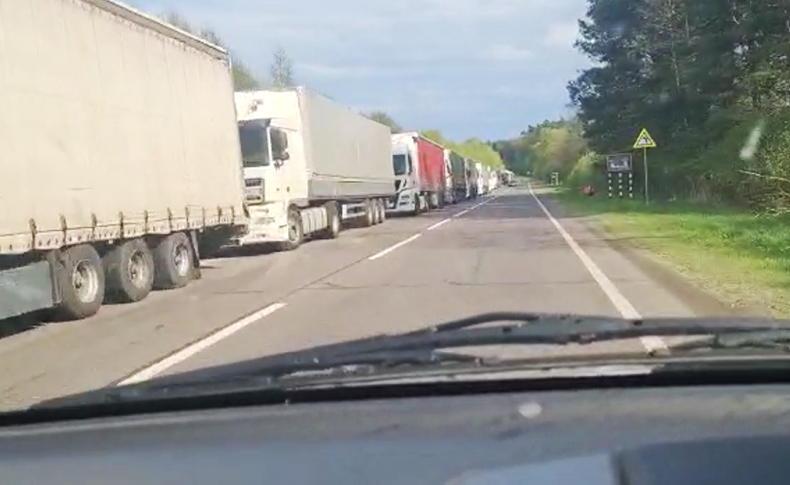
Ukrainian grain lorries are among those waiting at the Polish border with agricultural produce to export. / Kees Huizinga
Since then, shipping routes through the Black Sea have been agreed with Russia, but increasing quantities of Ukrainian grain are been sold into the EU, taking advantage of the tariff-free entry.
While this was being tolerated for a year, the proposal by the EU to extend for a second year has triggered the protests, particularly in Poland, whose grain growers are most impacted by this alternative cheap supply.
This is the second problem the EU has with its eastern member states following the protest by Romanian farmers last week at what they believe is an unfair allocation of funds granted to countries bordering Ukraine to compensate for the impact of the war.
Short-term solution, longer-term problem
With the war still raging in Ukraine and the EU anxious to be supportive, the likelihood is that a solution will be found to placate Polish grain growers by way of compensation.
While that may solve the problem for now, the spat that has developed in Poland on this issue is an example of how difficult it will be to bring one of the world’s major grain exporters into the EU single market and maintain harmony among members.
Notwithstanding the current concession on tariffs, it is tariffs that have been protecting the EU markets up to now from being flooded with Ukrainian grain.
No doubt the tariffs will be restored at the first sign of normality, but they would have to be removed permanently if Ukraine was accepted as a full member of the EU with access to the single market.
The practical outworking of EU political policy will come at a financial cost and likely disharmony among members most impacted.
Read more
Grain Trends: French wheat down, Irish harvest prices remain steady
Tillage Management: preparing for dry weather
Grain Trends: oilseed prices plunge, pig numbers decline
Since Russia invaded Ukraine just over a year ago, one of Ukraine's strongest supporters has been Poland. It has opened its borders to fleeing refugees and backed up strong political support by providing military equipment.
The friendship and co-operation between the countries appeared to be cemented this week when the Ukrainian president visited Poland and was given the country’s highest honour.
Ukraine has also been spoken of as a future member of NATO and there have been multiple calls for fast-track entry for Ukraine to membership, with the Irish Government supporting the proposal.
Not so fast
Politically and diplomatically, this would make sound sense. EU members, the UK, US and other NATO members have been vociferous in their support for Ukraine, as has the European Union.
However, in the midst of the outpouring of goodwill towards Ukraine, there is a cloud growing on the horizon that threatens to thwart the evolving relationship with the EU and bordering countries in particular.
This week, as the Ukranian president was travelling to Poland for his award, the Polish agriculture minister Henryk Kowalczyk was in the process of resigning from the government.
This was in response to increasing protests by Polish farmers against an inflow of cheaper, tariff-free Ukrainian grain that has been bought up by Polish merchants filling the grain silos rather than exporting it to other countries.
Suspension of tariffs
This time last year, the EU granted tariff-free access to Ukrainian grain in response to the invasion closing Ukrainian shipping routes through the Black Sea.
As well as devastation for Ukrainian grain growers, the absence of Ukrainian grain on global markets threatened a serious increase in hunger among the poorer countries in the world.
On top of working on getting the product out of Ukraine through European road and rail networks, the EU and UK decided to remove tariffs on the entry of Ukrainian grain for a 12-month period.
Ukrainian grain lorries are among those waiting at the Polish border with agricultural produce to export. / Kees Huizinga
Since then, shipping routes through the Black Sea have been agreed with Russia, but increasing quantities of Ukrainian grain are been sold into the EU, taking advantage of the tariff-free entry.
While this was being tolerated for a year, the proposal by the EU to extend for a second year has triggered the protests, particularly in Poland, whose grain growers are most impacted by this alternative cheap supply.
This is the second problem the EU has with its eastern member states following the protest by Romanian farmers last week at what they believe is an unfair allocation of funds granted to countries bordering Ukraine to compensate for the impact of the war.
Short-term solution, longer-term problem
With the war still raging in Ukraine and the EU anxious to be supportive, the likelihood is that a solution will be found to placate Polish grain growers by way of compensation.
While that may solve the problem for now, the spat that has developed in Poland on this issue is an example of how difficult it will be to bring one of the world’s major grain exporters into the EU single market and maintain harmony among members.
Notwithstanding the current concession on tariffs, it is tariffs that have been protecting the EU markets up to now from being flooded with Ukrainian grain.
No doubt the tariffs will be restored at the first sign of normality, but they would have to be removed permanently if Ukraine was accepted as a full member of the EU with access to the single market.
The practical outworking of EU political policy will come at a financial cost and likely disharmony among members most impacted.
Read more
Grain Trends: French wheat down, Irish harvest prices remain steady
Tillage Management: preparing for dry weather
Grain Trends: oilseed prices plunge, pig numbers decline





SHARING OPTIONS