An unprecedented increase in the value of dairy commodities during 2022 saw turnover up by 45% at Lakeland Dairies to hit £1.7bn last year.
As well as record sales, the cross-border co-op also returned a record operating profit of £28.7m, although cost inflation during the year saw profit margin squeezed, coming in at 1.7% compared to 2.1% the previous year.
Since 2017, the operating profit margin has sat between 2% and 2.4%.
The Lakeland balance sheet remains strong, with net assets of €273m up 18% on 2021, although much of this was driven by high stock values at the year’s end, which came in at €216.6m – up €77m on the previous set of accounts.
While soaring commodity prices in 2022 drove stock values, they also meant more loans and overdrafts were required to fund working capital. Net debt in the business is up €60m in 2022 to stand at €160m.
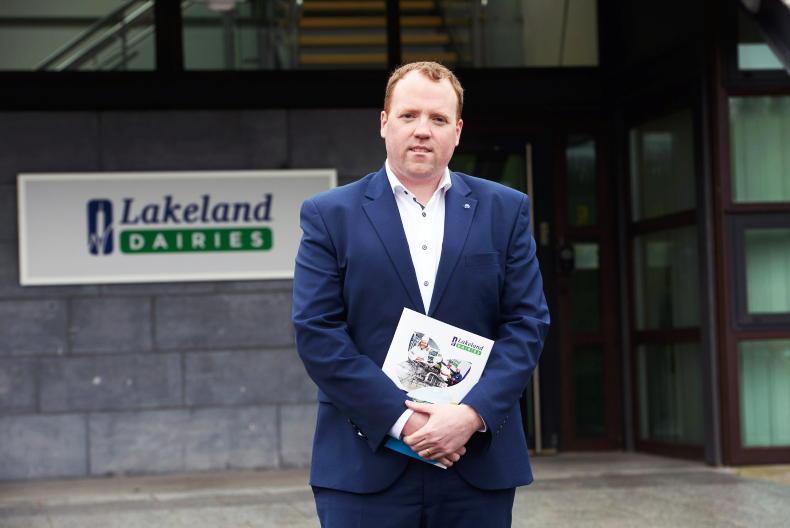
New Lakeland CEO Colin Kelly described the 2022 results as “positive” and paid tribute to the senior management team led by Michael Hanley, who retired last December.
“It was a record year, we have a good balance sheet and we paid a competitive milk price,” he said.
He explained that the percentage lift in sales did not follow through into a similar increase in profits as “our margins tend to be the same, whether it is €7,000 or €4,000 for butter”.
With commodities trending down in 2023, he expects overall turnover to drop to around €1.6bn to €1.7bn this year.
Volume
Milk volumes were up just over 3% in 2022 to stand at over 2bn litres, over half of which is supplied by NI farmers.
Lakeland also continued to invest in the business, with €22m of capital expenditure, much of which was spent on maintenance and effluent management at various sites. In NI, Lakeland has operations at Artigarvan, Newtownards, Ballyrashane and an overflow site at Banbridge, which manufactures butter at peak.
Farmgate
On farmgate milk price, Kelly accepts that prices are coming down faster than input costs, and expects the next 12 to 18 months “will be tough”.
His prediction for this year is that NI base prices will average out in the low- to mid-30s, although he thinks that markets could look more positive in the second half of 2023.
For that to happen “we will have to see a supply correction across the world,” he said, pointing out that with high costs, farmers will be losing money, so they might be tempted by high beef prices to cull more cows. His sense is that customers are not carrying a lot of stock at present, so a small change in supply could stimulate demand as they try to build inventory.
With farmgate prices already down significantly in 2023, Kelly acknowledged that this is leading to “difficult conversations” with customers, who might expect a similar drop in their prices.
“We are trying to maintain prices as far as possible. Everything is more expensive. It has to be sustainable for everybody,” said Kelly.
Kelly keen to progress NI
Sustainability Body
New Lakeland chief Colin Kelly is “fully supportive” of the work being done to bring various organisations together under the banner of a new NI Sustainability Body.
It is understood that work is being finalised on the new organisation, under which will sit the likes of the Livestock and Meat Commission (LMC), Animal Health and Welfare NI, AgriSearch and a new Ruminant Genetics company. A key early focus for the new entity is to drive forward with carbon audits of NI farms.
“I would like to see things moving a little bit quicker. It needs to happen quickly and needs resourced. We need a big push on that,” Kelly told the Irish Farmers Journal.
Legislation coming
on milk contracts
UK-wide legislation that will put in place certain standards for those purchasing milk off farmers could be in place by the summer, Lakeland CEO Colin Kelly said.
A public consultation on a new statutory code of conduct was undertaken in 2020, with farm organisations, including the UFU, arguing strongly for various changes – including formal contracts and forward milk pricing.
According to Kelly, a number of Lakeland suppliers in NI continue to operate without a contract, but it now looks likely a 12-month arrangement will have to be in place.
Locally, NI dairy companies have generally argued against the need for legislation, pointing out that most of the milk is lifted by farmer-led co-ops.
“The code is written for a Great Britain problem, but the solution is for the UK,” suggested Kelly.
Fixed milk prices
On the issue of fixed milk prices, he believes that they aren’t a thing of the past, although he accepts that at present, no customer or farmer would be interested given recent volatility in the market.
“It worked for 10 years and performed very badly for 18 months. Going forward, a fixed price would have to be linked to input costs,” he said.
Read more
Lakeland profits rise to £23.6m
UFU sets out vision for dairy contracts
An unprecedented increase in the value of dairy commodities during 2022 saw turnover up by 45% at Lakeland Dairies to hit £1.7bn last year.
As well as record sales, the cross-border co-op also returned a record operating profit of £28.7m, although cost inflation during the year saw profit margin squeezed, coming in at 1.7% compared to 2.1% the previous year.
Since 2017, the operating profit margin has sat between 2% and 2.4%.
The Lakeland balance sheet remains strong, with net assets of €273m up 18% on 2021, although much of this was driven by high stock values at the year’s end, which came in at €216.6m – up €77m on the previous set of accounts.
While soaring commodity prices in 2022 drove stock values, they also meant more loans and overdrafts were required to fund working capital. Net debt in the business is up €60m in 2022 to stand at €160m.
New Lakeland CEO Colin Kelly described the 2022 results as “positive” and paid tribute to the senior management team led by Michael Hanley, who retired last December.
“It was a record year, we have a good balance sheet and we paid a competitive milk price,” he said.
He explained that the percentage lift in sales did not follow through into a similar increase in profits as “our margins tend to be the same, whether it is €7,000 or €4,000 for butter”.
With commodities trending down in 2023, he expects overall turnover to drop to around €1.6bn to €1.7bn this year.
Volume
Milk volumes were up just over 3% in 2022 to stand at over 2bn litres, over half of which is supplied by NI farmers.
Lakeland also continued to invest in the business, with €22m of capital expenditure, much of which was spent on maintenance and effluent management at various sites. In NI, Lakeland has operations at Artigarvan, Newtownards, Ballyrashane and an overflow site at Banbridge, which manufactures butter at peak.
Farmgate
On farmgate milk price, Kelly accepts that prices are coming down faster than input costs, and expects the next 12 to 18 months “will be tough”.
His prediction for this year is that NI base prices will average out in the low- to mid-30s, although he thinks that markets could look more positive in the second half of 2023.
For that to happen “we will have to see a supply correction across the world,” he said, pointing out that with high costs, farmers will be losing money, so they might be tempted by high beef prices to cull more cows. His sense is that customers are not carrying a lot of stock at present, so a small change in supply could stimulate demand as they try to build inventory.
With farmgate prices already down significantly in 2023, Kelly acknowledged that this is leading to “difficult conversations” with customers, who might expect a similar drop in their prices.
“We are trying to maintain prices as far as possible. Everything is more expensive. It has to be sustainable for everybody,” said Kelly.
Kelly keen to progress NI
Sustainability Body
New Lakeland chief Colin Kelly is “fully supportive” of the work being done to bring various organisations together under the banner of a new NI Sustainability Body.
It is understood that work is being finalised on the new organisation, under which will sit the likes of the Livestock and Meat Commission (LMC), Animal Health and Welfare NI, AgriSearch and a new Ruminant Genetics company. A key early focus for the new entity is to drive forward with carbon audits of NI farms.
“I would like to see things moving a little bit quicker. It needs to happen quickly and needs resourced. We need a big push on that,” Kelly told the Irish Farmers Journal.
Legislation coming
on milk contracts
UK-wide legislation that will put in place certain standards for those purchasing milk off farmers could be in place by the summer, Lakeland CEO Colin Kelly said.
A public consultation on a new statutory code of conduct was undertaken in 2020, with farm organisations, including the UFU, arguing strongly for various changes – including formal contracts and forward milk pricing.
According to Kelly, a number of Lakeland suppliers in NI continue to operate without a contract, but it now looks likely a 12-month arrangement will have to be in place.
Locally, NI dairy companies have generally argued against the need for legislation, pointing out that most of the milk is lifted by farmer-led co-ops.
“The code is written for a Great Britain problem, but the solution is for the UK,” suggested Kelly.
Fixed milk prices
On the issue of fixed milk prices, he believes that they aren’t a thing of the past, although he accepts that at present, no customer or farmer would be interested given recent volatility in the market.
“It worked for 10 years and performed very badly for 18 months. Going forward, a fixed price would have to be linked to input costs,” he said.
Read more
Lakeland profits rise to £23.6m
UFU sets out vision for dairy contracts







SHARING OPTIONS