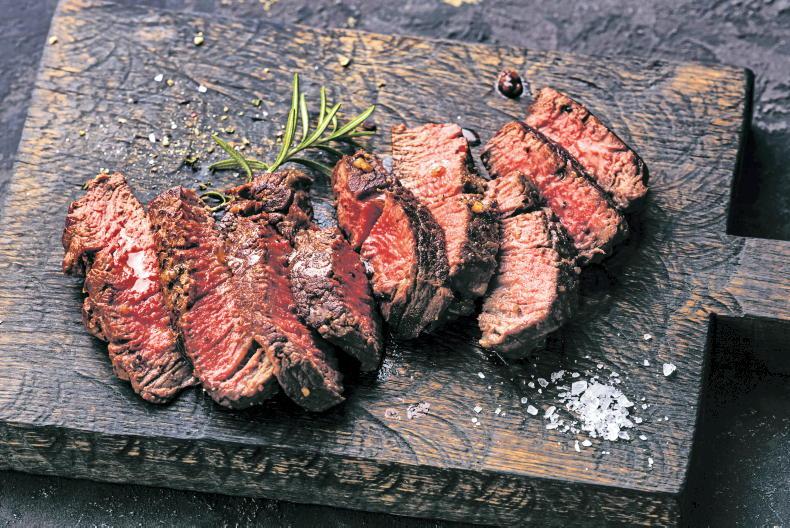
I wasn’t always a big fan of steak. But like so many things in life, you don’t always appreciate steak until you’ve had a truly great one. Moving to Ireland from Canada was game-changing for me – I think Irish beef has? the most delicious flavour. Over the years, I’ve gone from “just OK” steak experiences to “blow your mind” experiences.
Luckily, I have a great local butcher who rears his own beef. I can ask him for a certain cut or thickness of steak, and these never disappoint. Your butcher is always there to help you discover your new favourite cut of meat, so don’t be afraid to go in and strike up a conversation.
Global flavours
When it comes to warm summer nights, there is no better dinner than grilled Irish steak. Steaks can be simple and straightforward – you don’t need much more than some salt, pepper, and a glug of Irish rapeseed oil.
When it comes to pairing sides, the sky is the limit. You can infuse a steak dinner with plenty of global flavour – go Mediterranean with grilled peppers, courgettes and lemon and oregano potatoes.
Argentinians love their steak, too, with a tangy chimichurri sauce. Canadian or American-style might add a brush of barbecue sauce, corn on the cob and twice-baked potatoes with sour cream, bacon bits and chives. Or, go Mexican by grilling a marinated steak and serving it sliced in tortillas with lots of fresh toppings and a squeeze of lime.
1 Rib-eye
Also known as Delmonico or entrecôte, a rib-eye is a cut from the rib section of the animal. These steaks have a good fat to meat ratio and are very flavourful with tender meat. They can be served boneless or bone-in. The fat marbling in a rib-eye is what makes it ideal for grilling. Sear it on a hot grill and serve with a compound butter mixed with garlic or caramelised onions.
2 Skirt steak
This is definitely one to ask your butcher about. It comes from the lower plate (the belly) of the animal and what a skirt steak lacks in tenderness, it makes up for in flavour. Our favourite way to eat skirt steak is cave-man style: very quickly grilled over the hottest charcoal grill (you need to get a crust on the outside), rare on the ins?ide, well-rested and sprinkled with flaky sea salt just before eating. This is a great option for marinating and is a popular cut for making Mexican-style steak tacos.
3 T-bone steak
One hefty T-bone could easily feed two hungry adults. This steak which benefits from a more medium heat on the grill. Leave it alone on the grill for three minutes to allow for some nice char marks. Do the same on the other side, then it’s OK to frequently flip it or move until your desired doneness is achieved. A T-bone is a cross-section from the short loin section of an animal. It is cut closer to the front (steaks cut in this fashion, but from the back of the shot loin, are called porterhouse). A T-bone has a decent amount of fat marbling and is loaded with great flavour – no marinating necessary.
You hear the word “doneness” a lot when we talk about steak. This refers to the internal temperature of the steak when it is finished cooking. More commonly, we’ll say a steak is well-done, medium, medium-rare, rare or blue (we would say “black and blue” in professional kitchens – a steak cooked at such a high temperature that it is seared on the outside but barely cooked inside).
Many people are intimidated by steak because they are worried they won’t cook it to the correct doneness. We all know a steak-lover who is devastated when their steak isn’t cooked exactly to their liking – this can add to the cooking anxiety.
I think when you’re grilling steak, you don’t want to over-cook it, but you also shouldn’t worry about its exact doneness. Barbecues are a fun and relaxed way to eat, and they’re a great way to start cooking steaks because the “stakes” aren’t so high (sorry, bad joke). The most important rules are nearly impossible to get wrong:
1 Take your meat out an hour (or at least 30 minutes) before cooking to allow it to come to room temperature.
2 Pre-heat your grill (depending on the steak, you will want the temperature as high as possible or more medium). Don’t put steak on a cold or lukewarm grill.
3 Season it well. This can be as simple as some salt and pepper, or as elaborate as a homemade spice rub. Season your steak when it reaches room temperature and drizzle it with a little oil to make a bit of a seasoned paste.
4 Let it rest. After the steak is cooked, let it rest for five to 10 minutes. When you slice a steak, always slice it against the “grain” in the meat (across the fibres instead of with them).
Internal temperature
If you follow those instructions and still overcook your meat a little, just know that we’ve all been there – even seasoned chefs overcook their steak sometimes. There are ways to tell your steak’s doneness as it’s cooking, though, and the more you cook steak, the more you get a feel for how long it takes at what temperature to get to your desired finish. Use a meat thermometer on thicker steaks, if you’re worried. The following temperatures will tell you which doneness your steak has achieved:
3 Rare: 50°C-54°C3 Medium-rare: 54°C-60°C3 Medium: 60°C-65°C3 Medium-well: 65°C-71°C3 Well-done: over 71°C As we are encouraged to cut our meat consumption for climate reasons, it becomes even more important to make sure you are buying Irish when you want to indulge. Build up a good relationship with your local butcher, or contact a farmer who sells beef directly (if you have room in your freezer for a beef box). In all cases, make sure your steak is Bord Bia quality assured. According to IBEC (Irish Business and Employers Federation), Irish beef is among the top five most carbon efficient in the EU. And the flavour? It can’t be beat.
Read more
Bring on the beef
Wine pairing for easy entertaining
I wasn’t always a big fan of steak. But like so many things in life, you don’t always appreciate steak until you’ve had a truly great one. Moving to Ireland from Canada was game-changing for me – I think Irish beef has? the most delicious flavour. Over the years, I’ve gone from “just OK” steak experiences to “blow your mind” experiences.
Luckily, I have a great local butcher who rears his own beef. I can ask him for a certain cut or thickness of steak, and these never disappoint. Your butcher is always there to help you discover your new favourite cut of meat, so don’t be afraid to go in and strike up a conversation.
Global flavours
When it comes to warm summer nights, there is no better dinner than grilled Irish steak. Steaks can be simple and straightforward – you don’t need much more than some salt, pepper, and a glug of Irish rapeseed oil.
When it comes to pairing sides, the sky is the limit. You can infuse a steak dinner with plenty of global flavour – go Mediterranean with grilled peppers, courgettes and lemon and oregano potatoes.
Argentinians love their steak, too, with a tangy chimichurri sauce. Canadian or American-style might add a brush of barbecue sauce, corn on the cob and twice-baked potatoes with sour cream, bacon bits and chives. Or, go Mexican by grilling a marinated steak and serving it sliced in tortillas with lots of fresh toppings and a squeeze of lime.
1 Rib-eye
Also known as Delmonico or entrecôte, a rib-eye is a cut from the rib section of the animal. These steaks have a good fat to meat ratio and are very flavourful with tender meat. They can be served boneless or bone-in. The fat marbling in a rib-eye is what makes it ideal for grilling. Sear it on a hot grill and serve with a compound butter mixed with garlic or caramelised onions.
2 Skirt steak
This is definitely one to ask your butcher about. It comes from the lower plate (the belly) of the animal and what a skirt steak lacks in tenderness, it makes up for in flavour. Our favourite way to eat skirt steak is cave-man style: very quickly grilled over the hottest charcoal grill (you need to get a crust on the outside), rare on the ins?ide, well-rested and sprinkled with flaky sea salt just before eating. This is a great option for marinating and is a popular cut for making Mexican-style steak tacos.
3 T-bone steak
One hefty T-bone could easily feed two hungry adults. This steak which benefits from a more medium heat on the grill. Leave it alone on the grill for three minutes to allow for some nice char marks. Do the same on the other side, then it’s OK to frequently flip it or move until your desired doneness is achieved. A T-bone is a cross-section from the short loin section of an animal. It is cut closer to the front (steaks cut in this fashion, but from the back of the shot loin, are called porterhouse). A T-bone has a decent amount of fat marbling and is loaded with great flavour – no marinating necessary.
You hear the word “doneness” a lot when we talk about steak. This refers to the internal temperature of the steak when it is finished cooking. More commonly, we’ll say a steak is well-done, medium, medium-rare, rare or blue (we would say “black and blue” in professional kitchens – a steak cooked at such a high temperature that it is seared on the outside but barely cooked inside).
Many people are intimidated by steak because they are worried they won’t cook it to the correct doneness. We all know a steak-lover who is devastated when their steak isn’t cooked exactly to their liking – this can add to the cooking anxiety.
I think when you’re grilling steak, you don’t want to over-cook it, but you also shouldn’t worry about its exact doneness. Barbecues are a fun and relaxed way to eat, and they’re a great way to start cooking steaks because the “stakes” aren’t so high (sorry, bad joke). The most important rules are nearly impossible to get wrong:
1 Take your meat out an hour (or at least 30 minutes) before cooking to allow it to come to room temperature.
2 Pre-heat your grill (depending on the steak, you will want the temperature as high as possible or more medium). Don’t put steak on a cold or lukewarm grill.
3 Season it well. This can be as simple as some salt and pepper, or as elaborate as a homemade spice rub. Season your steak when it reaches room temperature and drizzle it with a little oil to make a bit of a seasoned paste.
4 Let it rest. After the steak is cooked, let it rest for five to 10 minutes. When you slice a steak, always slice it against the “grain” in the meat (across the fibres instead of with them).
Internal temperature
If you follow those instructions and still overcook your meat a little, just know that we’ve all been there – even seasoned chefs overcook their steak sometimes. There are ways to tell your steak’s doneness as it’s cooking, though, and the more you cook steak, the more you get a feel for how long it takes at what temperature to get to your desired finish. Use a meat thermometer on thicker steaks, if you’re worried. The following temperatures will tell you which doneness your steak has achieved:
3 Rare: 50°C-54°C3 Medium-rare: 54°C-60°C3 Medium: 60°C-65°C3 Medium-well: 65°C-71°C3 Well-done: over 71°C As we are encouraged to cut our meat consumption for climate reasons, it becomes even more important to make sure you are buying Irish when you want to indulge. Build up a good relationship with your local butcher, or contact a farmer who sells beef directly (if you have room in your freezer for a beef box). In all cases, make sure your steak is Bord Bia quality assured. According to IBEC (Irish Business and Employers Federation), Irish beef is among the top five most carbon efficient in the EU. And the flavour? It can’t be beat.

Read more
Bring on the beef
Wine pairing for easy entertaining
SHARING OPTIONS