



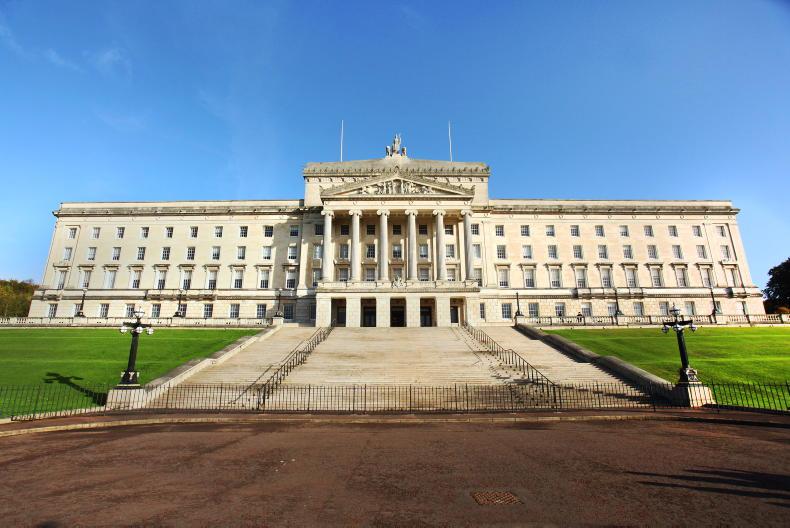
The failure of many NI politicians to follow scientific advice around targets for greenhouse gas (GHG) emissions has left NI civil servants in a difficult position, putting in place plans that will ultimately decimate livestock farming, while delivering little for global warming.
The scientific advice came from the UK climate change committee (CCC) who set out “a very ambitious pathway” to cut emissions by 83% as part of the UK’s overall target to achieve net zero emissions by 2050. Rather than listen to the CCC, our politicians opted for a net zero target in NI.
To achieve net zero by 2050, the CCC is clear that “radical actions” and “speculative options” are required over and above its original advice. Those include NI cutting livestock numbers in half and spending billions on carbon capture technology.
In any event, a rapid switch to electric vehicles and zero-carbon heating systems is necessary, as well as a significant increase in planting of trees and peatland restoration.
Baseline
When compared to a 1990 baseline, in 2021 NI had cut emissions by 23%. If we are to get to net zero by 2050, the CCC point to a 48% reduction by 2030 and a 77% cut by 2040.
Those targets are included in a DAERA public consultation which runs to 11 October 2023. It asks respondents whether NI should adopt these targets, as well as those incorporated into five-year budgets. Views are also sought on the pathway set out by the CCC for NI to get to net zero.
The target within the first carbon budget from 2023 to 2027 is to achieve an average 33% annual reduction in emissions. Analysis from DAERA suggests agriculture can contribute to this by adopting new science and innovation, including around soil health and animal breeding. A cull of livestock will not be necessary over the next five years.
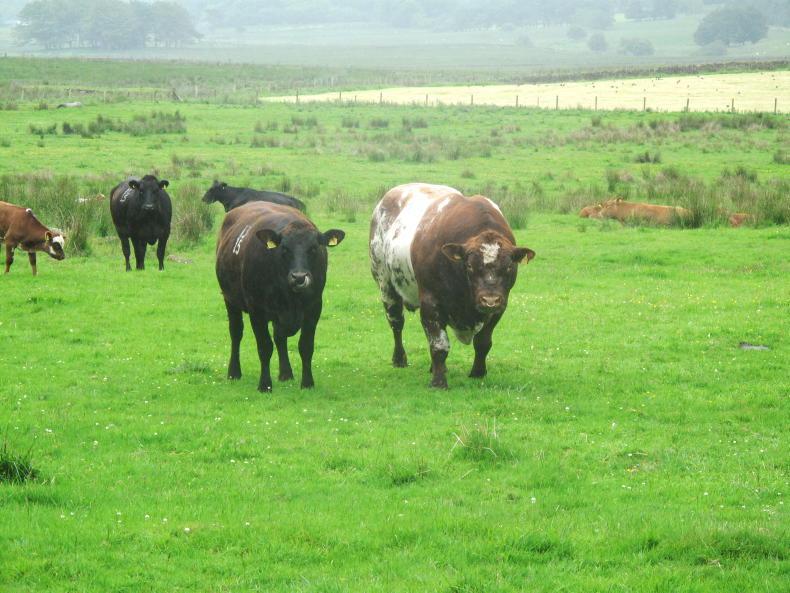
However, a new beef carbon reduction scheme, starting in 2024, will encourage farmers to kill cattle at younger ages, and will contribute to less cattle on NI farms.
Looking beyond 2027, NI might just about scrape through and meet GHG emissions targets in 2030, but after that, it all becomes increasingly difficult/impossible. The reality will eventually dawn on our politicians that climate law in NI will have to be revised.


SHARING OPTIONS