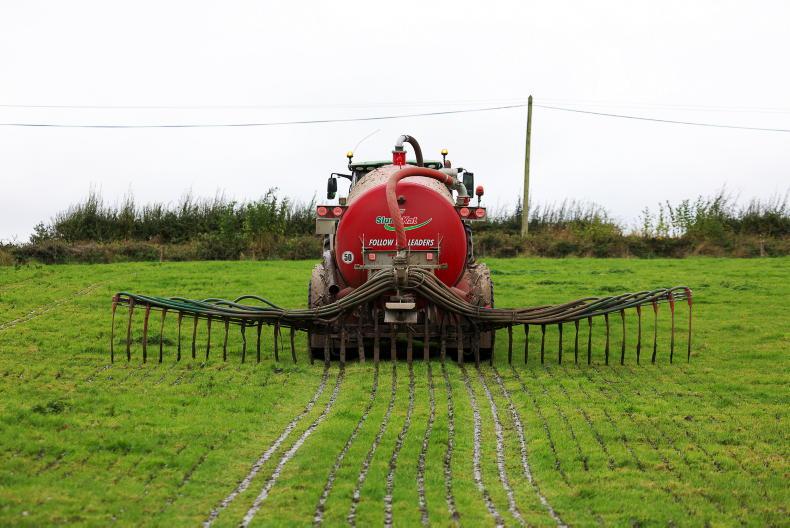
Thousands of farmers will suffer the fall out of a new maximum stocking rate, which is set to drive land demand and prices up. Caitríona Morrissey and Aidan Brennan report.
Land demand is expected to soar as dairy farmers will move to dilute their stocking rates.
ADVERTISEMENT
Demand for land is expected to go into overdrive as the European Commission looks set to reduce the maximum stocking rate for nitrates derogation farmers from 1 January 2024.
An Environmental Protection Agency (EPA) report has indicated that most of the country will be subject to a new maximum stocking rate of 220kg organic N/ha, despite protests from across the industry that the move will have no significant effect on water quality.
Farm organisations and Dairy Industry Ireland have condemned the EPA report, while senior Teagasc experts and even the Department of Agriculture itself have conceded publicly that the move will do little to improve water quality but will cut dairy farm profits by up to 29%.
ADVERTISEMENT
While the number of farms directly affected by the derogation change is estimated to be around 3,000, the subsequent distortion of the land market is likely to hit all farms.
Demand for land for sale and lease is expected to soar as dairy farmers will move to dilute their stocking rates, pushing prices up and forcing tillage and drystock farmers out of the market.
IFA analysis has suggested that dairy farmers would need to access an extra 28,000ha to avoid culling 50,000 cows.

Register for free to read this story and our free stories.
This content is available to digital subscribers and loyalty code users only. Sign in to your account, use the code or subscribe to get unlimited access.
However, if you would like to share the information in this article, you may use the headline, summary and link below:
Title: Stocking rate limit set to inflate land prices
Thousands of farmers will suffer the fall out of a new maximum stocking rate, which is set to drive land demand and prices up. Caitríona Morrissey and Aidan Brennan report.
The reader loyalty code gives you full access to the site from when you enter it until the following Wednesday at 9pm. Find your unique code on the back page of Irish Country Living every week.
CODE ACCEPTED
You have full access to the site until next Wednesday at 9pm.
CODE NOT VALID
Please try again or contact support.
Demand for land is expected to go into overdrive as the European Commission looks set to reduce the maximum stocking rate for nitrates derogation farmers from 1 January 2024.
An Environmental Protection Agency (EPA) report has indicated that most of the country will be subject to a new maximum stocking rate of 220kg organic N/ha, despite protests from across the industry that the move will have no significant effect on water quality.
Farm organisations and Dairy Industry Ireland have condemned the EPA report, while senior Teagasc experts and even the Department of Agriculture itself have conceded publicly that the move will do little to improve water quality but will cut dairy farm profits by up to 29%.
While the number of farms directly affected by the derogation change is estimated to be around 3,000, the subsequent distortion of the land market is likely to hit all farms.
Demand for land for sale and lease is expected to soar as dairy farmers will move to dilute their stocking rates, pushing prices up and forcing tillage and drystock farmers out of the market.
IFA analysis has suggested that dairy farmers would need to access an extra 28,000ha to avoid culling 50,000 cows.
If you would like to speak to a member of our team, please call us on 01-4199525.
Link sent to your email address
We have sent an email to your address. Please click on the link in this email to reset your password. If you can't find it in your inbox, please check your spam folder. If you can't find the email, please call us on 01-4199525.
ENTER YOUR LOYALTY CODE:
The reader loyalty code gives you full access to the site from when you enter it until the following Wednesday at 9pm. Find your unique code on the back page of Irish Country Living every week.
SHARING OPTIONS