All cattle and sheep will have to be tested for bluetongue virus before they can go from England to Wales, the Welsh government has announced.
This pre-movement testing will come into effect from Friday 20 June and has been prompted by a somewhat relaxation of controls in England.
A specific movement licence will be required for any susceptible animals on the move as well as a valid pre-movement test, which will be at the farmer's own expense.
If an animal is showing clinical signs on the day of transport, they cannot move to Wales.
Situation in England
From 1 July 2025, the bluetongue restricted zone will expand to cover all of England.
This means that pre-movement controls will be lifted, with the government there hoping that the focus shifts to encouraging uptake of new bluetongue vaccines, which alleviate the symptoms.
Wales' deputy first minister Huw Irranca-Davies said that he regretted the UK government's decision not to maintain current restriction zones.
"In practical terms, it means we will lose the security of having a two-county buffer between potentially infected livestock in England and the Welsh border.
"This change increases the risk of disease incursion into Wales, either through the movement of infected livestock or the ingress of virus-carrying midges from across the border," he said.
Clinical signs
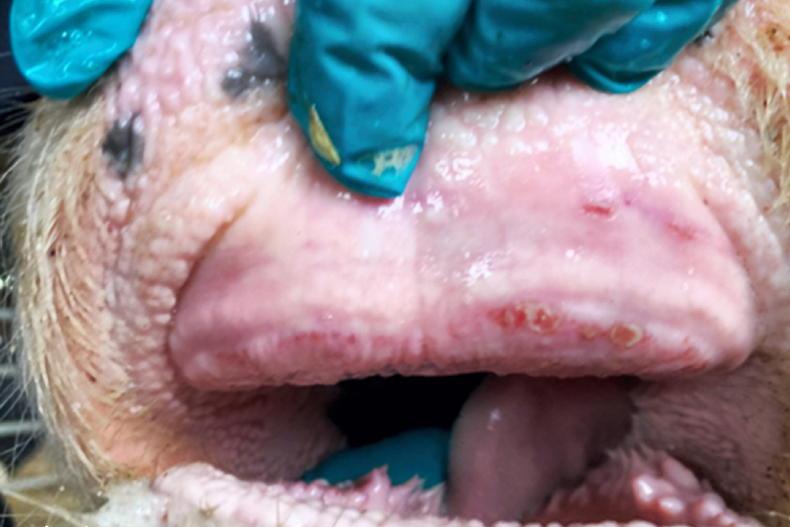
Adult cattle may serve as a source of virus for several weeks while displaying little or no clinical signs of disease. They are often the preferred host for insect vectors.
The following clinical signs may be present in cattle: