


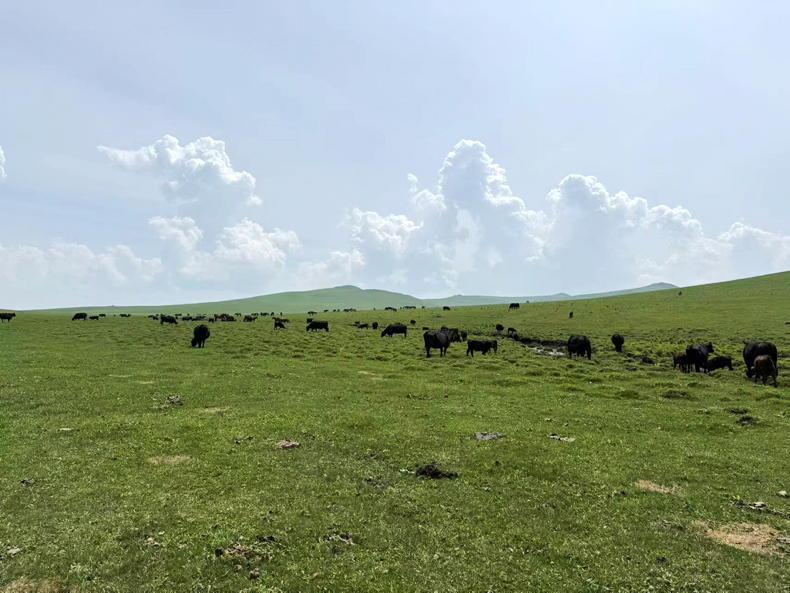
Recently, I went to one of the quietest corners of China to take part in an event on the grasslands of Inner Mongolia, only 15km from the border with Outer Mongolia. The area already blends into the natural border with Mongolia, where there are 100km of forest and grasslands and wild animals roam. It’s known as wolf valley. Tourists are brought to a place where a few wolves seem to always appear at the right time.
I didn’t have time for tourism, and was brought straight to the farm, which is held on a long-term land lease by a roguish 70-year-old farmer named Zhang Wen. His landmass is 400,000mu or nearly 66,000ac and he runs 17,000 cows and followers on there.
His story started in 2007 when he visited the remote area and saw a sign to say that there was grassland for sale. He called the number and got through to a mining mogul who said that the land was just useless grassland. They came to a deal and he snatched the lease for 10 million RMB (€1.2m).
He began his farming in 2007 and ran Simmental cattle on the land for half of the year and sold the animals to feedlots. Zhang Wen has no formal education but was highly curious about what other major cattle producing countries were doing.
He visited Australia, Europe, the United States and South America in the subsequent years and returned to China with strong convictions. He saw that in the major cattle producing countries, Angus was king and with good reason.
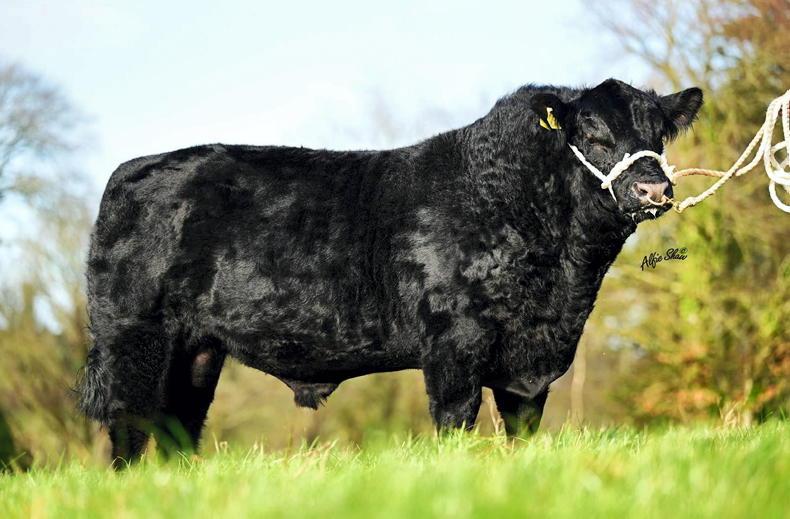
He resolved to turn his farm to Angus, importing 10,000 cows from Australia in the following years, and by 2020 he had a full Angus herd roaming the fields.
Zhang Wen rails against the academics in China who continue to promote Simmental and the newly ordained ‘Huaxi cow’ which is a fourth generation Simmental.
Debating partner
The top breeding professor in China has a farm operation less than 1km away and the two men don’t see eye to eye on the future of Chinese beef production. If you ever need a debating partner around the benefits of Angus, Zhang Wen is your man.
As part of Zhang’s development, he took a keen interest in understanding where his Angus cattle can get a good market. He started to team up with a hotpot chain that specialises in selling ‘hot beef’ or meat from animals slaughtered only a few hours earlier.
Fresh Yard is a Shanghai-based company with 150 restaurants that has vertically integrated so that its slaughter facilities, transport facilities and cattle (investment into Zhang Wen’s farming empire) can have beef slaughtered in the morning, in their restaurants by lunch, and the same in the afternoon for dinner.
Its current focus is to do antibiotic-free production and to continue to ensure the safety of hot beef slaughtering and processing. There are economic benefits to this model, but it also requires a strong management and supply chain.
As we sat in the grasslands admiring the eco-diversity, the nucleus breeding herd appeared. Zhang Wen said he has taken Australian Angus cows, crossed with American bulls to create ‘Chinese Angus’.
His next exploration is using Wagyu crosses to get the marbling that his target Chinese consumers are looking for. Whatever about the genetics and the hot beef, these grasslands are thriving, a rare bright spot bucking the narrative of grassland degradation in Inner Mongolia.




SHARING OPTIONS