


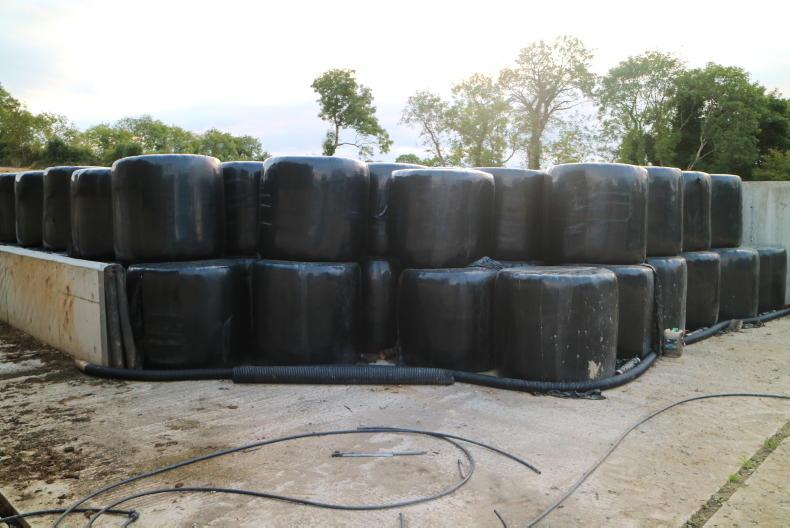
Some 119 farmers were penalised for having bales of silage stacked incorrectly on farms when inspections were carried out by the Department of Agriculture.
In early 2023, the Department announced that stricter rules around the stacking of bales would be in force from that summer onwards.
Silage bales can no longer be stacked more than two high or stored within 20m of a surface water or water abstraction point, unless there are storage facilities in place to collect any potential effluent.
According to a Department spokesperson, there were 46 and 73 instances of non-compliance in 2023 and 2024, respectively, which resulted in a financial sanction being applied to farmers’ direct payments.
Penalty
Sanctions are determined on the basis of the extent, severity and permanence of the non-compliance identified, according to the Department.
As a general rule, it said a 3% sanction will apply but this may be reduced to 1% or increased up to 10% and will be determined based on the non-compliance’s impact.
The Department has said that tolerance may be considered where the risk to the objective is low. More serious breaches may be dealt with as intent.
Conditionality
As part of conditionality, the Department is required to assess compliance with a range of measures and controls designed to safeguard the environment and protect natural ecosystems.
These controls form part of the Statutory Management Requirements (SMRs) and Good Agricultural and Environmental Conditions (GAECs), including those set out under SMR 2 – the Nitrates Directive – which aim to prevent water pollution from agricultural sources and promote responsible nutrient management.
Inspections
Farmers can be chosen for a conditionality or a nitrates derogation inspection and found non-compliant by Department officials.
Local authorities may also carry out inspections on farms. Where non-compliance is detected they can cross report the incident to the Department.



SHARING OPTIONS