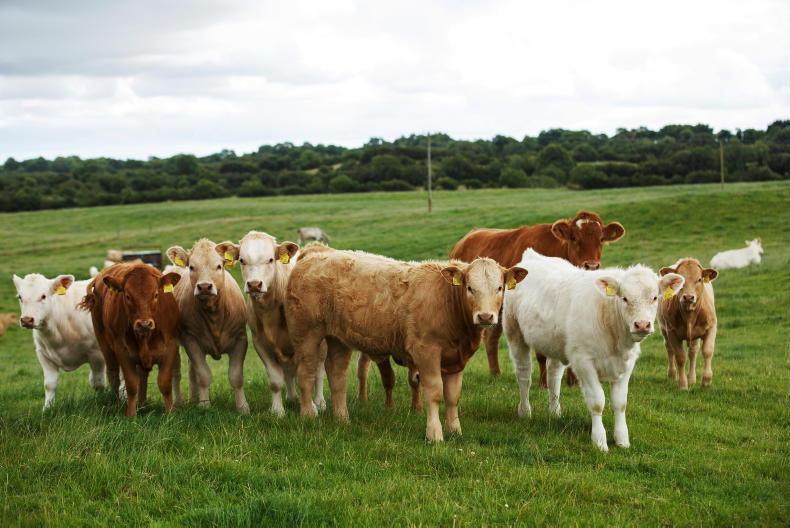
The 2025 National Beef Welfare Scheme (NBWS) is expected to open for applications in the coming week.
The budget for the 2025 scheme has increased by 40% compared to 2024 and will underpin an increase in the payment rate from €50 to €75/eligible calf, while the maximum number of calves eligible for payment is expected to increase from 40 to 45 calves.
Hence, the maximum payment per herd is €3,375, up from €2,000 per herd in 2024.
Minister for Agriculture Martin Heydon has previously announced many details of the scheme in order for farmers to be able to complete actions in advance of the scheme opening.
Calves deemed eligible for payment are those born between 1 July 2024 and 30 June 2025.
The timing of the opening of the scheme means that farmers will be able to select the number of calves on which they wish to carry out actions upon.
Mandatory meal feeding remains the core element of the scheme and has a payment of €35/head, to a maximum of €1,575/herd.
Under this action calves must receive meal supplementation for a period of at least four weeks pre-weaning and two weeks post-weaning, to reduce the stress at weaning time. An optional payment of €15/eligible calf is available for a vaccination action covering pneumonia/clostridial vaccination.
For pneumonia vaccination, it is expected that the terms will not be specific and will include farmers implementing the most suitable vaccination programme for their farm.
Clostridial vaccination will require a full course consisting of a primary and booster vaccine. Farmers can carry out both actions, but will receive payment on one action.
New element
A new element to the scheme in 2025 is a third optional action worth €25/calf. The options here are silage testing or faecal egg testing.
The Irish Farmers Journal understands that faecal egg tests can be carried out across animal types, removing time-specific constraints for farmers moving weanlings off the farm.
The scheme proved popular in 2024 with the number of applications increasing by over 7,000 herds to 23,720.