




Potted coriander, supplied to the country’s main supermarkets, is the latest product to be recalled due to the possible presence of Listeria.
The Food Safety Authority of Ireland (FSAI) has advised that O'Hanlon Herbs are recalling various batches of its potted coriander as a result of the potential presence of listeria monocytogenes.
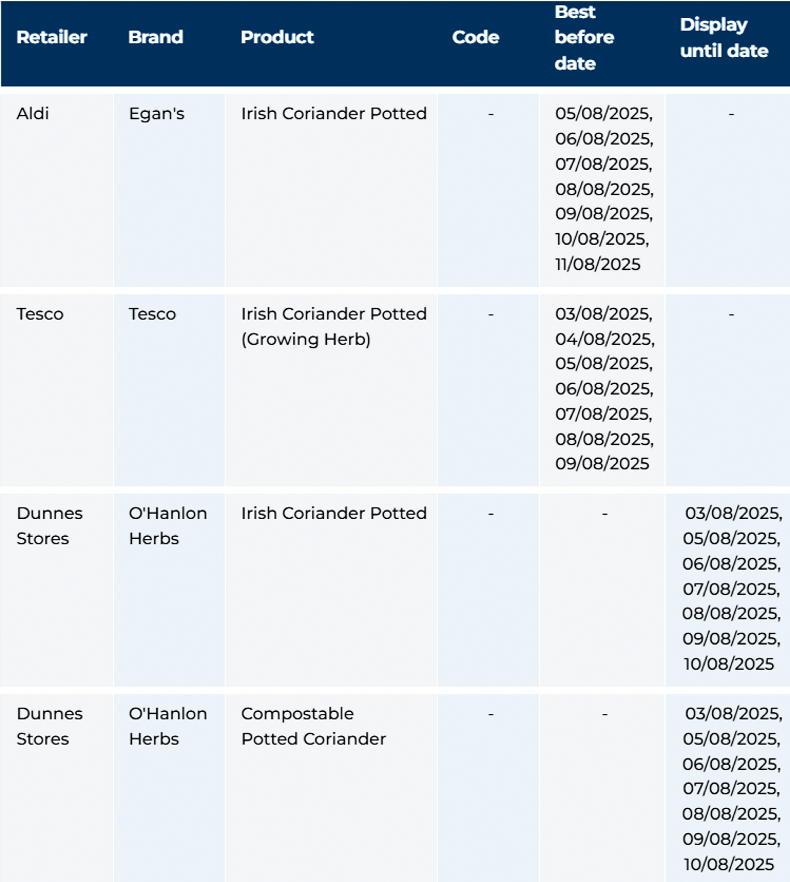
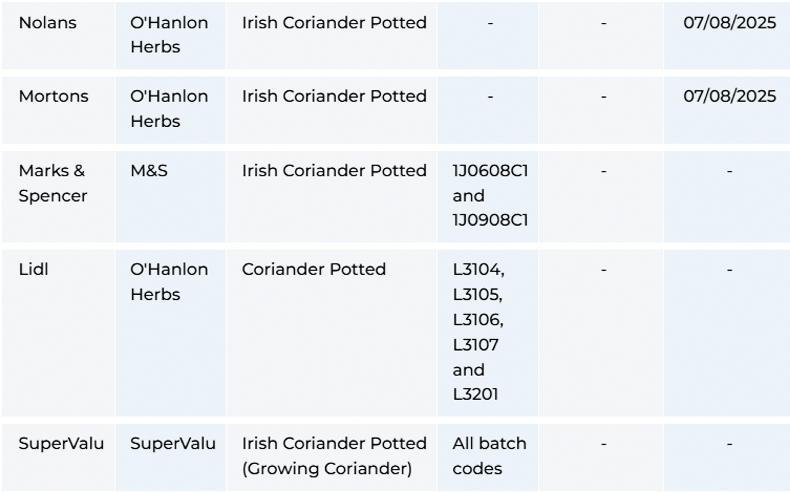
The following potted coriander products are being recalled by O’Hanlon Herbs, with recall notices to be displayed at the point-of-sale in stores:
This table was updated on Wednesday 6 August to reflect the most update information, as issued by the FSAI at the time.
Retailers are requested to remove the implicated batches from sale and display recall notices at point-of-sale, while consumers are advised not to eat the implicated batches.
Other recalls
This is the latest in a number of product recalls across recent weeks due to listeria.
Last week, a 248g batch of Aldi roast chicken basil pesto pasta was recalled as a result of the same bacteria, as were batches of spinach and mixed leaves from McCormack Family Farms.
The week previous, an outbreak of listeriosis linked to ready-to-eat meals resulted in the death of an adult.
These meals were produced by Ballymaguire Foods, a sister company to agri-food business Country Crest.
Ballymaguire Foods ready meals are sold in all the main supermarkets. It is understood that the company is working with the relevant health authorities for a staged reopening of its currently suspended facility.
At the time of the spinach recall, the FSAI moved to reassure consumers that there was no link between the spinach recall and the ready-to-eat meals.
Symptoms
The symptoms of Listeria monocytogenes infection can include mild flu-like symptoms, or gastrointestinal symptoms such as nausea, vomiting and diarrhoea.

In rare cases, the infection can be more severe, causing serious complications.
Some people are more vulnerable to Listeria monocytogenes infections, including pregnant women, babies, and people with weakened immune systems, including the elderly.
The incubation period (time between initial infection and first symptoms appearing) is on average three weeks but can range between three and 70 days.






SHARING OPTIONS