


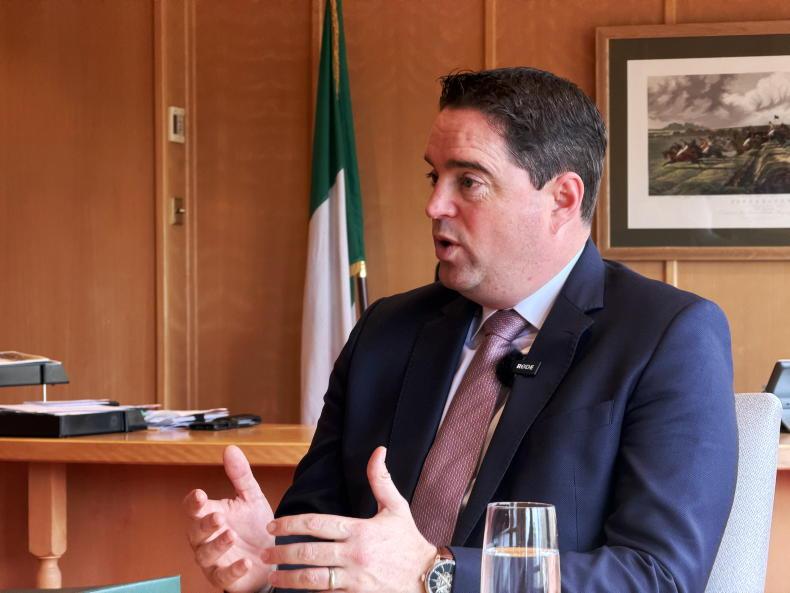
Changes to the law around trespassing must be carefully considered, but action is needed to address trespass and illegal hunting, the vice chair of the National Association of Regional Game Councils (NARGC) says.
Dan Curley says that NARGC “members have attended farmer meetings on the issue right around the country, and actively support farmers and gardaí in efforts to safeguard wildlife and livestock from illegal activity and trespass”.
Responsibility for dog control was recently transferred to the Department of Agriculture. Martin Heydon, as agriculture minister, now has the power to tackle this major issue for rural communities.
The change envisaged would be specifically targeted at groups of individuals who bring hunting dogs onto farmland without permission, and would not impact people such as hill walkers or gun club members who will only enter lands in a responsible manner and at an appropriate time.
The likelihood is that, with safeguards in place against unauthorised hunters with dogs, tensions between farmers and legitimate recreational users of land would actually be reduced.
Last week, we highlighted the change in legislation proposed by Kilkenny farmer Edward Butler, who had his life threatened by a trespasser with a hunting dog.
Waterford man Jimmy O’Reilly, who threatened Butler, was sentenced to four years in prison, with the last 18 months suspended.
Crucially, O’Reilly was also barred from going within 5km of Butler’s farm.
Butler believes legislation should be changed so farmers don’t have to confront men with hunting dogs to establish trespass.
Recommendations
The previous Minister for Rural and Community Development, Heather Humphreys, established a stakeholder group on dog control and tasked it with making recommendations to Government on strengthening dog control policy.
Edward Butler wants this group to amend the legislation to reverse the burden of proof.
“Instead of forcing the farmer to prove that no permission was granted, why not require the trespasser to prove that they had permission, thus removing the farmer from the process,” he says.
“Farmers are afraid to sign a statement because of the ‘they know where I live’ factor.
“If the trespass law was reversed, then the farmer would not be required to give a statement or appear in court therefore removing this fear factor.”
John Lynskey is the Mayo IFA chair, and previously served as chair of IFA’s sheep committee. He strongly agrees with Edward Butler’s proposal.
“Farmers are afraid for their safety and the safety of their families when people come on their land with dogs,” he told the Irish Farmers Journal.
“Many western farmers are isolated, and a long way from the nearest garda station”. Last December, Lynskey chaired a meeting in Roundfort, with over 60 farmers highlighting the extent of the problem in a county with the second highest sheep population in the country.
“All our hands are tied,” one farmer remarked that night, echoing Edward Butler in the far corner of the country. The problem is nationwide.



SHARING OPTIONS