



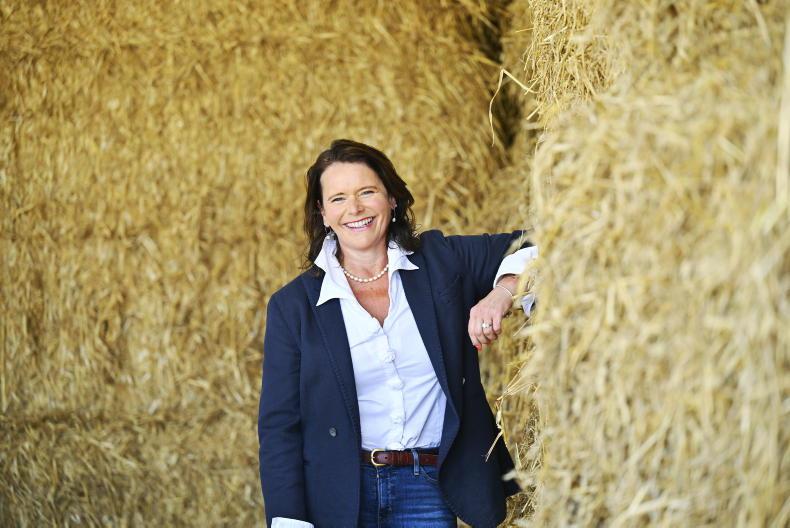
Succession may be a simple word, but it strikes dread in so many in the farming community, not just in Ireland but across the globe. Why exactly? Why do people find it so difficult to talk about it?
These are just a sample of the myriad questions that Heather Wildman deals with every day working with families up and down the UK and beyond to help them come up with a plan for the future.
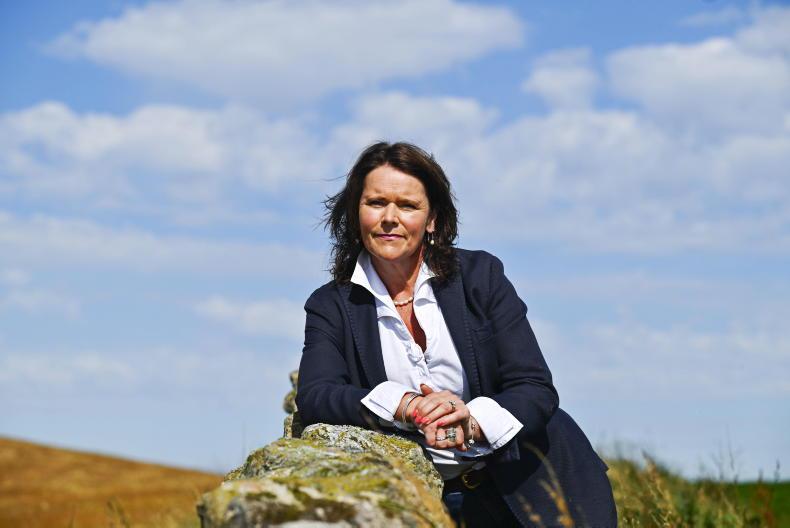
A farmer’s wife and a farmer’s daughter, she knows the territory well. Heather also knows the people and how they operate. With several decades of working in the rural sector she is able to draw on her farming and business experience to assist families in navigating what could be a tricky situation – but it certainly doesn’t have to be. “Being independent and straight-talking” is one of her great strengths when she is called in by a family member to facilitate the development of a succession plan, she tells Irish Country Living. “Apparently, it was one of my weaknesses when I was an employee,” she adds, laughing.
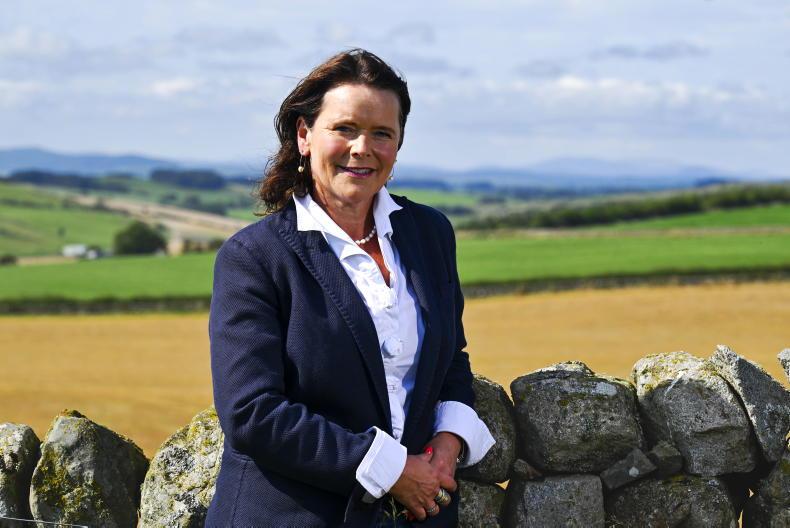
Based outside Dundrennan, close to the fishing village of Kirkcudbright in the south west of Scotland, Heather is embedded in the countryside, having grown up on a hill farm in the Lake District. An award-winning, independent, family succession facilitator, the former Nuffield Scholar and founder of Saviour Associates, is refreshingly plain-speaking and positive about the future of farming. But she is not afraid to call things out either and wonders why it is “the worst industry for eating itself” or “for putting itself down” when there are so many positives to champion.
On the succession process, it is a similar dynamic. So many families “navigate this beautifully”, but it’s just not talked about. Then all we hear are the bad news stories – the fallouts and the court cases. “That then gives everyone a reason not to do it [look at succession] because they don’t want to rock the boat,” she observes. “It’s so personal and private, and they [farmers] don’t want to gloat [by talking about it] because it might change.”
\ Stuart Walker
Just as every succession case varies, success for every family differs too. “There’s a beautiful phrase – success is when the family can meet up together and talk about money and not get upset. That is great. Whatever has happened, they’ve reached an outcome; they all have accepted it and are able to move on.
“For some, success is that they have agreed to split and go their separate ways. They have come to the realisation that this is not going to work, and as painful as that is to accept, they can then move on.
“Success is also that everyone is now speaking, getting on. It’s like the uncertainty has been a boil that has been festering away. The fact they all now have clarity, they all see where they are going. The relief and the release are great.
“Sometimes success isn’t really what you wanted to hear, but it really needed to happen,” she says matter-of-factly.
Her unique role is to provide “a safe space to talk” for families to navigate succession by providing a structure and doing so in a kind, forthright and even, fun way. Learning to read the room is absolutely key for her to understand the family dynamic.
“There is no bias, you say it as it is. You call people out, but you also praise, compliment and acknowledge strengths and weaknesses, which is again something many businesses or farms often don’t do.
In the majority of cases, she is called in by a family member, often the mother, who is caught in the middle.
Tension
“Sadly, a lot of the time it’s because they are at their wits’ end. There’s been a fallout, a tension; they are not getting on. That’s generally when they come in [to see me].
“However, I’m getting more and more now [calls from people] who are realising, ‘Hang on, we need to address this.’ There are some changes coming, and we’ll get in there before there is a fallout.
“Others are asking for help because they recognise they need to do something, but the talking is going around in circles.”
Initially, Heather’s business was focused mainly on staff management, recruitment and leadership in the rural sector. Specialising in succession came about “completely accidentally” when the Cumbrian native realised it was becoming a major issue and no one was working with families. She travelled to Australia in 2016 to learn how the issue is handled there.
\ Stuart Walker
Since then, succession has become a huge part of her work. It has gone “off the scale” altogether since the budget announcement earlier this year of changes to the inheritance tax regime in the UK.
While not an accountant or a lawyer, Heather stresses the need for the family to have all of the figures and assets on the table from the start and then agree in report form where they are now before taking the next step. Ground rules are put in place from the start, and these vary from family to family because in some, shouting or being very quiet is perfectly normal.
She also advises on business governance similar to commercial businesses. It could be a communication plan on how the family is going to manage conflicts or differences of opinion to see if there is a common vision.
“Is there an aligned goal that we can all actually get together on, or are we so different? That’s often where I’m speaking to the family, and I’m like, ‘You guys are delusional if you think you’re going to work your way through this. You are so unaligned; you’re going in completely different directions.
“It will keep imploding, so the kindest thing, even though it will be difficult, is to make a separation [splitting the business] now, and you have a chance of rebuilding. I don’t have to do that too often, but it has been done.
“Other times, I’m able to say, ‘You guys are so close. You are so aligned, but you are just frustrated.’ So let’s get it all out. It’s just giving them that safe place to talk. Everyone has made assumptions and never given each other the opportunity to actually say [what they are thinking].
Just the other day she had a mother-in-law tell her she couldn’t believe the difference in the family afterwards. It was obvious, they were all saying the same thing, but didn’t know how to make any progress. At the end of the process, Heather will have an action plan for what the family need from their accountant or solicitor to move forward.
The biggest barrier for Heather is often the fact the farmer has been their own boss for so long, accountable to no one. As they age, their role and responsibilities change. A son or daughter may take on a larger share or the entry of in-laws changes the family unit.
Again, she says it comes down to being open; the more communication they can have, the better in terms of aligning expectations of earnings, homes and the future.
Asked how she manages expectations? she simply says, “I set them very low. It is interesting. People say they don’t want anything, but when we put all the assets on the table, they suddenly go, ‘Oh, hang on.’ The farm is worth how many millions, and I get €50,000.
“It does blow my mind; the understanding of what a farm is and the value of that asset has gone up ridiculously. But as we all know, the return and the living doesn’t reflect that.”
Managing expectations starts with whoever owns the business, underlines Heather, and how to ensure they are financially secure and what the overall aim for the business is in the years ahead.
“Is it for the business to continue? Is it for it to be sold? Who has contributed what to the business, and have they been fairly recompensed for that?
“Sometimes, it’s tough love. Well, actually, there isn’t enough to go around because, again, sometimes, there is an unrealistic expectation of what the farm is. Maybe there is a lot of debt; maybe it’s not that productive, so actually there is not going to be anything. That can be an eye-opener.”


SHARING OPTIONS