


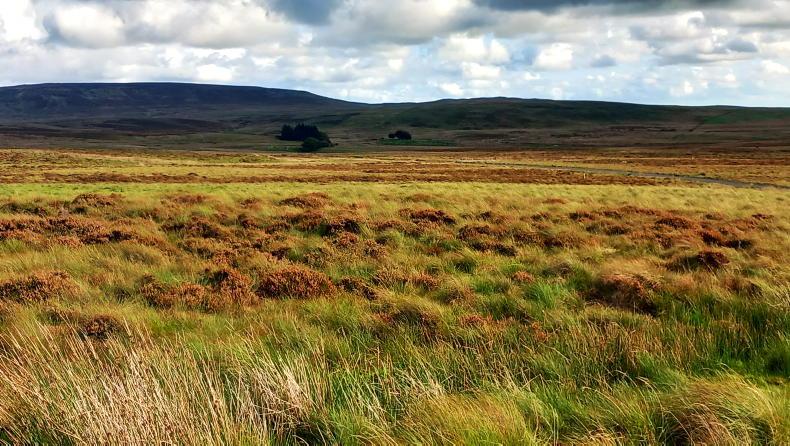
The importance of keeping farming families actively managing upland areas of NI was a key point raised at an open day at the CAFRE hill farm in Glenwherry, Co Antrim, last week.
At the start of the event, Mark Scott from CAFRE outlined how management of the 960ha hill farm has helped to ensure there are 10 different habitats for wildlife and vast amounts of carbon stored above and below the ground.
Soil samples taken to a depth of 75cm on the farm found 196 tonnes of carbon is stored in every hectare, plus laser mapping found 1,456t is in above-ground vegetation.
“The aim is to keep carbon stocks on our hills and to further add to those while creating habitat for a diverse range of plant, insect and animal species.
“Efficient, productive livestock are central to help deliver this and upland farming families are key,” Scott said.
Sucklers
An important measure of efficiency for the farm’s 100-cow suckler herd is weaning percentage, which is the weaning weight of each calf divided by the weight of its dam.
Mature cows had an average weaning percentage of 42% last year, based on calves averaging 274kg at weaning.
The cows are three-way cross of Aberdeen Angus, Shorthorn and Limousin and the average cow weight is 652kg.
With first-calf heifers, weaning percentage was 40% last year, which is based on calves averaging 233kg at weaning and an average heifer weight of 577kg.
Two other key measures of suckler efficiency are age of first calving and calving interval, with the CAFRE hill farm currently averaging 24.1 months and 370.7 days respectively.
Sheep
Looking at the performance of the 1,100-ewe flock, Blackface ewes are scanning at 145% and weaning rate is 129%. Blackface-Texel cross ewes average 175% at scanning and 158% at weaning.
“We want productive sheep with a high health and welfare status. We are managing habitat and producing a high value protein food from low quality forage,” said Dr Eileen McCloskey from CAFRE.
Outwintering
A significant habitat management project at Glenwherry is maintaining a 74ha breeding wader site by keeping 25 dry cows out on the land throughout the winter.
“The cattle break up the vegetation and provide a rich mosaic of vegetation for the birds. It has meant there has been no need for mechanical cutting of vegetation here for two years,” said Stephen McGuinness from wildlife charity RSPB.
Martin Kirk from CAFRE explained that outwintering 25% of the herd has a significant saving on winter feed, so the area cut for silage has been able to reduce by 30 acres.
“The cows lose some condition over the winter but, once the green shoots come in the spring, they bounce back and end up in the same condition as the housed cows.
“The outwintered cows also calve more easily because they are fitter after spending all winter outside foraging,” Kirk said.


SHARING OPTIONS