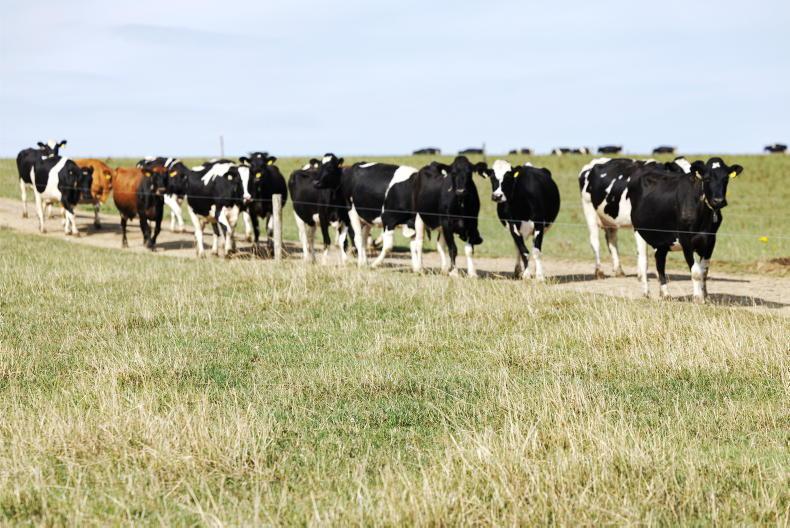
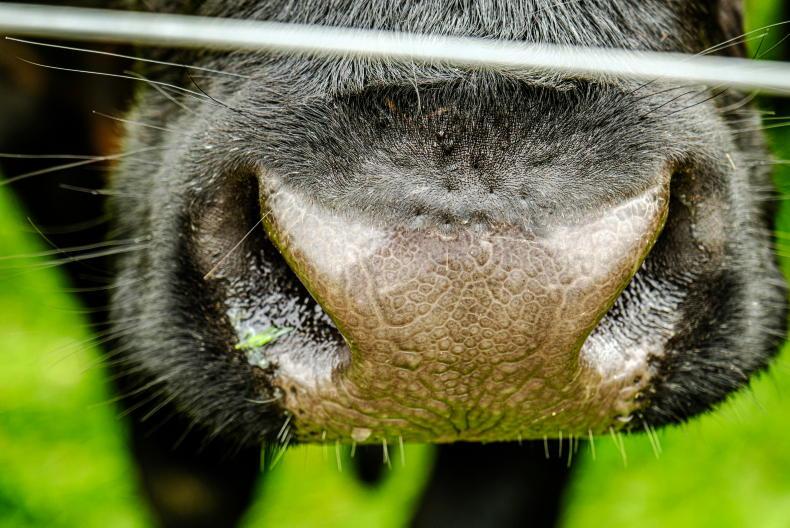
A heifer in the midlands died from lead poisoning, likely after ingesting a discarded old battery on the edge of the field it was grazing.
The animal was submitted to Athlone regional veterinary laboratory (RVL) for examination in May 2025 as the heifer displayed signs of neurological issues prior to its death.
Two other heifers grazing the same field at that time had begun to show similar signs.
Upon autopsy, several internal problems were discovered. These included severe blood bruises and haemorrhaging.
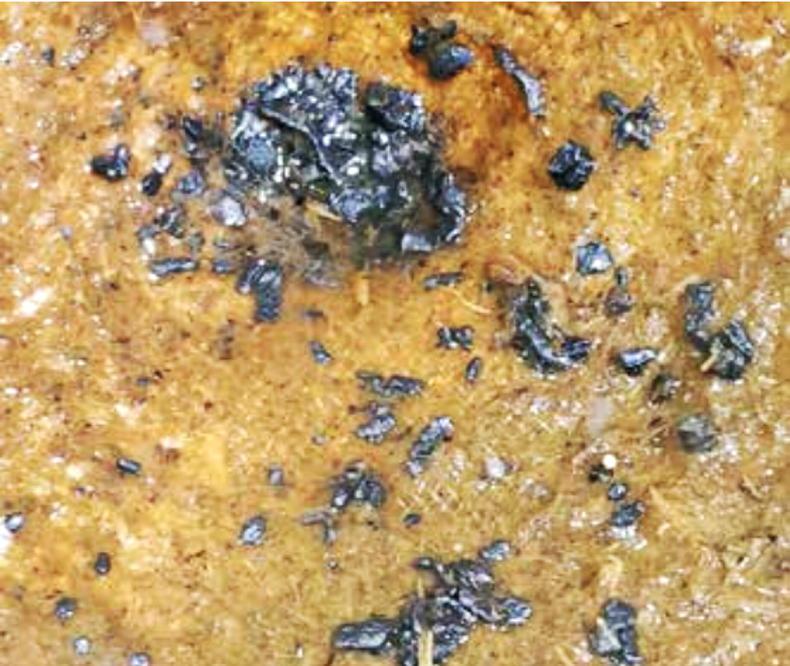
Fragments in the reticulum of a heifer that died from lead toxicity. \ Aoife Coleman.
Shiny, grey pieces were found in the animal’s faeces, while toxic concentrations of lead were found in liver and kidney tissue.
Athlone RVL’s report said lead toxicity can present with a range of clinical signs, including sudden death, blindness, poor balance, teeth grinding, head pressing and other neurological presentations.
It outlined that lead exposure can come from old batteries, old lead paint - either on surfaces or in tins, lead pipes and bonfire ash, among others.
However, in this case a discarded battery was discovered on the periphery of the field these heifers were grazing.
“Lead poisoning outbreaks are investigated thoroughly to safeguard public health and animal welfare.
“To reduce risk of lead poisoning, farmers are urged to examine their fields and hedges for sources of lead before turning cattle out to pasture and before silage making,” the RVL said.
Ragwort
Meanwhile, in Kilkenny RVL, a seven-year-old cow was found to have died from ragwort poisoning.
The cow had displayed neurological signs prior to death. Bloating and a firm liver were discovered. On further examination of the liver it was found to be scarred and its shape disrupted.
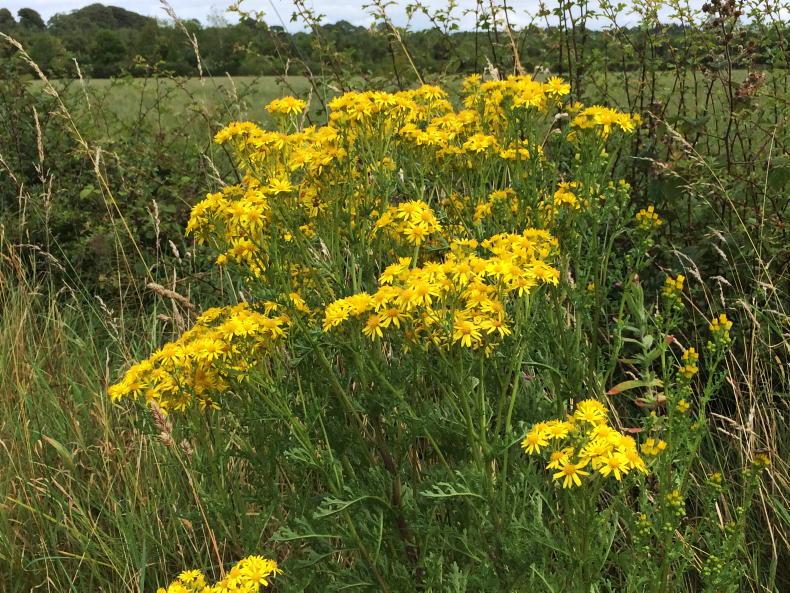
Ragwort can spread between 50,000 and 200,000 seeds in the period from July to September.
The RVL said this was most likely due to ragwort poisoning.
“In cattle, most cases of ragwort poisoning occur over a period of weeks to months, but clinical signs can take up to 18 months to develop.
“Diarrhoea with straining, jaundice, photosensitisation, bottle jaw and neurological signs can be symptoms of poisoning. There is no treatment for affected animals,” it added.
A heifer in the midlands died from lead poisoning, likely after ingesting a discarded old battery on the edge of the field it was grazing.
The animal was submitted to Athlone regional veterinary laboratory (RVL) for examination in May 2025 as the heifer displayed signs of neurological issues prior to its death.
Two other heifers grazing the same field at that time had begun to show similar signs.
Upon autopsy, several internal problems were discovered. These included severe blood bruises and haemorrhaging.

Fragments in the reticulum of a heifer that died from lead toxicity. \ Aoife Coleman.
Shiny, grey pieces were found in the animal’s faeces, while toxic concentrations of lead were found in liver and kidney tissue.
Athlone RVL’s report said lead toxicity can present with a range of clinical signs, including sudden death, blindness, poor balance, teeth grinding, head pressing and other neurological presentations.
It outlined that lead exposure can come from old batteries, old lead paint - either on surfaces or in tins, lead pipes and bonfire ash, among others.
However, in this case a discarded battery was discovered on the periphery of the field these heifers were grazing.
“Lead poisoning outbreaks are investigated thoroughly to safeguard public health and animal welfare.
“To reduce risk of lead poisoning, farmers are urged to examine their fields and hedges for sources of lead before turning cattle out to pasture and before silage making,” the RVL said.
Ragwort
Meanwhile, in Kilkenny RVL, a seven-year-old cow was found to have died from ragwort poisoning.
The cow had displayed neurological signs prior to death. Bloating and a firm liver were discovered. On further examination of the liver it was found to be scarred and its shape disrupted.

Ragwort can spread between 50,000 and 200,000 seeds in the period from July to September.
The RVL said this was most likely due to ragwort poisoning.
“In cattle, most cases of ragwort poisoning occur over a period of weeks to months, but clinical signs can take up to 18 months to develop.
“Diarrhoea with straining, jaundice, photosensitisation, bottle jaw and neurological signs can be symptoms of poisoning. There is no treatment for affected animals,” it added.
SHARING OPTIONS