



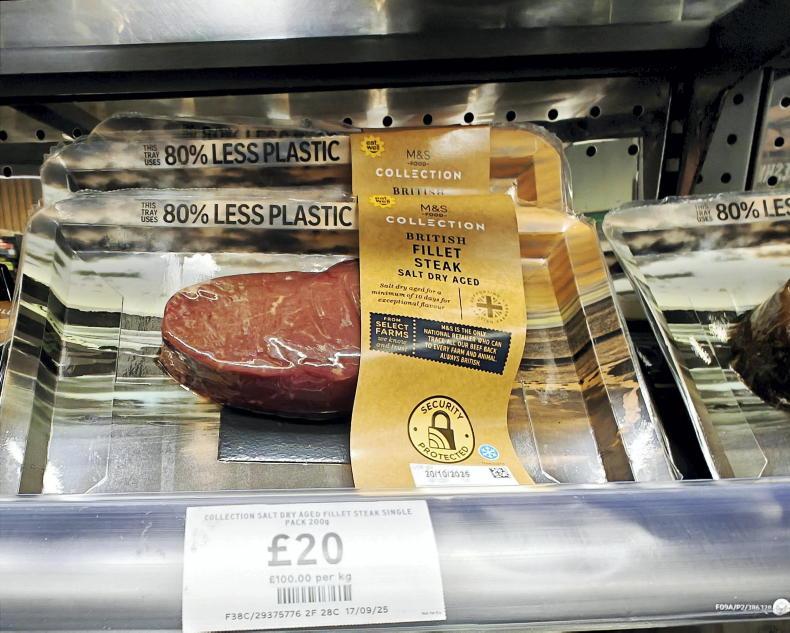
In the 12 weeks to 7 September, average prices for total beef products increased by 17.1% year on year but the volume purchased fell by 8.3% or 10,332 tonnes (t). For primary beef cuts, the increase was higher with average prices up 24.4% with volume sales down by almost 11%. This is revealed in the latest update by Worldpanel by Numerator UK published by the Agriculture and Horticulture Development Board (AHDB). Shoppers actually spent 7.4% more year on year during the period, but the rate of price increase meant that this extra spend wasn’t enough buy the same amount of beef.
Primary beef includes the common retail cuts such as steaks, roasts, stews and mince. All categories declined but the greatest fall was in mince sales which were down by 8.8% or 2,694t year on year. AHDB report that this was “driven by a combination of a reduction in shopper numbers, as well as a reduction in volumes purchased per buyer”.
Volume and value of lamb sales decline
Sales of total lamb products – which includes all forms of processed lamb as well as primary cuts – fell by 14.7% or 2,426t from a year earlier with the spend also falling, down by 12.2% year on year. Sales of primary lamb cuts showed a sharper decline, down by 21.9% despite a strong performance by the lamb steaks category where sales were up by 21.1%.
It should be noted that overall lamb purchases are much lower than for other meats and a relatively small change in consumer buying trends can reflect a high percentage change.
Pork is the winner
When beef and lamb prices are high, shoppers looking for cheaper protein options turn to pig and poultry meat. Primary cuts of pork recorded a 6.3% increase in volume sales when compared to the same 12-week period last year.
Spend was up 8.7% to £192.6m and the average price for primary pork cuts was £6.57/kg, significantly lower than the £13.45/kg for lamb cuts or the £12.32/kg for beef cuts.
In processed pork products, sausages recorded a 2.2% increase while sliced cooked product (typically hams) recorded a 1.8% increase in volume sales. However bacon rashers recorded a 3.7% decline year on year for the 12-week period while gammon sales were down 5.3%.
Contrasts in foodservice picture
AHDB also published updated analysis of meat sales in the food service category this week. This reflects purchases made for dine-in and take-away or on-the-go consumption. Volumes are estimated by AHDB based on Worldpanel by Numerator UK out-of-home (OOH) data.
For the 52 weeks ending 7 September, beef volumes in foodservice are estimated to have declined by 5.4% year on year. Burgers which account for almost half (46.3%) of this category shows a 10.5% decline.
It was a better result in foodservice for lamb sales with volumes up by 2.7% in the year to 7 September even with a 6.7% year on year increase in average price per pack.
This was despite a slight decline (0.8%) sale in Kebabs which account for half of lamb food service sales as it was more than offset by growth in dine-in/on-the-go dishes.
Pork sales in foodservice recorded a small 1.6% volume decline for the year ending 7 September as average pack prices increased by 3.2%.
Comment: high prices sort high prices (usually)
There is a long-held economic principle that the cure for high prices is high prices. This means that when the price of goods increases by a significant amount, people will buy less of the product and in turn, as people buy less, prices will fall. With beef and lamb, retail prices have increased sharply throughout this year and while shoppers have increased the amount they are spending, it hasn’t been by enough to buy the same amount of product.
If there was an abundance of cattle supply in the UK and Ireland, then prices would likely fall as processors and retailers would cut price to drive demand. However, with less cattle available for processing in both the UK and Ireland, beef supply is reduced and neither processors nor retailers are in a position to reduce prices to encourage more sales.
The other route for increasing beef and lamb supply to offset the drop in UK and Irish production is through imports. New Zealand lamb is a long-established option in the UK retail sector but while some supermarkets have dabbled with imported beef in 2025, British beef remains the preferred choice. This is supplemented by Irish beef in Tesco, Sainsbury’s and Asda which are the three largest UK supermarket groups. If they ever decided to introduce significant import options on their shelves, it would put serious pressure on the price of British and Irish beef right back to the farm gate.
Imported beef as well as sheepmeat is widely used in the foodservice sector in the UK and this is likely to increase because farmgate prices are much lower in the major beef- and sheepmeat-exporting countries in the southern hemisphere.
In brief:




SHARING OPTIONS