



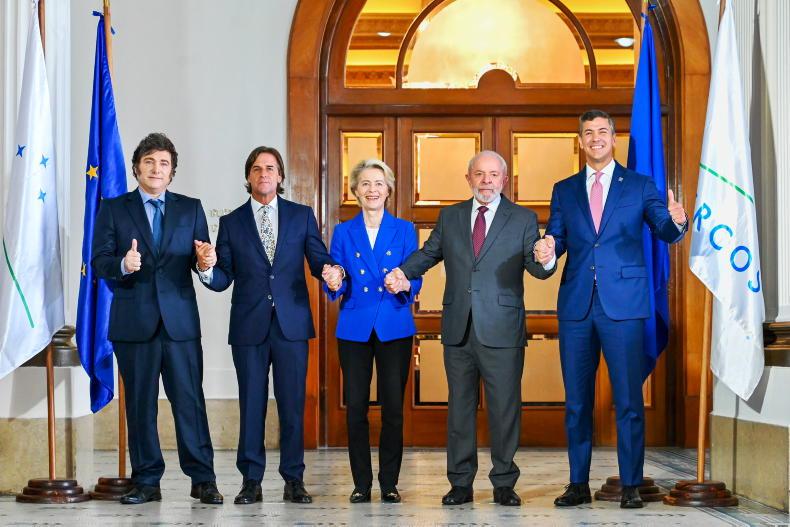
Last December, European Commission President Ursula von der Leyen made her way to South America to agree the Mercosur trade deal with Argentina, Brazil, Paraguay and Uruguay.
This year it looks like she may be making the same journey assuming the European Council of Ministers give it their approval at the heads of state meeting under the Danish Presidency on 18/19 December. The thinking is that if a qualified majority is secured there that ratification by the European Parliament will follow.
All indications suggest that the deal will be approved by the Member States. The reality is for the European Union it is a great deal for virtually the entire economy and all member states. The only fly in the ointment is that it brings risk to beef and poultry meat producers. To get the deal, the major EU concessions were 99,000 tonnes of additional beef quota and a 180,000 tonne poultry meat quota.
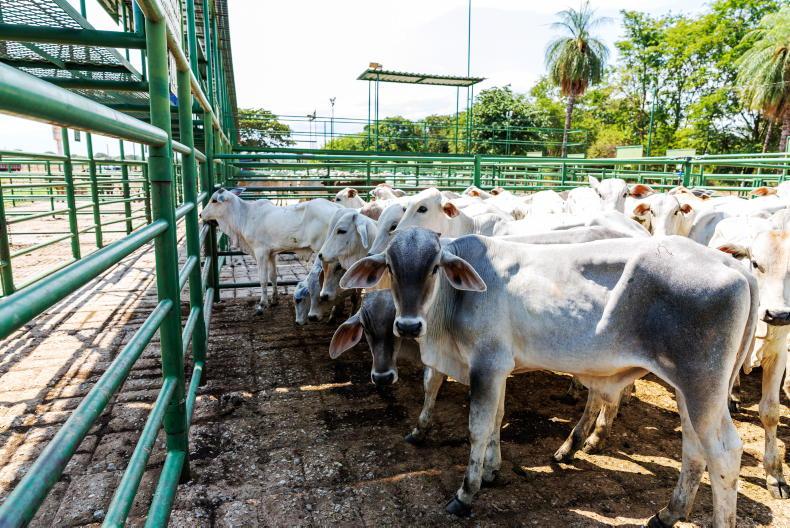
This won’t happen overnight, they will be phased in over a five year period from whenever the deal takes effect. The beef quota is carcase weight equivalent and to put it in context, 99,000 tonnes would work out at around 300,000 head of cattle based on average Irish steer and heifer weight.
Not all beef is the same
The major issue for beef producers and processors is that while it is carcase weight equivalent, it doesn’t mean that the quota is applied proportionately to the different high and low value cuts that make up the beef carcase. Ongoing EU imports from the Mercosur countries are dominated by steak meat. This is the highest value part of the carcase and is at a price point in the EU market that can include a full tariff.
The average Irish steer and heifer will have a combined 25 kilos of fillet and striploin steak meat. Therefore 99,000 tonnes of beef carcases would produce just under 4,000 tonnes of these steaks. However the 99,0000 tonne quota doesn’t specify what type of beef is to be used (beyond a fresh/frozen split) so in practice all of it could be dedicated to just steak meat.
With 2025 cattle prices in the EU and deficit of supply in many European countries, the market may well indeed absorb additional steak meat. The safeguards put in place recently offer some assurance but it is wrong to suggest that there is no risk to beef producers. The reality is that anything that makes a market more accessible is a potential risk.
Comment: overall, apart from beef, Mercosur is a winner
While Mercosur presents a risk to beef and poultry meat producers and processors, there is no denying that overall, the wider economy across the EU would benefit from the deal.
Also it isn’t just German cars and Italian white goods that benefit from the deal. All industrial products plus pharma and technology exports are winners in the Mercosur deal and these are major contributors to Irish corporation tax revenue.
There is also the wider geo political issues at play as well. The current volatile nature of US trade policy, a deal with Mercosur is a big fillip for the EU and it would also be the first major trade deal for the Mercosur countries.
This all means that EU member states are likely to approve the deal. Beef producers will have to hope that the market doesn’t become over supplied with steak meat and that the safeguards are sufficient to mitigate the risk.



SHARING OPTIONS