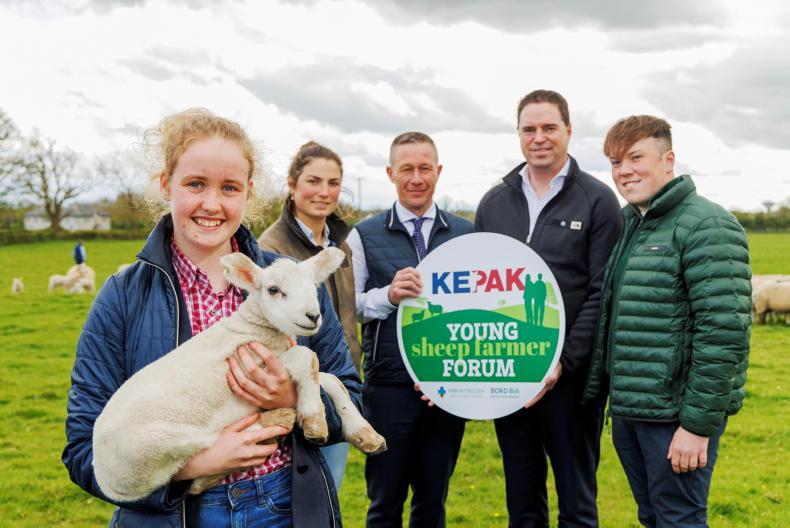
The Kepak Group has this week launched a new Kepak Young Sheep Farmer Producer Group offering bonus payments on lambs ranging from 20c/kg to 30c/kg.
The initiative is open to existing and new Kepak Group suppliers under 35 years of age who are registered as flock owner or flock keeper of a Bord Bia Quality Assured (QA) sheep flock.
There are three member benefits highlighted including:
Bonus payments on in-spec lambs on top of the current 15c/kg QA payment including: 20c/kg on O and R grade carcases within desired specifications plus30c/kg on E and U grade carcases within desired specifications.
Bonus payment of 10c/kg on cull ewe carcases.Annual social and knowledge-transfer events to support members and build a strong peer network. The initiative, which the Kepak Group highlights will provide both financial incentives and professional development to young farmers, has been launched in tandem with the launch of a Young Sheep Farmer Forum report and aims to help convert policy ambitions into tangible outcomes.
Report launch
The farmer-led report has been submitted by the Young Sheep Farmer Forum (YSFF), a group formed by an initiative supported by the Kepak Group, Bord Bia and Mountbellew Agricultural College. The report has been submitted to Minister for Agriculture, Food and the Marine, Martin Heydon and includes 15 recommendations to “tackle succession, improve land access and strengthen the viability of the sheep sector in Ireland which is currently at a crossroads”.
Providing background to why such a report is needed the group said: “while sheepmeat exports were worth over €400m to the Irish economy in 2024, 37% of farmers are aged 65 and older, highlighting the need to support the development of a resilient sector that strengthens rural communities and meets evolving market needs. The YSFF report highlights practical solutions to reverse the decline in sheep numbers and make farming attractive for the next generation.”
Key proposals include:
Phased farm retirement scheme: a seven-year EU-supported model to incentivise land transfer.Statutory land mobility body: a one-stop shop for succession planning and land access. Improved TAMS supports: higher grant rates (75%) and staged payments for young farmers.
Education reforms: dedicated Green Cert modules on succession and online learning options.Sector-specific measures: Sheep Welfare Scheme continuity, price bonuses for young farmers and marketing initiatives such as a focus on lamb in schools.Minister’s welcome
Minister Martin Heydon has welcomed the report stating: “Succession planning is a complex challenge with a lot of personal, financial and practical factors shaping how farmers make decisions. I would like to commend the Young Sheep Farmer Forum, Kepak, Bord Bia and Mountbellew Agricultural College for their commitment and hard work in developing these recommendations. The YSFF report provides practical recommendations that reflect the everyday reality of young farmers and the real challenges they face on the ground.”
The minister continued: “Generational renewal is a key priority for my Department and initiatives like the Young Sheep Farmer Forum very much complement the Government’s dedication to supporting the sustainability and viability of Irish agriculture.”
Aoife Mahony and Michael Feely, members of YSFF added: “These recommendations are practical, achievable and essential for the long-term sustainability of Irish sheep farming. It’s a positive step towards a stronger future for sheep farming and the establishment of a new Kepak Young Sheep Farmer Producer Group shows that the industry is determined to back the next generation of farmers.”
Brian Tormey, CEO of Kepak Meat Division Ireland said: “Kepak is proud to support the next generation of sheep farmers through both policy engagement and practical action. With the launch of our Kepak Young Sheep Farmer Producer Group, we want to turn those ambitions into reality by rewarding younger suppliers, supporting knowledge-sharing, and strengthening the long-term resilience of the Irish sheep industry.”
The Kepak Group has this week launched a new Kepak Young Sheep Farmer Producer Group offering bonus payments on lambs ranging from 20c/kg to 30c/kg.
The initiative is open to existing and new Kepak Group suppliers under 35 years of age who are registered as flock owner or flock keeper of a Bord Bia Quality Assured (QA) sheep flock.
There are three member benefits highlighted including:
Bonus payments on in-spec lambs on top of the current 15c/kg QA payment including: 20c/kg on O and R grade carcases within desired specifications plus30c/kg on E and U grade carcases within desired specifications.
Bonus payment of 10c/kg on cull ewe carcases.Annual social and knowledge-transfer events to support members and build a strong peer network. The initiative, which the Kepak Group highlights will provide both financial incentives and professional development to young farmers, has been launched in tandem with the launch of a Young Sheep Farmer Forum report and aims to help convert policy ambitions into tangible outcomes.
Report launch
The farmer-led report has been submitted by the Young Sheep Farmer Forum (YSFF), a group formed by an initiative supported by the Kepak Group, Bord Bia and Mountbellew Agricultural College. The report has been submitted to Minister for Agriculture, Food and the Marine, Martin Heydon and includes 15 recommendations to “tackle succession, improve land access and strengthen the viability of the sheep sector in Ireland which is currently at a crossroads”.
Providing background to why such a report is needed the group said: “while sheepmeat exports were worth over €400m to the Irish economy in 2024, 37% of farmers are aged 65 and older, highlighting the need to support the development of a resilient sector that strengthens rural communities and meets evolving market needs. The YSFF report highlights practical solutions to reverse the decline in sheep numbers and make farming attractive for the next generation.”
Key proposals include:
Phased farm retirement scheme: a seven-year EU-supported model to incentivise land transfer.Statutory land mobility body: a one-stop shop for succession planning and land access. Improved TAMS supports: higher grant rates (75%) and staged payments for young farmers.
Education reforms: dedicated Green Cert modules on succession and online learning options.Sector-specific measures: Sheep Welfare Scheme continuity, price bonuses for young farmers and marketing initiatives such as a focus on lamb in schools.Minister’s welcome
Minister Martin Heydon has welcomed the report stating: “Succession planning is a complex challenge with a lot of personal, financial and practical factors shaping how farmers make decisions. I would like to commend the Young Sheep Farmer Forum, Kepak, Bord Bia and Mountbellew Agricultural College for their commitment and hard work in developing these recommendations. The YSFF report provides practical recommendations that reflect the everyday reality of young farmers and the real challenges they face on the ground.”
The minister continued: “Generational renewal is a key priority for my Department and initiatives like the Young Sheep Farmer Forum very much complement the Government’s dedication to supporting the sustainability and viability of Irish agriculture.”
Aoife Mahony and Michael Feely, members of YSFF added: “These recommendations are practical, achievable and essential for the long-term sustainability of Irish sheep farming. It’s a positive step towards a stronger future for sheep farming and the establishment of a new Kepak Young Sheep Farmer Producer Group shows that the industry is determined to back the next generation of farmers.”
Brian Tormey, CEO of Kepak Meat Division Ireland said: “Kepak is proud to support the next generation of sheep farmers through both policy engagement and practical action. With the launch of our Kepak Young Sheep Farmer Producer Group, we want to turn those ambitions into reality by rewarding younger suppliers, supporting knowledge-sharing, and strengthening the long-term resilience of the Irish sheep industry.”
SHARING OPTIONS