



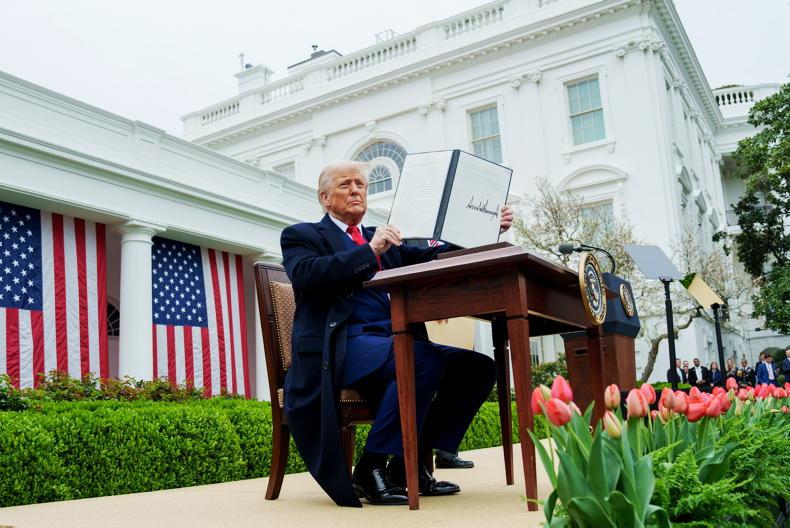
The latest twist in US trade policy has been President Trump’s reversal of the additional tariffs he imposed in April this year on a range of food products. Of particular interest to Irish beef producers and processors is that beef is included in this list. This isn’t because the US is an important export market for Irish beef, rather the reversal will further enhance the attractiveness of the US to exporters from established southern hemisphere countries. Trump’s about turn was driven by food price inflation in the US running at 2.7% in September. Around 200 food products, including beef, will benefit from this policy reversal.
US tariff rates on beef
Prior to what were described as “liberation day” tariffs, the standard US beef import tariff was 26.4%. However, a number of countries had a zero-tariff rating for quotas including Australia, New Zealand, Uruguay and Argentina, while Brazil had access to a general 66,000t quota, which was open to all suppliers that didn’t have a country specific tariff. Mexico and Canada had tariff free access under the US-Mexico-Canada Agreement (USMCA).
This all changed in April this year when the president announced a range of additional tariffs to be imposed on all imports to the US, including beef. These “liberation” tariffs ranged from a minimum rate of 10% which was applied to Australia and New Zealand, to a penal 50% which was applied to Brazil from August. Despite the increase in tariffs at these varying rates on beef imported from all countries, the total volume of beef imported by the US has increased this year as shown in Figure 1.
At present, there are two key drivers of US beef imports. The US is the world’s second largest beef importer after China, typically importing over 1m tonnes annually to satisfy demand from the food service and burger manufacturing sectors.
In addition to the usual requirement, demand for imported beef has increased further this year as a result of a drop in US beef production with the national cattle herd having fallen to its lowest level since 1951. New tariffs typically reduce trade, but such was the need of US importers to secure beef supply, import volumes have actually increased.
Reaction
Even though trade continued robustly in the face if the tariffs, all the major suppliers to the US have enthusiastically welcomed the removal of the additional tariffs. ABIEC, which represents Brazil’s beef exporters, described the US decision as “very positive” and that the “tariff reduction restores predictability to the sector and creates more suitable conditions for the smooth functioning of trade”.
Nathan Guy, chair of the New Zealand Meat Industry Association called the decision “a boost for our exporters as it reduces the uncertainty they had been experiencing”. He also expressed the view that “the tariffs have been having an impact on US food inflation, so this is a sensible move to alleviate the pressure on US consumers”.
Similar sentiments were expressed by Michael Crowley, managing director of Meat & Livestock Australia who said that “MLA welcomes the news out of the United States that tariffs on Australian beef have been removed”.
Comment: positive knock-on effect for Irish beef
Unfortunately, the US market has failed to fire for Irish beef exports over the past decade. It may, therefore, be tempting to conclude that this change of policy doesn’t matter much for Irish beef producers and processors.
However, there is an indirect benefit from the US market being more attractive for the world’s major beef exporting countries, in that easier access to the US will make the UK and EU less attractive alternatives.
The UK has a free trade deal for beef with both Australia and New Zealand, while the EU trade deal with Mercosur will likely be ratified soon. This makes both the UK and EU viable alternative markets to the US
The shortage of domestic supply in the US meant that the market absorbed the higher prices on imports and trade disruption has been minimal so far.
However, if there was a downturn in demand from the US, the additional tariffs would be significant barrier to trade and encourage further sales to the UK and EU.
This would be in direct competition with Irish beef exports and therefore the US decision to remove the additional tariffs on their suppliers of imported beef is good news for Irish beef producers and exporters as well.




SHARING OPTIONS