



Earlier this month the Irish Farmers Journal in conjunction with the Irish Farmers Association (IFA) visited a number of states across Brazil as part of a trip to look at Brazilian beef production systems.
Tomas Bourke, livestock director with the IFA, Philip Doyle, picture editor with the Irish Farmers Journal, and myself made the trip at the beginning of November.
To listen to policymakers and trade negotiators in the European Commission, you would be forgiven for thinking that Brazil has turned a corner.
For months now animal traceability issues, animal welfare concerns, deforestation and hormone use have all been cast aside as issues with a previous version of Brazil.
However, the problems of old remain and our findings over the course of a week-long journey confirmed that Brazil is a long way off being on a level playing field with European farmers.
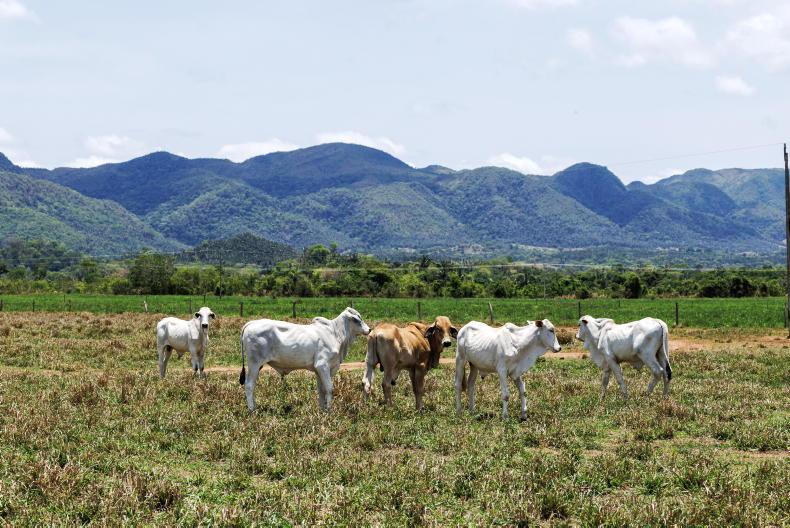
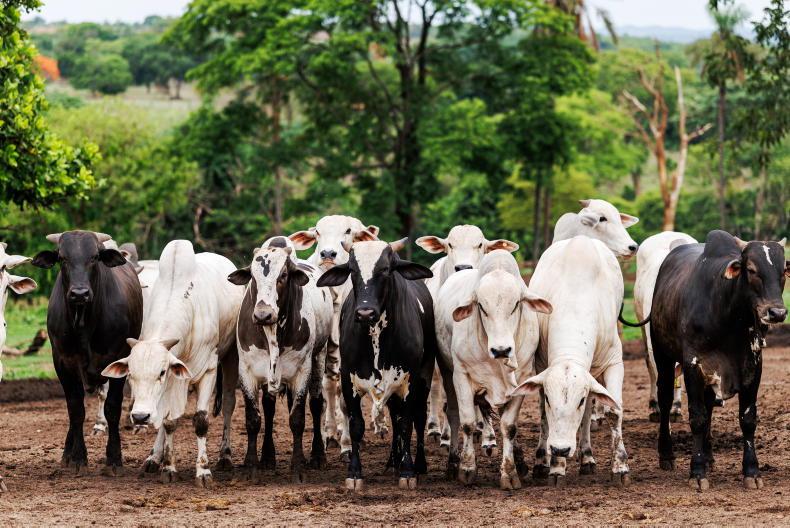
Over the course of the trip we travelled almost 3,000km by car, from Cuiabá, the capital city of Mato Grosso, one of Brazil’s most heavily populated states for cattle and home to 34m head.
During the trip we visited farms and agricultural stores. In Mato Grosso and other states, every town and village has a number of agricultural supply stores which, with many also specialising in a wide range of veterinary medicine.
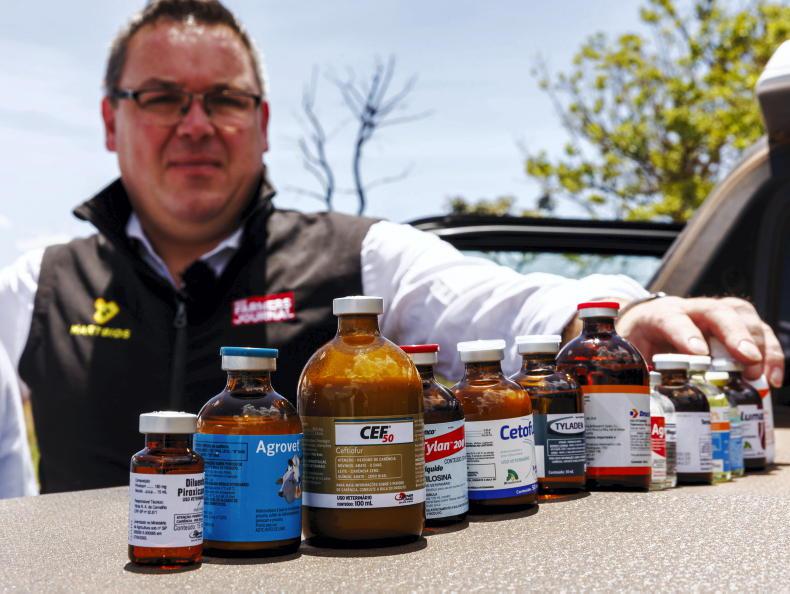
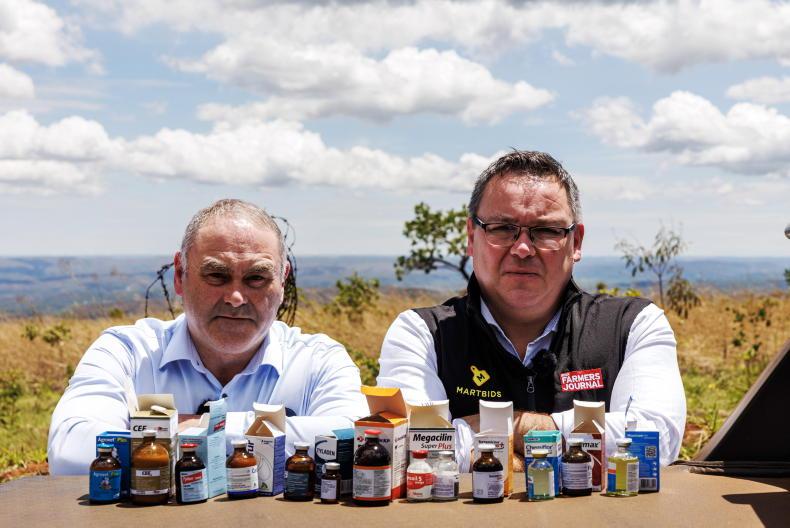
It was in these small agricultural stores that we were able to purchase prescription-only antibiotics over the counter without any form of identification or proof that the antibiotic was needed.
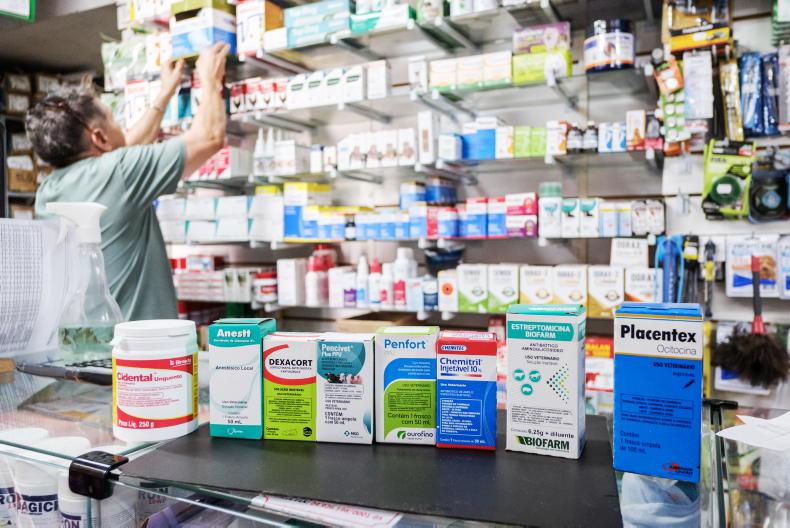
No herd number or tag number was required, with much of the purchasing done through a combination of pointing to photos on a phone and antibiotics in full view on a shelf in the shop.
Many of the store assistants even went as far as to offer to sell more than one bottle. The antibiotics that were purchased in the agricultural store had no barcodes on the boxes or bottles, demonstrating that there is no database to keep track of such sales.
Common antibiotics like Draxxin, Tylan and Baytril were all freely available to be purchased. All of the medicines that were purchased by ourselves should have required a veterinary prescription and should have also been used under veterinary guidance.
We spoke to Martin Cormican, consultant microbiologist and professor of bacteriology, at the School of Medicine, University of Galway, about our ability to be able to acquire critically important antibiotics over the counter in Brazil without a prescription or even proof that we owned cattle.
He has been at the forefront in recent years in fighting the AMR battle in Ireland.
Professor Cormican said: “These are a critically important antibiotic in human health.
“To be able to purchase and use third generation cephalosporins without prescription is contrary to everything that we’ve tried to achieve in the European Union in the last 20 years in terms of using antibiotics irresponsibly in Brazil.”
In-feed antibiotics
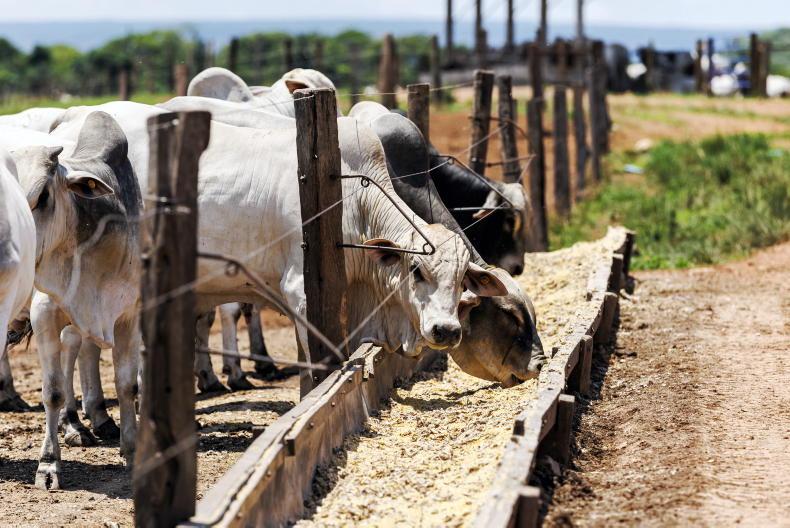
What was even more concerning was the level of in-feed antibiotics being fed on Brazilian cattle farms that we visited.
Specially constructed feeders are placed in fields so animals have access to a mixture of minerals and monensin, an in-feed antibiotic used for the prevention and control of coccidiosis, bloat and ketosis in beef cattle.
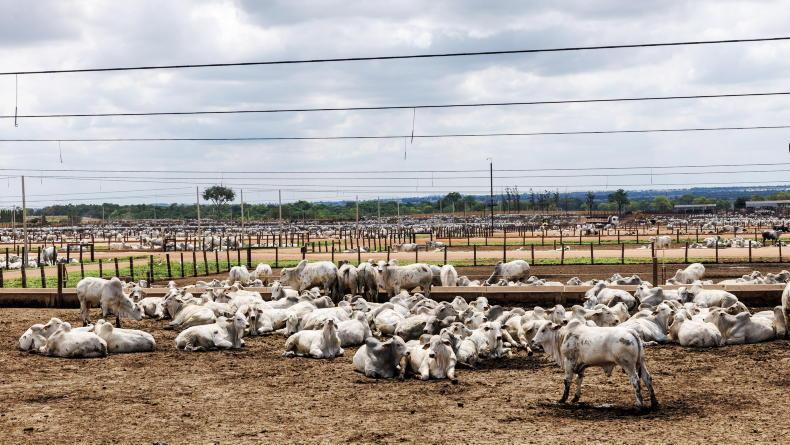
It’s also used as a growth promotor to improve feed efficiency and increasing weight gains.
Feeding monensin was banned in the EU in 2003 on the back of recommendations from a scientific steering committee. It cited food safety and public health considerations in its decision to ban the feeding of the antibiotic.
The risk of environmental contamination with in-feed antibiotic use is huge and its continued use is contributing to the growing global AMR problem.
Hormones
Hormones like prostaglandin and oestradiol could also be freely purchased over the counter in agricultural supply stores right across Brazil. As recently as 2024, an audit by the European Commission found that a guarantee cannot be given that Brazilian beef imports to the EU are from hormone-free animals.
The report showed that Brazil could not prove its beef supplied to the EU market is not treated with oestradiol 17ß. Cattle treated with oestradiol 17ß cannot be slaughtered for the EU market.
Since 1981, the EU has prohibited the use of substances having a hormonal action for growth promotion in farm animals. On the Commission’s website, oestradiol 17ß is included in examples of these kinds of growth promoters.
The report said while national legislation on this is broadly similar between the EU and Brazil, “the current arrangements in place to guarantee that cattle, meat from which is destined for the EU market, have never been treated with oestradiol 17ß for zootechnical or therapeutic purposes, are ineffective”.
It added that as a result, Brazilian authorities cannot attest to the “reliability of operators’ sworn statements on non-use of oestradiol 17ß in cattle”.
The report continued that the Brazilian Ministry of Agriculture “is not in a position to reliably attest to operator compliance” with this section of the EU health certificate for bovine meat exports to the EU.
The report in question is based on an audit of Brazil carried out from 27 May to 14 June 2024 as part of the European Commission’s Directorate-General for Health and Food Safety’s planned work programme.
It also found that livestock farms in Brazil are not legally required to keep on-farm treatment records and that controls on the use of veterinary medicinal products on farms are not carried out.
Veterinary medicinal products containing oestradiol 17ß require a veterinary prescription in Brazil. However, the information to be recorded in the prescription is not defined and the prescription does not need to be retained on the farm, the report said.
The fact that these hormones can still be purchased in Brazil with no record being kept of who buys them, or what animal receives them shows that nothing has changed since the issues were highlighted by the European Commission almost 18 months ago.
It’s ironic that in 10 days’ time, the sale of many veterinary medicines in Ireland will be tightened even further under the Veterinary Medicinal Products, Medicated Feed and Fertilisers Regulation Act 2023.
This act is being brought into Ireland to regulate the sale of animal medicines in line with EU law.
The new regulations will include a national database for recording vet prescriptions, restrictions around the sale of antiparasitic medicine without prescription and new regulations around the sale of animal medicine.
The new laws in Ireland are a world away from what is taking place in Brazil.
List of prescription-only antibiotics purchased
In the case of Cetofur, a third generation cephalosporin, not only do you need a prescription for its use in Ireland, a vet also has to carry out a sensitivity analysis to warrant its use in a farm situation.
What is AMR and why should we be worried about it?
Antimicrobial resistance occurs when micro-organisms no longer respond to treatment with antimicrobial medicines.
Because of growing resistance, the world is running out of effective antimicrobials to treat infections.
Standard treatments become ineffective, infections become harder or impossible to treat, and other medical procedures and treatments – such as surgery or cancer chemotherapy become much riskier to the patient being treated according to the World Health Organisation (WHO).
The WHO has forecast that more people will die as a result of antimicrobial resistance than cancer by 2050.
Deaths
It also projects that AMR will cause 39 million deaths over the next 25 years, equivalent to three deaths every minute.
AMR is the single biggest health challenge that will affect the world population in the coming decades.
It’s also a growing problem with recent data released by the UK Health Security Agency showing that deaths linked to antibiotic superbugs rose by 17% in 2024.
Europe has put in place stringent rules and regulations to govern the use of antibiotics in both human and veterinary health settings and is actively engaging with professionals in the global fight against AMR.
What is the Mercosur trade deal?
The Mercosur trade deal has been in the making for the last 25 years. It represents the single biggest trade deal that Europe has ever completed with a trading block and the EU says that EU annual exports could increase by €49bn.
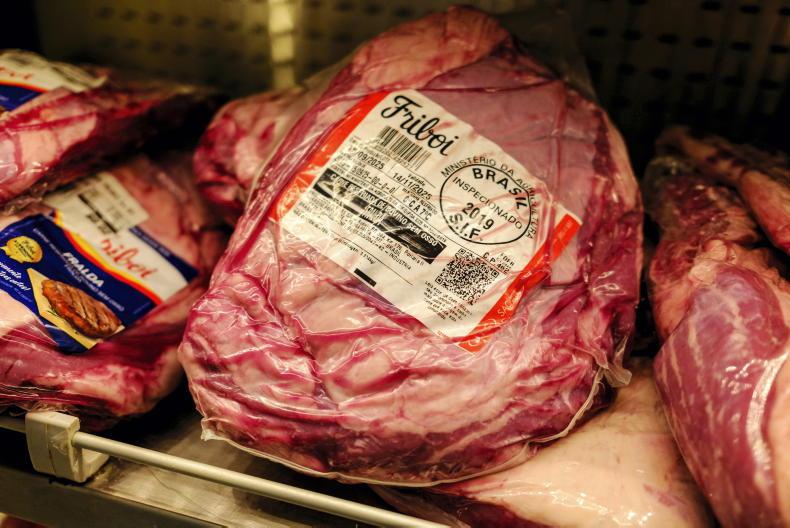
As part of the deal, Mercosur countries will be able to export an extra 99,000t of beef to the EU with a reduced tariff of 7.5% on top of the existing 200,000t of beef already being imported into the EU.
An additional 180,000t of poultry would also be duty free under the agreement.
The Irish Government’s own study of the trade deal in 2021 found that it will cost Irish beef farmers between €44m and €55m.
Other estimates including Meat Industry Ireland’s impact assessment have put this cost as high as €130m.
There is some confusion around the safeguard clauses attached to the deal with many citing the safeguard clauses do not go far enough to protect European beef farmers.
Approval process
The approval process is underway with a qualified majority required at member state level and a simple majority required in the European Parliament.
The deal could be operational by late 2026 if approved by the end of 2025.
To block the deal at least four member states with at least 35% of the EU population would need to come together and align their opposition to the deal.
Countries like France, Poland, Austria and Italy would be central in any blocking minority.
Comment
We have heard a lot in recent months about safeguards, a level playing field and equivalent standards.
The real story of what is going on in Brazil is something completely different: illegal sale of antibiotics, no animal database for recording animal medicine use, no database in agricultural supply stores to record medicine purchase, animal traceability issues with evidence of widespread tag removal on farms, feeding of growth promoters and environmental issues. The list goes on.
These aren’t new problems.
The Mercosur trade deal negotiations started 25 years ago and Brazil has had ample opportunity to implement changes and raise their standards but has chosen not to.
Deforestation also continues, albeit at a lower rate but it’s still happening in many parts of Brazil.
The sale of critically important antibiotics without prescription is a huge issue not only for animal health but also for human health.
With no recording of antibiotic usage on farms, how do we know that withdrawal dates are being adhered to and antibiotic residues aren’t entering the food chain?
Reaction
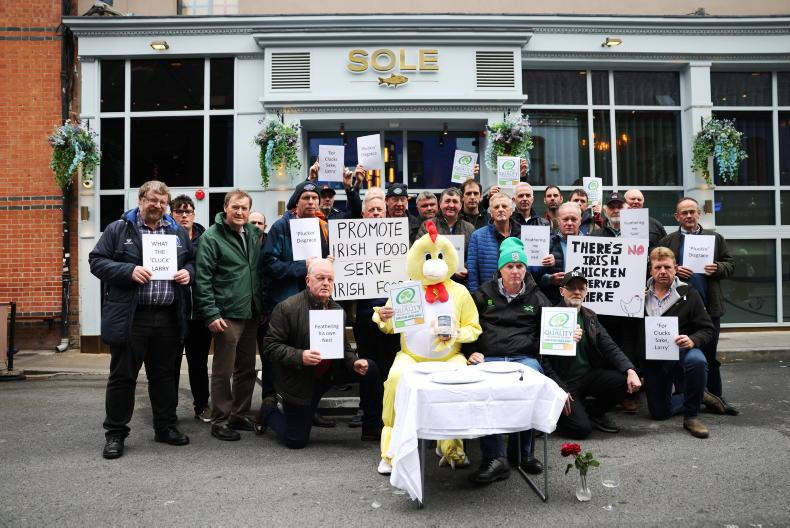
IFA president Francie Gorman said: “What this exposé shows is that there are no effective control standards in Brazil. We are going to take these findings to our Government, to our MEPs, to the European Commission. There is no way that the European Commission can stand over what’s going on in Brazil.”
Roscommon-based vet John Gilmore also expressed his shock at such high level antibiotics being purchased across the counter in Brazil.
Professor Martin Cormican was unequivocal in his response to the illegal sale of antibiotics contributing to the global AMR problem.



SHARING OPTIONS