



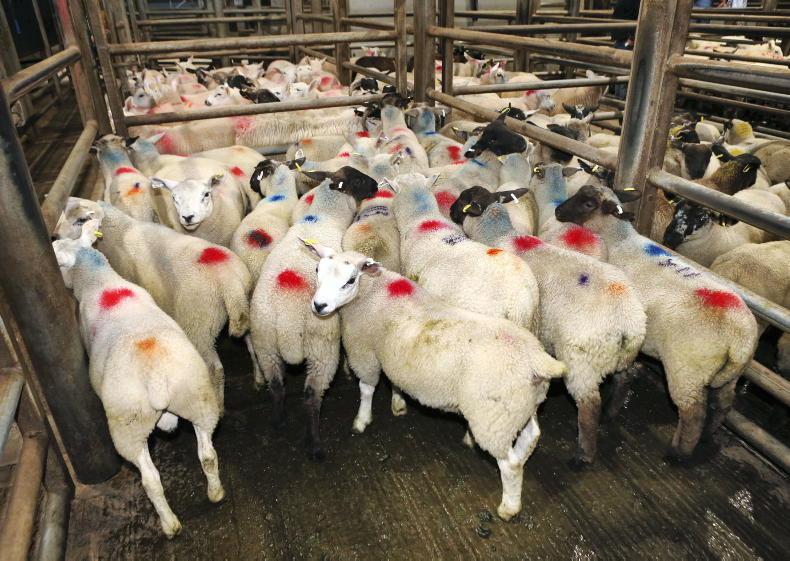
The NI sheep trade has received a boost, with the easing of bluetongue restrictions allowing live exports to Britain to recommence.
An NI-wide ban on livestock exports to Britain was introduced on 1 December following the bluetongue virus being identified in cattle in Co Down.
The sheep trade has been hardest hit by the disruption, with prices at the marts falling by up to £15/head and factories initially cutting base quotes by 30-40p/kg.
On Tuesday evening, DAERA announced that farmers outside the two 20km temporary control zones (TCZs) will be able to move livestock again with immediate effect.
In the week prior to the export ban, DAERA figures show 1,564 sheep moved from NI to Britain for direct slaughter. It is understood a similar number were also exported to Britain under breeding and production licences.
Continued on page 4
Exports to Republic of Ireland for direct slaughter were not banned in the wake of the bluetongue outbreak, but numbers still reduced amid the disruption.
DAERA figures show that 3,482 sheep moved south for slaughter last week, which is 400 head fewer than the week previous and 1,000 head below the weekly average for 2025.
Another factor negatively impacting the sheep trade is limits on throughput of lambs at local factories, reportedly due to staff shortages.
However, by mid-week, the sheep trade had steadied with fewer lambs being presented for sale at local marts and reports of exporters moving stock to Britain again.
Base quotes from factories also improved to 620p/kg, having been as low as 600p/kg earlier in the week. Reports suggest up to 640p/kg is available for some suppliers.
Restriction zones
Asides from lifting live exports to Britain for farmers outside the TCZs, the department has also eased some restrictions for those inside the two 20km zones.
This involves allowing movement of animals into the TCZs, although a general licence is required which is available on the DAERA website.
The 20km zones were established around a confirmed outbreak of the BTV-3 strain of the virus in Bangor, and a suspected case in Greyabbey.
However, movement of susceptible livestock off farms in the two TCZs remains prohibited, and a general licence is needed to move TCZ stock for direct slaughter.
“Ongoing surveillance in the zones, in addition to further stakeholder engagement, will support decisions on the way ahead and this will be communicated with industry in the immediate days ahead,” said NI chief vet Brian Dooher.
Ends.


SHARING OPTIONS