The Department of Agriculture confirmed an outbreak of the bluetongue virus in Co Wexford on Saturday.
The confirmation marks the first cases to be confirmed south of the border.
The virus was confirmed on four farms in Northern Ireland between late November and 19 December 2025, all of which related to premises in Co Down.
An announcement from NI’s Department of Agriculture, Environment and Rural Affairs (DAERA) on 23 January 2026 stated that further suspected cases on another Co Down farm were also under investigation.
What is bluetongue?
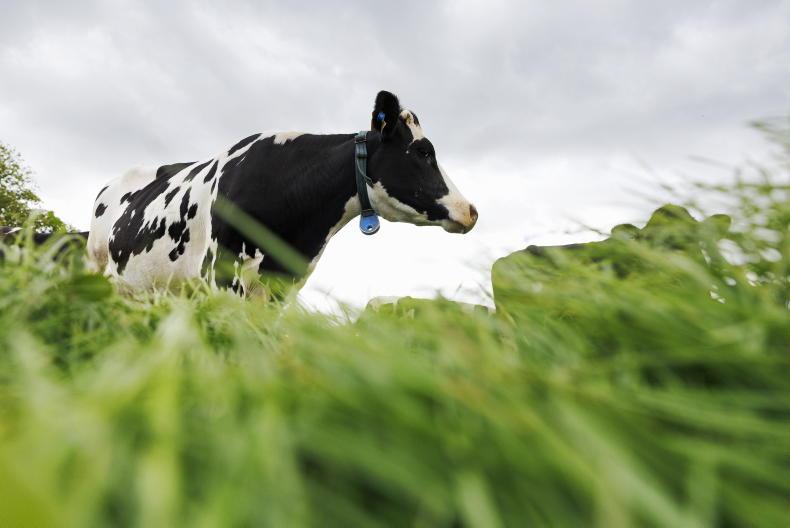
Bluetongue is a virus of ruminants spread by biting midge that are typically active between April and November in Ireland, but milder conditions can prolong their activity.
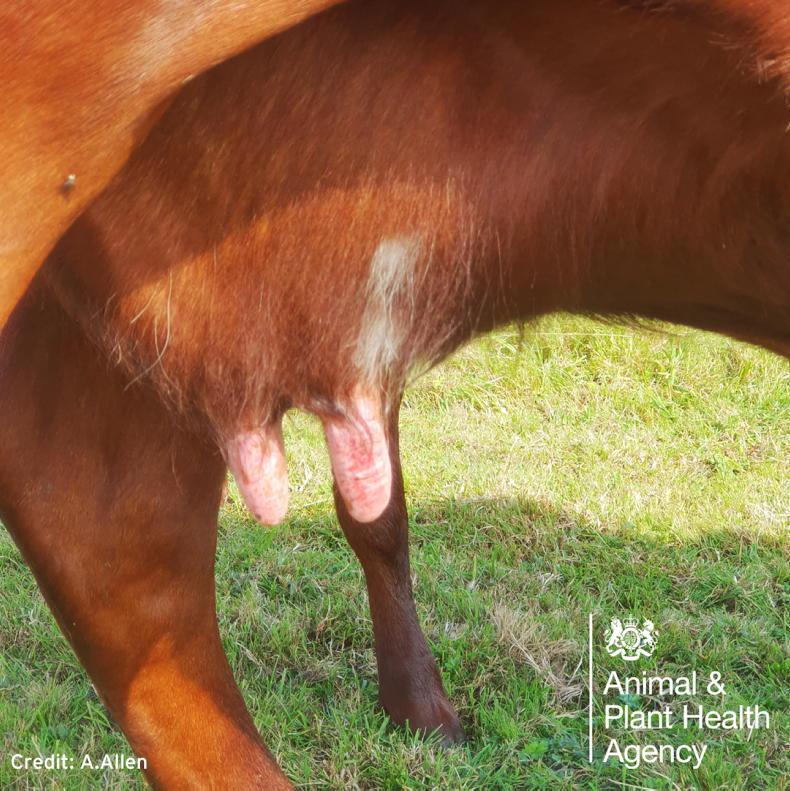
The virus can lead to lesions on cattle's teats.
The virus does not affect humans and cannot be transmitted through milk or meat.
Mortality rates can be as high as 70% and sheep are known to exhibit clearer symptoms than cattle.
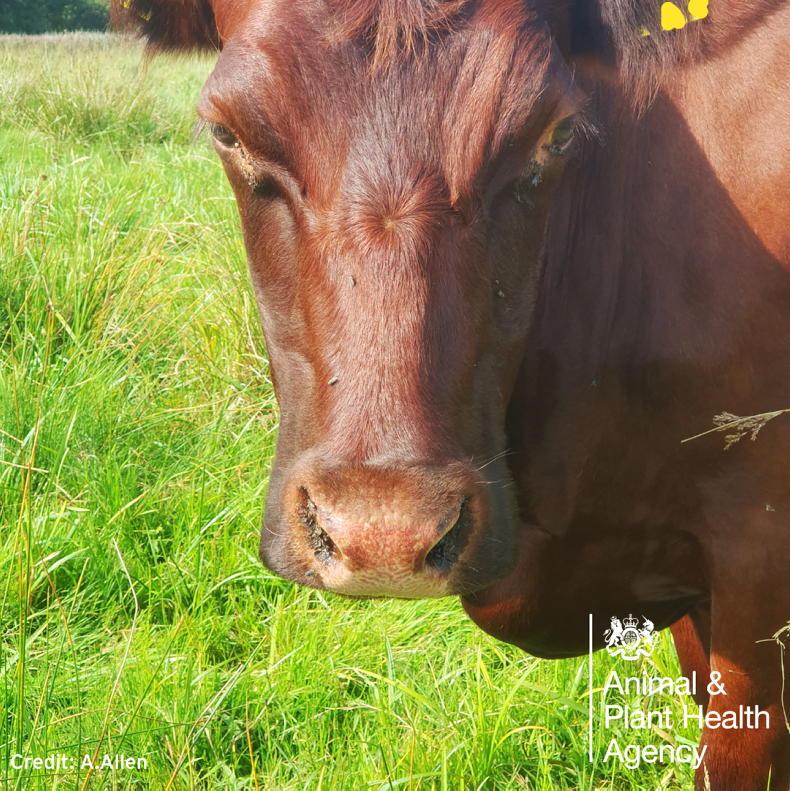
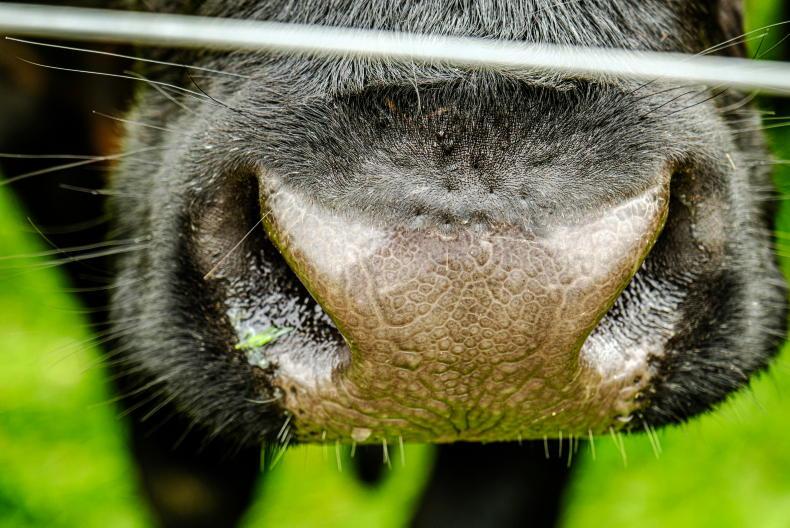
Cattle can display redness and crusting on soft nose tissue with the bluetongue virus.
Some flocks or herds infected with the virus may only see one or two animals showing visible symptoms and even these cases may not be easily visible.
What are the symptoms of bluetongue in cattle?
The range of symptoms for the disease is wide and although some animals may not show these signs, they can still spread the disease to midges which can go on to infected other livestock.
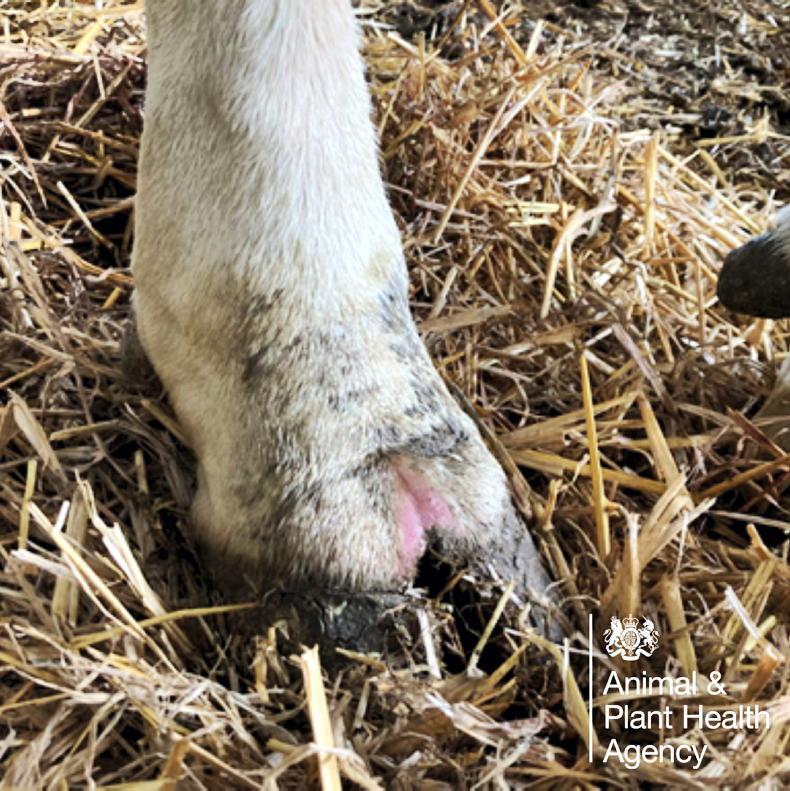
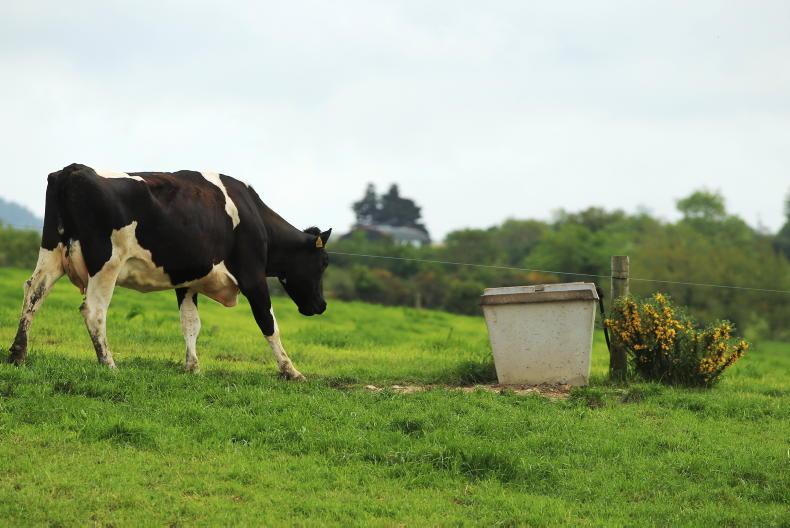
Cattle can show the bluetongue symptom of a reddening of the interdigital deft (the space between toes).
The symptoms in cattle include fever, loss of appetite, tiredness, reduced milk yields, discharge from the nose or eyes, reddening or cracking of the tissue around the udder and swelling in the mouth or face.
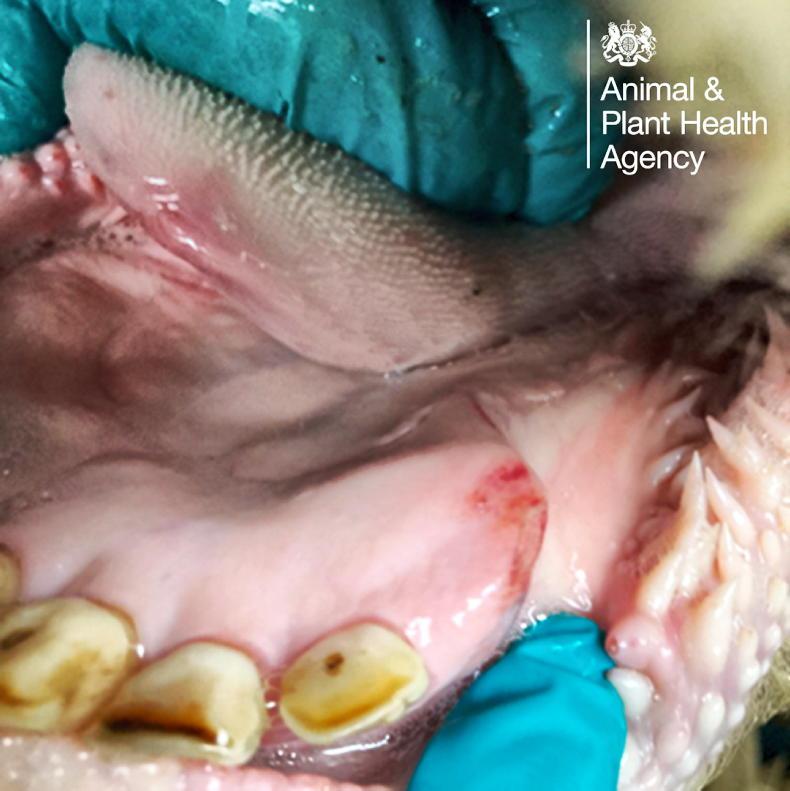
Ulcers in the mouth are another sign of the disease in cattle.
Longer-term symptoms include reduced milk yields, abortion and lower fertility in infected herds.
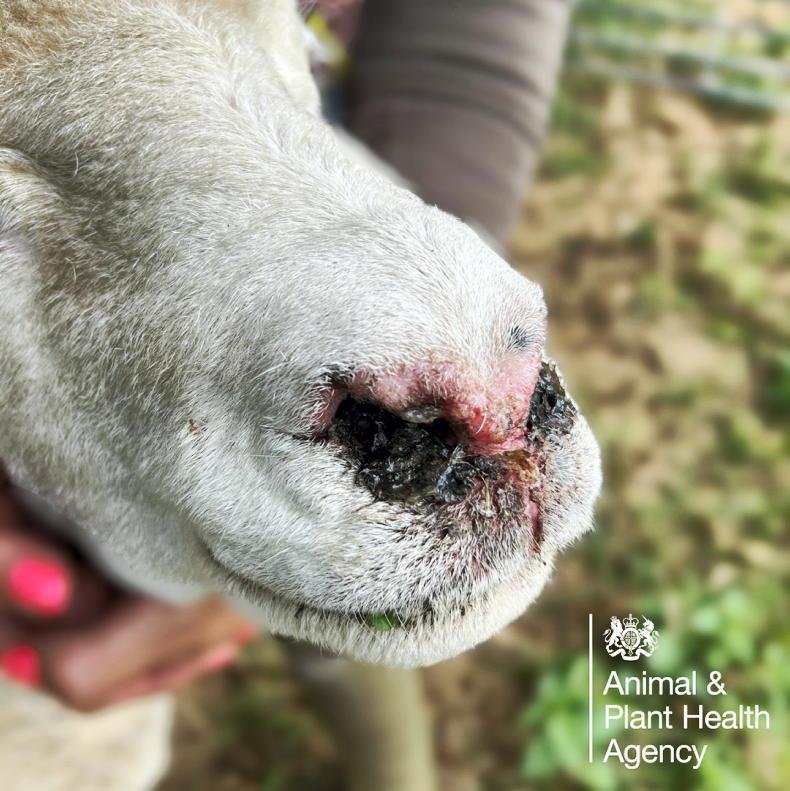
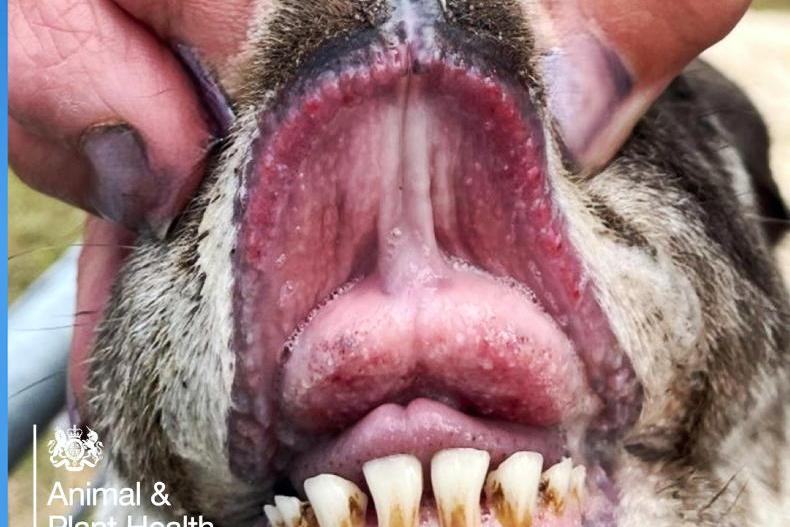
Nasal crusting and lesions on the nose are symptoms of the bluetongue virus in sheep.
What are the symptoms of bluetongue in sheep?
Sheep typically exhibit stronger symptoms and the disease typically affects sheep more than it does cattle.
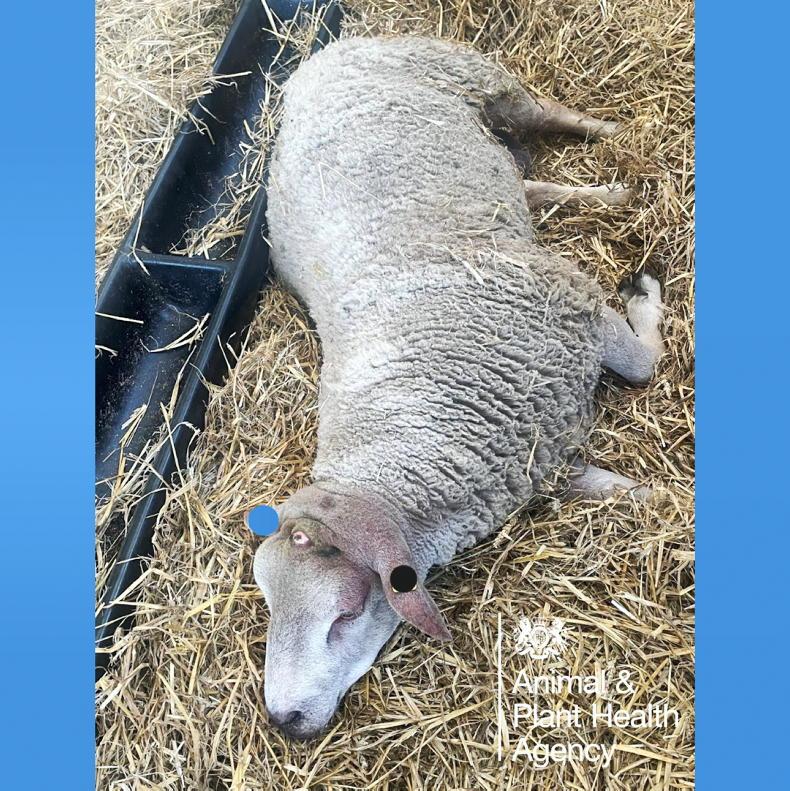
Signs of bluetongue to look out for in sheep flocks.
Symptoms include a fever, swelling of the head and neck, lameness, drooling, a discolouration and swelling of the tongue.
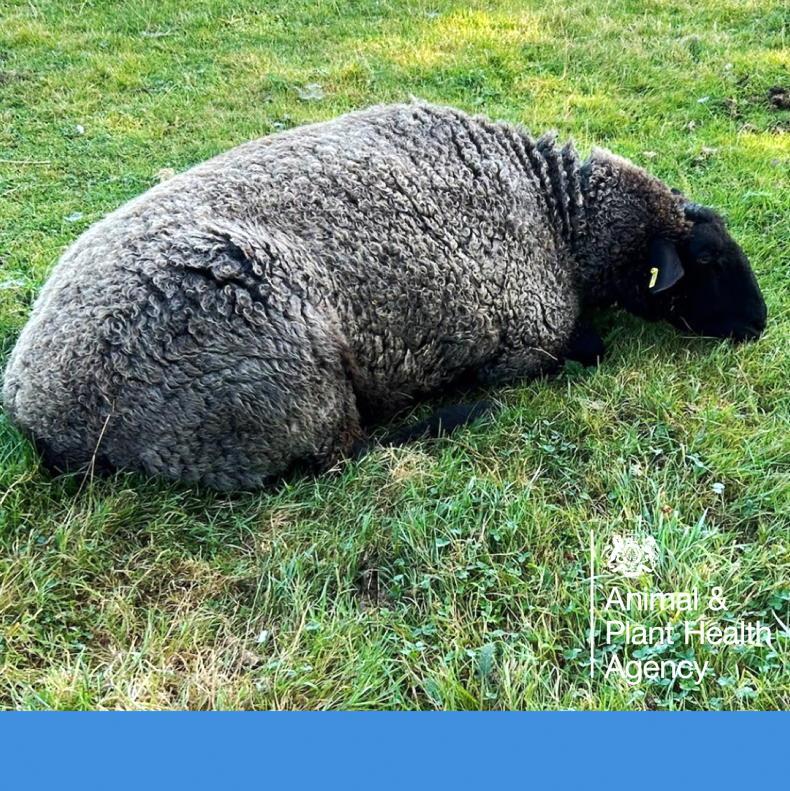
Sheep can appear recumbant due to a loss of appetite due to bluetongue infection.
If you notice any of the symptoms in your cattle and sheep, you must immediately contact your local regional veterinary office (during office hours) or the National Disease Emergency hotline (outside of office hours) on 01-492 8026.
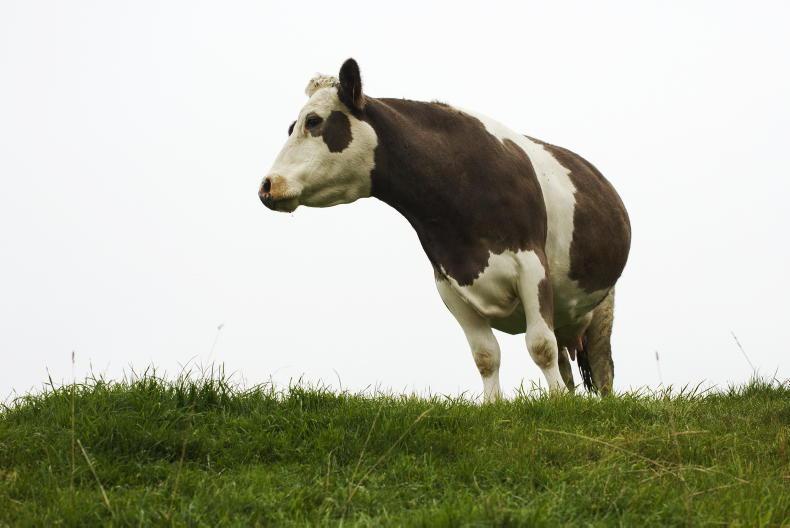
The Department of Agriculture confirmed an outbreak of the bluetongue virus in Co Wexford on Saturday.
The confirmation marks the first cases to be confirmed south of the border.
The virus was confirmed on four farms in Northern Ireland between late November and 19 December 2025, all of which related to premises in Co Down.
An announcement from NI’s Department of Agriculture, Environment and Rural Affairs (DAERA) on 23 January 2026 stated that further suspected cases on another Co Down farm were also under investigation.
What is bluetongue?
Bluetongue is a virus of ruminants spread by biting midge that are typically active between April and November in Ireland, but milder conditions can prolong their activity.

The virus can lead to lesions on cattle's teats.
The virus does not affect humans and cannot be transmitted through milk or meat.
Mortality rates can be as high as 70% and sheep are known to exhibit clearer symptoms than cattle.

Cattle can display redness and crusting on soft nose tissue with the bluetongue virus.
Some flocks or herds infected with the virus may only see one or two animals showing visible symptoms and even these cases may not be easily visible.
What are the symptoms of bluetongue in cattle?
The range of symptoms for the disease is wide and although some animals may not show these signs, they can still spread the disease to midges which can go on to infected other livestock.

Cattle can show the bluetongue symptom of a reddening of the interdigital deft (the space between toes).
The symptoms in cattle include fever, loss of appetite, tiredness, reduced milk yields, discharge from the nose or eyes, reddening or cracking of the tissue around the udder and swelling in the mouth or face.

Ulcers in the mouth are another sign of the disease in cattle.
Longer-term symptoms include reduced milk yields, abortion and lower fertility in infected herds.

Nasal crusting and lesions on the nose are symptoms of the bluetongue virus in sheep.
What are the symptoms of bluetongue in sheep?
Sheep typically exhibit stronger symptoms and the disease typically affects sheep more than it does cattle.

Signs of bluetongue to look out for in sheep flocks.
Symptoms include a fever, swelling of the head and neck, lameness, drooling, a discolouration and swelling of the tongue.

Sheep can appear recumbant due to a loss of appetite due to bluetongue infection.
If you notice any of the symptoms in your cattle and sheep, you must immediately contact your local regional veterinary office (during office hours) or the National Disease Emergency hotline (outside of office hours) on 01-492 8026.
SHARING OPTIONS