



The Department of Agriculture has released figures regarding the selection of applications under tranche nine of TAMS III.
Ranking and selection had been in play for previous iterations of TAMS (TAMS I and II).
However, the first eight tranches under TAMS III, which has been in place for three years now, had seen no ranking and selection take place, with all eligible applications approved.
Several tranches in TAMS III, particularly in 2023 and 2024 and its offset, had seen extensions on the open period within the tranches resulting in windows far greater than the normal three-month period that farmers had been previously accustomed to.
What we are now seeing is a system more akin to older TAMS schemes, with three-month open period for tranches and ranking and selection coming in to play.
A total of 5,787 applications were submitted under tranche nine, with a total across the 10 sub schemes of 4,453 selected, leaving an overall selected percentage of 77%. The overall percentage of approvals for distinct sub schemes vary in range from 25% to 100%.
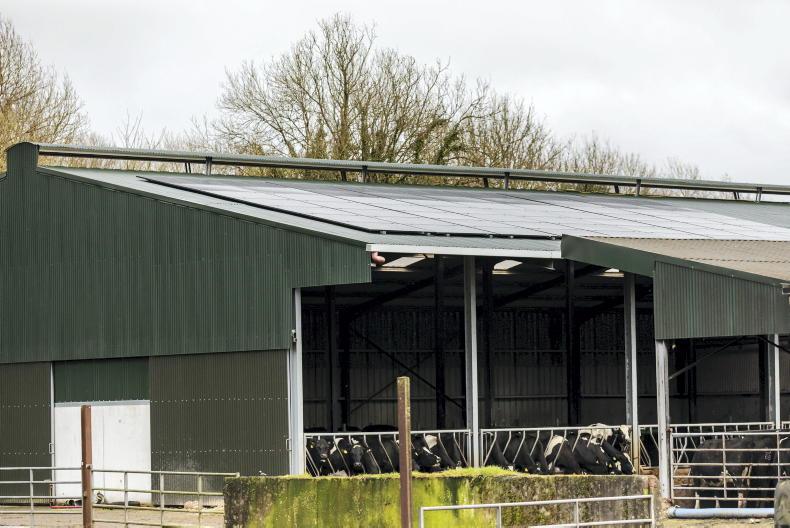
The Solar Capital Investment Scheme (SCIS) has seen the lowest selection rate at 25%, with the hugely popular Low Emissions Slurry Spreading (LESS)
In his explanation surrounding this, Minister Martin Heydon explained that 40% of TAMS funding in recent tranches went on the Solar Capital Investment Scheme and the Low Emission Slurry Spreading Scheme (LESS).
“On that basis, I have decided to focus on approvals for core on-farm investments at this time.
“I am acutely aware of the importance of measures to support on-farm safety, so I have decided to approve all eligible applications submitted under this measure,” the minister said.
“Similarly, I want to acknowledge the importance of continued investment in nutrient storage, attracting 60% grant aid support, which I introduced earlier this year.
“A total of 80% of eligible applications containing these investments will be approved in this tranche,” he added.
The remaining sub schemes within TAMS all carry an 80% selected rate.
In correspondence with the Irish Farmers Journal, the Department stated ‘’Applications that were selected have now proceeded to regional offices for further detailed checks, while those that were unsuccessful will be rolled over and included in the tranche 10 selection process.’’
“The cut-off point for each sub-scheme is based on the number of eligible applications within that scheme and the overall available budget.
“It should be noted that the percentage selection is based on the value of applications, which means that the percentage selection may not equate to the actual number of applications.”
In acknowledgement of the importance of farm safety, all eligible applications under the Farm Safety Capital Investment Scheme were selected, while sub-schemes which include nutrient storage investments were also prioritised. ‘’
The ranking and selection on a percentage basis for each sub scheme is likely a better option than it would have been if scoring had been done across the board, with examples shown in case studies on our farm buildings pages here in recent months showing how tillage farmers with protein crops or who had opted for the straw incorporation method and young farmers would be ranked considerably higher than those who do not tick these boxes.
Approvals started being issued for tranche nine applications this week. A total of 6,122 applications were submitted, with 203 of these rejected and a 124 withdrawn by the applicant, leaving the remaining pool of applications subjected to the criteria above with regards to ranking and selection.
The Department have come out of the traps strong, with 1,490 applications already approved, the majority of these being Farm Safety (530) and Animal Welfare and Nutrient Storage (435), which is good to see as the AWNSS is one of the more paper heavy sub schemes due to planning permissions, drawings, etc.
In further correspondence, the Department relayed that the most popular items applied for through tranche nine were solar photovoltaic panels including inverter and controller (854) and solar PV rechargeable batteries (826), with cattle weighing scales at 545, head scoops at 496 and bale slicers at 450.




SHARING OPTIONS