



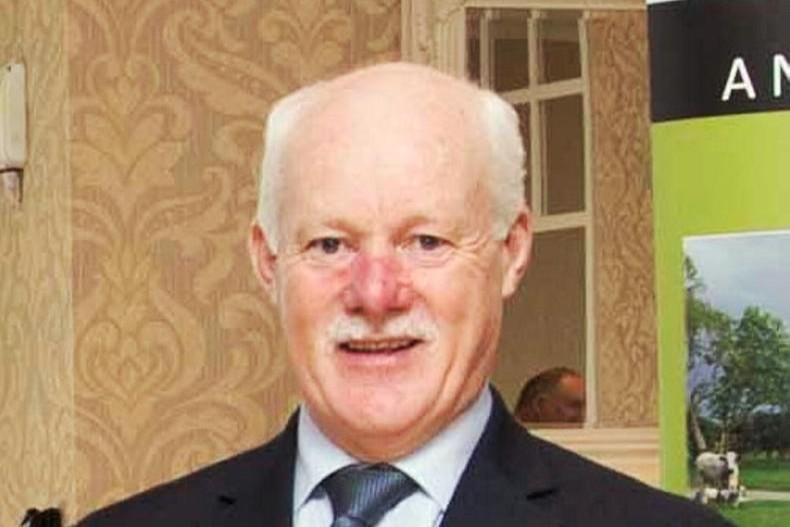
The Irish Natura and Hill Farmers Association (INHFA) has withdrawn its support for the final report of the Independent Advisory Committee (IAC) on the implementation of the Nature Restoration Law (NRL).
The IAC report, which comprises a set of recommendations, was agreed over the last week and forwarded to the Minister of State for Nature, Heritage and Biodiversity, Christopher O’Sullivan.
However, INHFA president Phelim Molloy has requested the removal of the association’s name and the names of its representatives from the final IAC report citing continuing concerns around Article 4 of the NRL and an absence of dedicated funding for the nature restoration process.
While the IAC report calls on the Government to introduce a new fund which will pay farmers and landowners to restore nature, Molloy pointed out that there is currently no dedicated financial package on the table to implement the NRL.
In addition, the INHFA leader took issue with the characterisation of the nature restoration actions as voluntary. Molloy said this was not the case with Annex 1 lands.
“The IAC was asked to produce a report without any clear budget, making it impossible to deliver a credible or implementable plan,” said Molloy.
“Farmers were led to believe that a €3.15 bn fund would underpin the rollout of this law. That funding has not materialised,” he added.
Molloy warned that baseline costs associated with compliance – particularly on lands with Annex 1 habitats – have not been assessed or accounted for, leaving farmers exposed to potentially significant financial burdens.
Meanwhile, Molloy said the assertion that the NRL is voluntary was “simply untrue”.
“Farmers, particularly those with farmlands classified as containing Annex I habitats, are now subject to significant obligations under Article 4 of the law. These obligations must be considered in virtually every farming activity and that is not voluntary by any reasonable definition,” he said.
This effectively embeds a layer of regulation across normal farming practice
Article 4 of the NRL requires member states to implement restoration measures on at least 30% of areas not in good condition by 2030, increasing to 60% by 2040 and 90% by 2050.
Where such habitats occur on farmland, farmers must actively “have regard” to these requirements in their day-to-day operations, said Molloy.
“This effectively embeds a layer of regulation across normal farming practice,” he stated.
“It impacts how land is used, managed, and developed. To suggest otherwise is misleading to both farmers and the wider public,” the INHFA leader maintained.
However, the INHFA said it was committed to engaging with the Government on the NRL.
“We remain ready to engage constructively with Minister Christopher O'Sullivan and the Department – but this engagement must be grounded in realism, transparency, and proper resourcing,” said Molloy.




SHARING OPTIONS