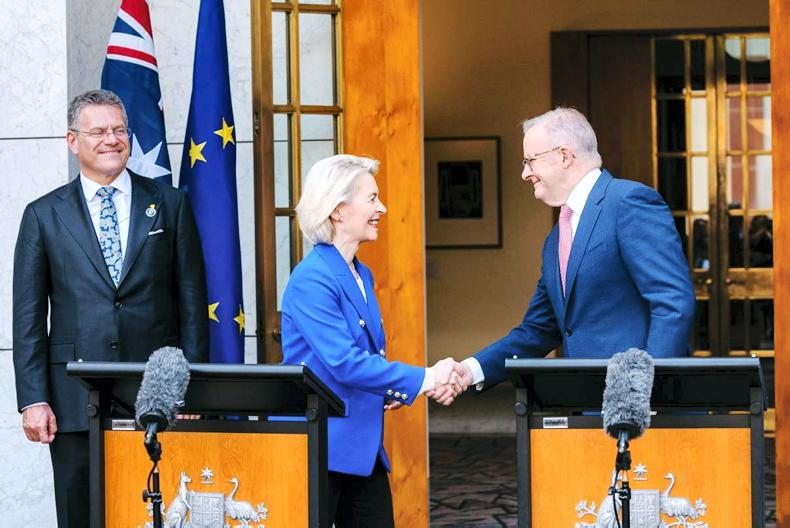
European Commission President Ursula von der Leyen and Australian Prime Minister Anthony Albanese signed the EU-Australia trade deal on Tuesday in Canberra, bringing almost a decade of negotiations to an end.
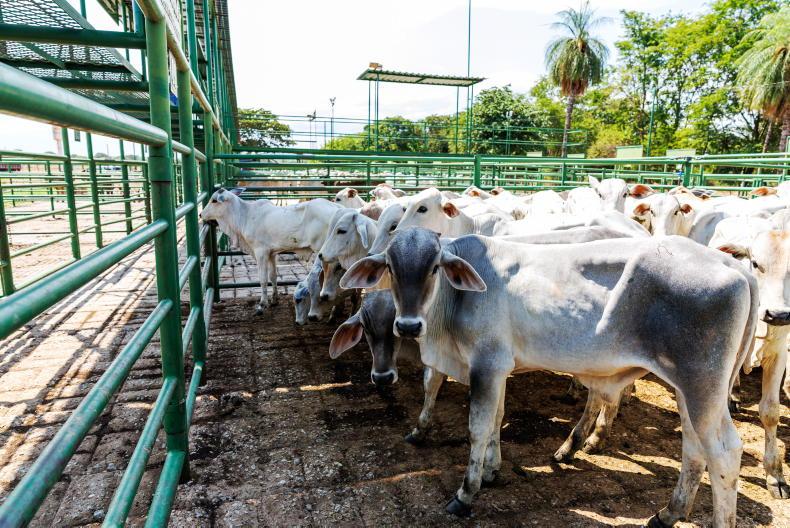
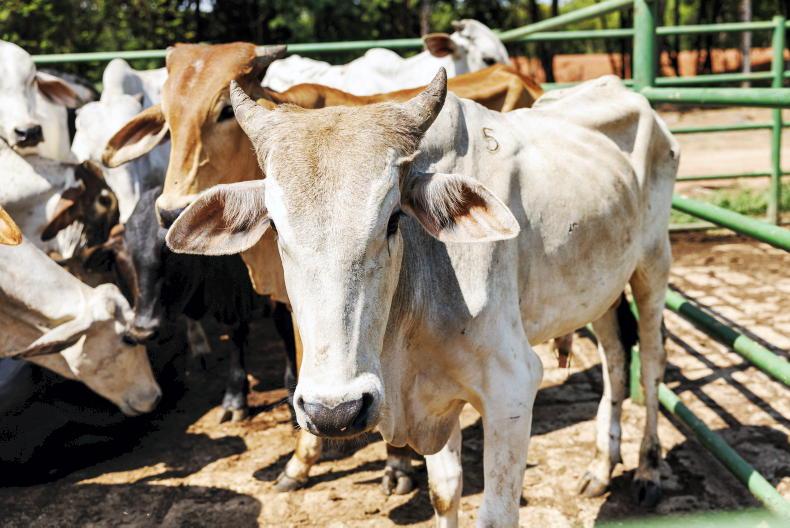
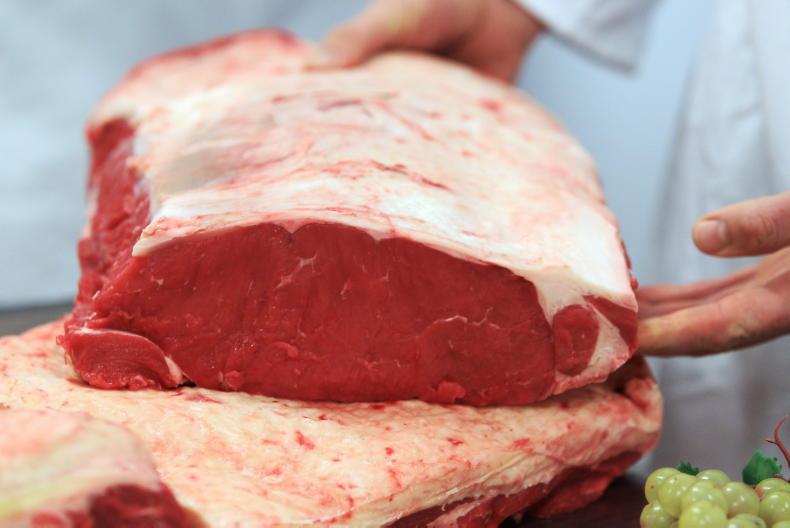
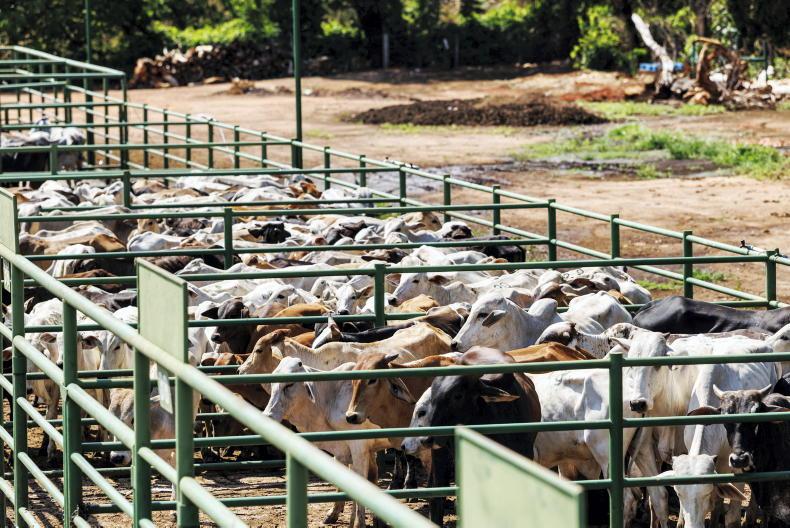
The sticking point for the deal had been the size of the beef quota Australia would have for the EU market.
The agreement puts that quota at 30,600 tonnes (t).
Of that, 16,830t will enter the market duty free, subject to a “grass-fed” conditionality, with the balance of 13,770t subject to a reduced tariff of 7.5%.
A third of those volumes will be granted when the deal comes into force, with the full quota available after 10 years.
The quota for sheep and goatmeat will be 25,000t tariff free, phased in over seven years. This quota will be for “grass-fed” animals.
There will be tariff rate quotas allowance for 5,000t of butter, which the EU said is equivalent to 0.25% of EU butter consumption.
The deal will eliminate tariffs on EU agricultural exports to Australia such as cheese, meat preparations, wine, chocolate and some fruits and vegetables.
Overall, the deal will remove over 99% of tariffs on EU goods exports to Australia, cutting around €1 billion a year in duties for companies.
Similar to the Mercosur trade deal, a safeguard mechanism in included in the agreement which would be triggered in the event that there are market disturbances in EU beef prices and other sensitive products.
Australia reaction
Meat and Livestock Australia (MLA), the marketing and research body for the country’s red-meat industry said that the industry is “devastated” by the decision of the country’s government to sign up to the deal. MLA said the quotas for beef and sheepmeat are well below the Australian government’s own objectives, let alone stakeholder expectations.
Speaking to the Irish Farmers Journal ahead of the deal, chair of the Australia–EU Red Meat Market Access Taskforce, Andrew McDonald, said that the industry wanted 50,000t of beef quote and 67,000t of sheepmeat quota.
The levels announced in the deal this week are far below what the industry was asking for. MLA’s, and McDonald’s, disappointment is clear in the statements issued following the signing of the agreement.
“Australia’s red meat sector has been profoundly let down by this outcome,” McDonald said. “The Australian red meat industry has been crystal clear that the FTA negotiations were the ideal mechanism to finally address the EU’s punitive and highly discriminatory import regime.
“Yet the agreement delivers just 30,600t carcase weight (cwt) of beef access over the next 10 years, when a minimum of 50,000t (cwt) was required simply to be in line with what the EU has offered our competitors.
“To land a deal so far below what other suppliers have secured is genuinely bewildering.”
“The EU’s inability to reform its deeply protectionist trade regime ultimately prevented the delivery of a good deal,” McDonald concluded.
In Europe, Copa Cogeca said the deal “raises serious concerns for European agriculture, which is once again being used as a bargaining chip in the EU’s pursuit of broader trade and political objectives. This reflects a vision that may respond to short-term urgencies, but whose medium-term consequences will prove unsustainable for many sensitive farming sectors.”
IFA president Francie Gorman told the Irish Farmers Journal that the deal is another blow to farmers as it will further increase competition for Irish farmers in its key EU market.
“These countries do not have the same standard of production as is seen in Ireland,” Gorman said.
“This deal does not have Irish and European farmer’s livelihoods and production standards as a priority.”
Following the signing of the deal, it will have to go through the usual ratification process which means it will be presented to the EU Council, and once it is adopted there both sides will officially sign the deal.
It will then go to the European parliament for a vote, and will then come into force, presuming Australia also ratifies it.
Mercosur
There was confirmation from the EU Commission on the provisional implementation date of the Mercosur trade deal. Following the completion of ratification in Brazil, Argentina, Uruguay and Paraguay, the Commission announced that the deal would be provisionally implemented from 1 May.
As is well known by everyone in Irish farming, the deal includes a 99,000t quota for beef imports from the region at the reduced tariff rate of 7.5%.
Taken together, the deals mean there is the going to be 129,600t more beef imported to the EU in the coming years at low or no tariff levels.
The EU has put safeguards in place to try to ensure there is no market dislocation from these Southern Hemisphere imports.
While the effectiveness of those safeguards have yet to be tested, it is simple economics to say that a cheaper product on the market will lead to lower prices.
However, there is a chance that those imports will only serve to balance the already falling beef production in Europe.
There is also the question over whether consumers actually want the products.
Whatever anyone thinks about the ins and outs of the controversy around the importation of Brazilian beef by the chair of Bord Bia, it did reveal that Irish shoppers are not fans of the product.
Whatever the future holds for the European beef market, developments this week mean that there is now some certainty over what the future holds on the trade landscape. The deals are signed, the quantities are locked in.
It is now up to everyone in the industry in Ireland, and across the EU, to ensure that consumers know the highest-quality products are produced in the EU under the most stringent standards in the world.
Irish beef and sheepmeat exports are already facing increased competition in the UK market, and will now face even more in Europe.