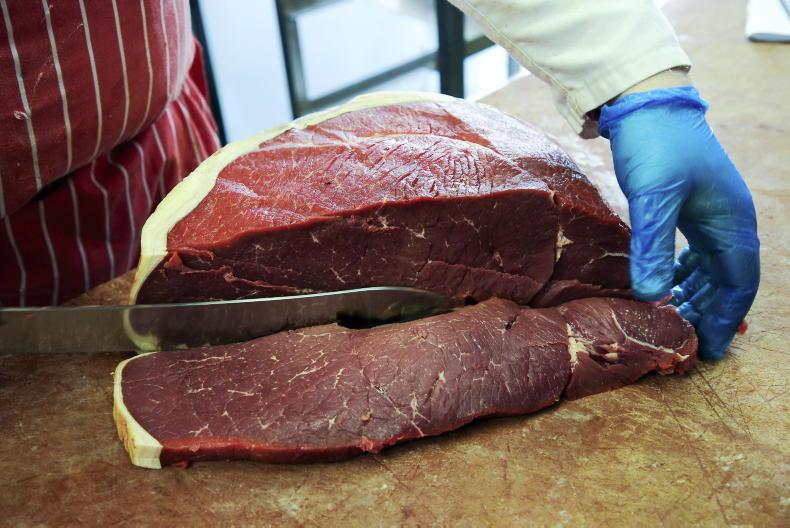
The Mercosur trade deal between the EU and Argentina, Brazil, Paraguay and Uruguay, collectively known as the Mercosur countries, came into operation provisionally on Friday.
The reason that it is provisional at this stage is because the deal has yet to be approved by the European Parliament.
They refereed it to the European Court of Justice (ECJ) for an opinion, delaying a vote on the substance of the deal. When that decision was taken by the Parliament, Commission president Ursula von der Leyen announced that the deal would operate provisionally until such time as the Parliament makes its decision.
The deal is controversial with Irish and EU farmers because of the level of beef quota access given in the negotiation even though overall the deal benefits EU countries.
When the deal is fully operational, the South American countries will have access to an additional 99,000 tonnes of beef carcase weight equivalent (cwe), divided 55%/45% between fresh and frozen beef. It is phased in over six years and for the remainder of this year, the bloc will have access to 13,200 tonnes cwe of the quota.
Mercosur reaction
As Figure 1 shows, EU beef imports from EU countries have already been on the increase this year. This is due to the fact that beef supplies have been reducing in most EU countries and South America countries, Brazil in particular, have plenty of beef to export.
Their volumes increased by 20% in 2025 alone to 3.5m tonnes, see Figure 2. Brazil’s exports have increased by a further 18% in the first quarter of this year.
However, the response by the South American countries to the deal has been muted. So far they haven’t agreed between them an allocation of the quota and until this happens, it will be used on a first come first served basis.
This tends to favour larger volume producers, Brazil in the first instance followed by Argentina as they have more beef to offer, though Brazil are curtailed somewhat in that several of their export factories aren’t EU approved.
United States and China
There is also the impact of what is happening in other major export markets for the Mercosur countries. For the first time in 2026, China has introduced an import quota for all their major suppliers. This won’t be an issue for Argentina, Paraguay or Argentina as they have quotas well ahead of the volume they supplied to China in 2025.
However, Brazil has been given a 1.1m tonne quota, which is over 500,000 tonnes less beef than it supplied in 2025. Anything it sends outside its quota will carry an additional 55% tariff and as a result there is a push on by Brazilian exporters to make the most of the quota when it is still available with the expectation that it will be filled long before the end of the year.
The other high-volume market for South American beef exports that has been growing in 2026 is the United States. Brazil’s beef exports to the US have been on an upward curve in recent years and they have increased again this year.
USDA beef import data to the middle of April shows that 109,990 tonnes of US beef imports came from Brazil, up 38% from 79,830 tonnes in the same period in 2025. Argentina, which has had its quota increased from 20,000 tonnes to 100,000 tonnes, has increased its volumes by almost 10,000 tonnes to 22,236 tonnes year on year, while imports from Uruguay have increased to 45,277 tonnes, up from 37,682 tonnes in the same period a year ago.
Comment – just the beginning
At the moment, China and the United States are bigger priorities for Mercosur countries' beef exports than the EU are.
This will continue while China’s quota is being filled in the case of Brazil and in the US for the duration of the drop in domestic cattle supply and demand for ground mince beef being met by imports. The European Union has been a growing market for Mercosur countries' beef exports in recent times and that trend is likely to continue, especially when Brazil’s quota for China is filled.

Read more
May day is Mercosur day
Mercosur deal comes into effect on Friday
'Facts don’t bear out the emotion' on Mercosur fears, Kelly claims
The Mercosur trade deal between the EU and Argentina, Brazil, Paraguay and Uruguay, collectively known as the Mercosur countries, came into operation provisionally on Friday.
The reason that it is provisional at this stage is because the deal has yet to be approved by the European Parliament.
They refereed it to the European Court of Justice (ECJ) for an opinion, delaying a vote on the substance of the deal. When that decision was taken by the Parliament, Commission president Ursula von der Leyen announced that the deal would operate provisionally until such time as the Parliament makes its decision.
The deal is controversial with Irish and EU farmers because of the level of beef quota access given in the negotiation even though overall the deal benefits EU countries.
When the deal is fully operational, the South American countries will have access to an additional 99,000 tonnes of beef carcase weight equivalent (cwe), divided 55%/45% between fresh and frozen beef. It is phased in over six years and for the remainder of this year, the bloc will have access to 13,200 tonnes cwe of the quota.
Mercosur reaction
As Figure 1 shows, EU beef imports from EU countries have already been on the increase this year. This is due to the fact that beef supplies have been reducing in most EU countries and South America countries, Brazil in particular, have plenty of beef to export.
Their volumes increased by 20% in 2025 alone to 3.5m tonnes, see Figure 2. Brazil’s exports have increased by a further 18% in the first quarter of this year.
However, the response by the South American countries to the deal has been muted. So far they haven’t agreed between them an allocation of the quota and until this happens, it will be used on a first come first served basis.
This tends to favour larger volume producers, Brazil in the first instance followed by Argentina as they have more beef to offer, though Brazil are curtailed somewhat in that several of their export factories aren’t EU approved.
United States and China
There is also the impact of what is happening in other major export markets for the Mercosur countries. For the first time in 2026, China has introduced an import quota for all their major suppliers. This won’t be an issue for Argentina, Paraguay or Argentina as they have quotas well ahead of the volume they supplied to China in 2025.
However, Brazil has been given a 1.1m tonne quota, which is over 500,000 tonnes less beef than it supplied in 2025. Anything it sends outside its quota will carry an additional 55% tariff and as a result there is a push on by Brazilian exporters to make the most of the quota when it is still available with the expectation that it will be filled long before the end of the year.
The other high-volume market for South American beef exports that has been growing in 2026 is the United States. Brazil’s beef exports to the US have been on an upward curve in recent years and they have increased again this year.
USDA beef import data to the middle of April shows that 109,990 tonnes of US beef imports came from Brazil, up 38% from 79,830 tonnes in the same period in 2025. Argentina, which has had its quota increased from 20,000 tonnes to 100,000 tonnes, has increased its volumes by almost 10,000 tonnes to 22,236 tonnes year on year, while imports from Uruguay have increased to 45,277 tonnes, up from 37,682 tonnes in the same period a year ago.
Comment – just the beginning
At the moment, China and the United States are bigger priorities for Mercosur countries' beef exports than the EU are.
This will continue while China’s quota is being filled in the case of Brazil and in the US for the duration of the drop in domestic cattle supply and demand for ground mince beef being met by imports. The European Union has been a growing market for Mercosur countries' beef exports in recent times and that trend is likely to continue, especially when Brazil’s quota for China is filled.

Read more
May day is Mercosur day
Mercosur deal comes into effect on Friday
'Facts don’t bear out the emotion' on Mercosur fears, Kelly claims
SHARING OPTIONS