



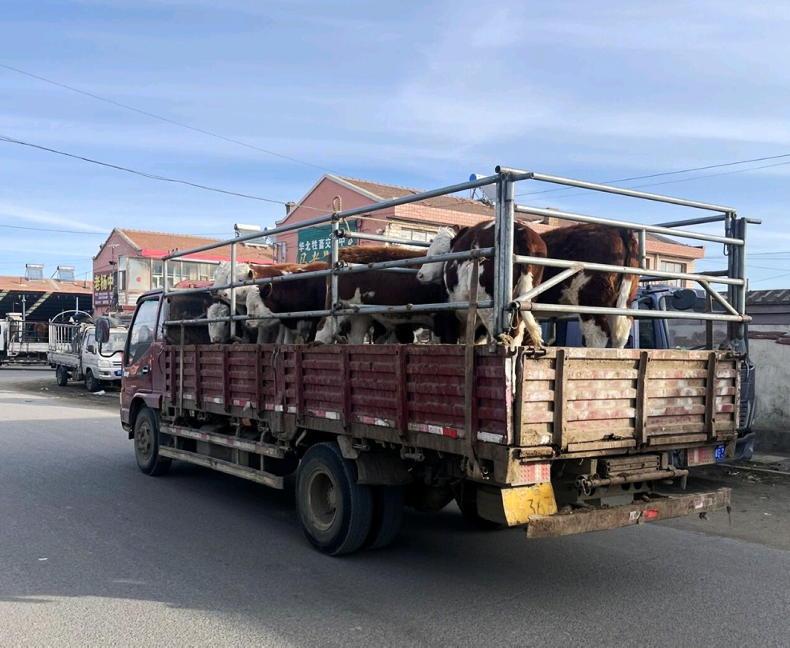
Reports started emerging earlier in the year about a foot-and-mouth disease (FMD) strain that was impervious to China’s vaccines. In late March, it became more widely known that the South African I strain had landed in China: within a couple of months, the country is once again grappling with a virus strain that threatens to destabilise China’s livestock farmers and drive further consolidation.
FMD is currently tearing through herds, and for those who watched the African swine fever (ASF) disaster of 2018 unfold, the sense of déjà vu is inescapable. The parallels are not merely coincidental: they are systemic.
The geography of the outbreak is the first familiar marker. Much like ASF, the South African FMD virus appears to have exploited the vulnerabilities of China’s massive northern border, this time landing in China’s westernmost province of Xinjiang. Stretching thousands of miles across rugged terrain, this frontier remains a sieve for pathogens. Whether through illegal animal movements or contaminated vectors, the “Northern Gate” has once again proven impossible to police effectively. Once across the border, the virus finds itself in a high-speed transit system.
China’s agricultural landscape is a paradox of modernisation and traditional chaos. While there are state-of-the-art facilities, a vast portion of the industry relies on the constant movement of animals and feed across provincial lines.
This logistical slipstream acts as a super-highway for FMD. With millions of pigs and cattle in transit and feed trucks criss-crossing the country with limited biosecurity oversight, containing a highly infectious virus is akin to trying to catch smoke with a net.
Even the large cattle marts have ground to a halt in some areas, leaving buyers in a tight domestic beef market struggling to access livestock.
Perhaps most concerning is the breakdown in communication.
Silence
In a move straight from the ASF playbook, Chinese authorities have largely gone silent since announcing that two farms had been struck down. Official reporting has slowed to a trickle as Beijing prioritises “social stability” and market optics over epidemiological transparency. From my understanding on the ground, while the impact on yield and udder health is massive, the biggest pain point is that almost 50% of calves succumb to this strain. When the data stops flowing, it usually means the situation has moved beyond “containment” and into “crisis” mode.
In the absence of culling and strict movement controls, the central government appears to be pinning its hopes on a massive vaccination campaign. Three producers have rapidly brought a vaccine to market, though without extensive efficacy testing. Unlike the previous ASF experience, they are avoiding live strains for fear of mutation, yet a narrative persists among officials and managers that these vaccines will act as a panacea.
However, history – and science – suggests this is a pipe dream. FMD is notoriously difficult to vaccinate against effectively due to its multiple serotypes and rapid mutation rates. Relying on a needle to solve a biosecurity collapse is a strategy that has failed before, and it appears to be failing again.
For the international observer, the lesson is clear: when China’s borders fail and their reporting goes dark, the global supply chain is in for a shock. The ghost of ASF is back, and it has found a new host in FMD.



SHARING OPTIONS