


Provisional figures released by the Department of Agriculture and Rural Development (DARD) suggest that the total income from farming (TIFF) in Northern Ireland (NI) fell 41% in 2015, to £183m (€241m) from £312m (€410m) in 2014.
The TIFF figure represents the return on labour, management input and own capital invested for all those involved in farming.
The 2015 estimate is £53m below the total income that came into NI agriculture from direct EU subsidies in 2015 (£236m).
Factors driving down the value of output in Northern Ireland (NI) included the euro-to-sterling exchange rate. A weak euro is generally bad for NI, given the dependence on exports.
Within the sectors, the headline figure is the drop in the value of output from dairy production, down 27% to £480m (€631m) in 2015, on the back of a 28% reduction in milk prices. Also down were pigs, by 15% to £113m (€149m). Sheep output was down 10% to £63m (€83m) and poultrymeat down 6% to £244m (€321m).
Field crops fell 7% to £59m (€78m). The output value of cattle was up slightly at £394m (€518m).
As well as the aggregate income, DARD also publishes estimates for farm level incomes for 2015/16, based on their farm business survey analysis. Across all farm types, income is expected to decrease from an average of £24,942 in 2014/15 to £13,451 in 2015/16, a decrease of 46%.
Dairying is predicted to see the sharpest drop, falling by 78% from an average per farm of £45,728 in 2014/15 to £10,152 (€13,357) in 2015/16.
It is a significant reduction in cash circulating within the wider industry and takes dairy farm income below that of beef and sheep farms in lowland (£14,481) and less favoured areas (£13,053).
Also coming under pressure are pig farms, which are expected to see the second largest decline in incomes, dropping by 51%, from £45,012 to £22,250 in 2015/16.
Virtually every dairy farmer in NI is currently operating below the cost of production. We asked two NI dairy farmers for their reaction to the figures
Alan Irwin, Benburb
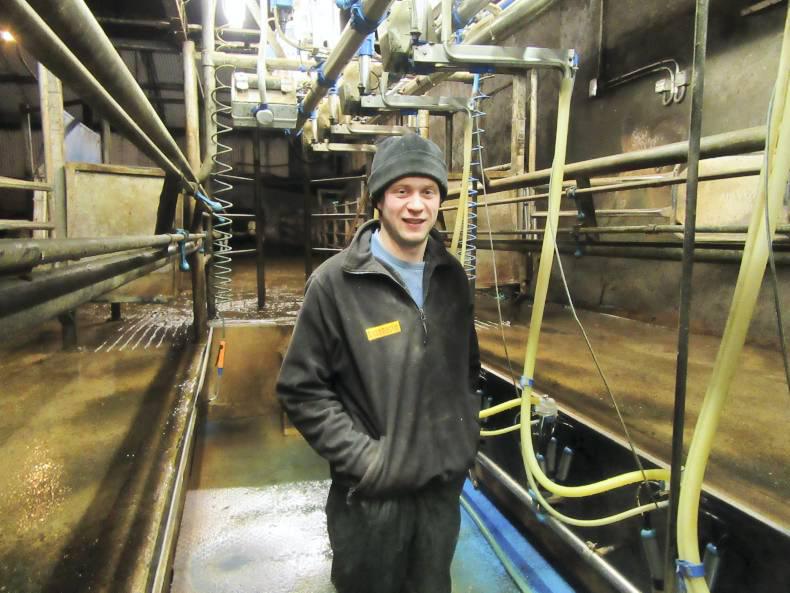
Along with his son David, Alan Irwin milks 170 pedigree Holstein cows in a containment system outside Benburb close to the Tyrone/Armagh border, producing over 2m litres of milk annually.
Irwin said: “Since 1 April 2015, I am down £70,000 (€92,000). The bottom line is that we can’t go on throwing £10,000 (€13,150) per month at the farm business. We can’t go on losing money indefinitely.
“We currently have a lot of fresh calvers in the herd. If things don’t improve, the most difficult period will come towards the end of the summer, when the majority of the herd is dry.
“While we all accept there are global factors dictating low prices, government must also take some share of the blame. Why should farmers be left to suffer the consequences of political decisions relating to Russia? How can the EU sit back while the US gives a guaranteed margin to their dairy farmers?
“People need to eat, and our governments need to seriously consider regulation to protect food producers.”
Listen to an interview with Alan Irwin in our podcast below:
Richard Marshall, Omagh
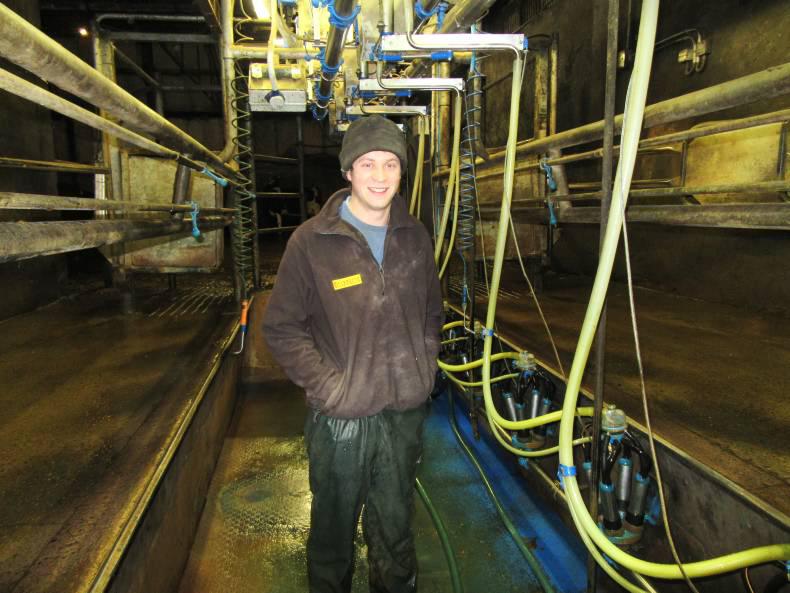
Richard Marshall milks 150 Holstein cows yielding 8,500 litres, alongside his father John near Omagh, Co Tyrone.
He said: “In NI the use of low-cost grass-based production systems in most parts is limited by land type and rainfall, so we are fairly typical of the herds in the area.
“While we can all cope with a lack of profitability for short periods, it is the continued low prices that is putting financial pressure on farmers.
“Currently, we haven’t had to extend overdrafts or restructure loans, but we are using cash reserves.
“We now do cash-flow budgets on a month-by-month basis to see what money is likely to move in or out.
“Variable costs, particularly use of concentrates, have been examined. We have targeted feeding by splitting cows into high- and low-yielding groups.
“Longer term, the ability to manage cash flow in times of both good and bad prices will be key to managing market volatility.”
Listen to an interview with Richard Marshall in our podcast below:



SHARING OPTIONS