As soon as Belcas chief executive Brian Murphy starts presenting his Co Fermanagh-based company, the implications of Brexit for his business become evident.
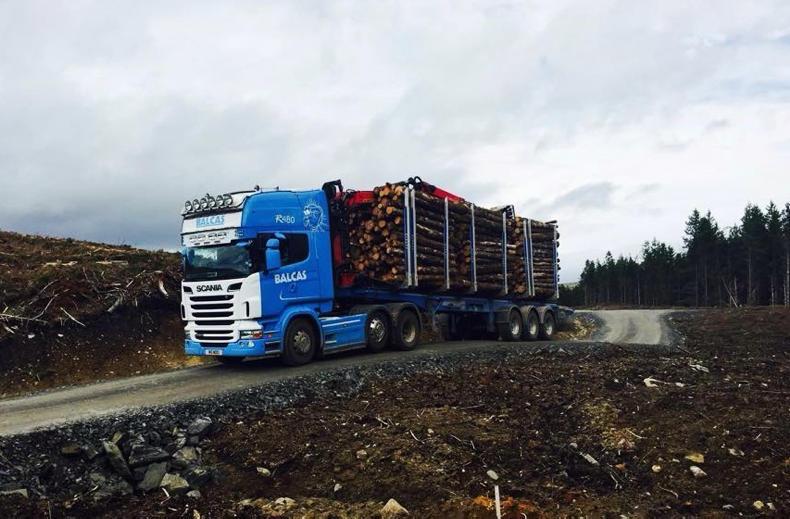
“We have two large plants, one in Eniskillen and one in the north of Scotland in Invergordon,” he told the Irish Farmers Journal. “We take timber from both the Republic of Ireland and the North of Ireland, and indeed the very west coast of Scotland, and process it primarily in our sawmill in Enniskillen.”
One of Belcas’s leading products is wood pellets, of which the company is the largest manufacturer in Britain and Ireland.
Many of its staff travel daily from their homes in the Republic to the Enniskillen plant, and some of them are nationals from other EU countries.
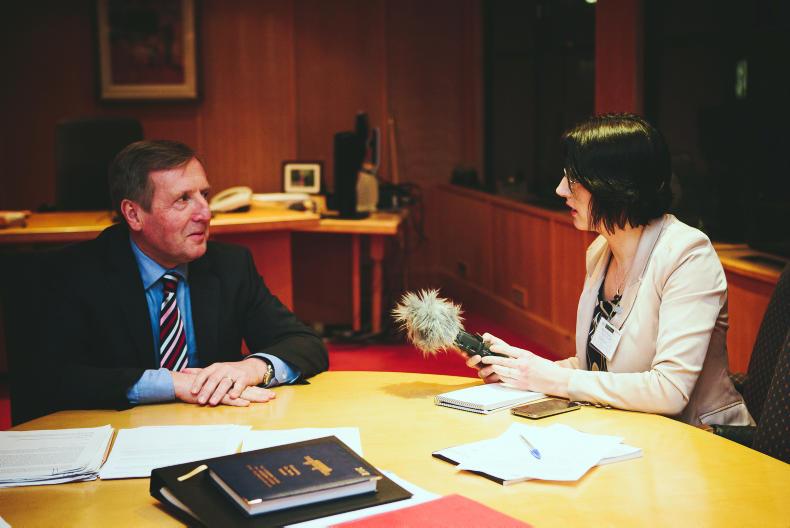
Listen to an interview with Brian Murphy on our podcast below:
Listen to “Balcas boss Brian Murphy on Brexit” on Spreaker.
“It’s very important that we can move freely between north and south, and our biggest concern with Brexit is that we are not inhibited in being able to work efficiently,” Murphy said.
While tariffs are unlikely to be a problem as timber products are already largely traded tariff-free around the world under WTO rules, borders between the UK and the EU, including Ireland, would present other difficulties for Belcas.
“If approved routes were very restricitive, this would involve extra distance and extra costs,” Murphy said. “Because we have to think always of safety for drivers, if there’s time our drivers are held up at border checkpoints, that in turn affects the efficiency with which we can process the output of Ireland’s forests.”
The prospect of barriers to trade would be all the more frustrating that Ireland’s forestry production is growing, offering a steady supply, while Britain is the largest timber importer in Europe and one of the largest in the world – ”right on our doorstep,” Murphy said.
Read more
Watch: Brexit – what agribusiness wants
Full coverage: Brexit
As soon as Belcas chief executive Brian Murphy starts presenting his Co Fermanagh-based company, the implications of Brexit for his business become evident.
“We have two large plants, one in Eniskillen and one in the north of Scotland in Invergordon,” he told the Irish Farmers Journal. “We take timber from both the Republic of Ireland and the North of Ireland, and indeed the very west coast of Scotland, and process it primarily in our sawmill in Enniskillen.”
One of Belcas’s leading products is wood pellets, of which the company is the largest manufacturer in Britain and Ireland.
Many of its staff travel daily from their homes in the Republic to the Enniskillen plant, and some of them are nationals from other EU countries.
Listen to an interview with Brian Murphy on our podcast below:
Listen to “Balcas boss Brian Murphy on Brexit” on Spreaker.
“It’s very important that we can move freely between north and south, and our biggest concern with Brexit is that we are not inhibited in being able to work efficiently,” Murphy said.
While tariffs are unlikely to be a problem as timber products are already largely traded tariff-free around the world under WTO rules, borders between the UK and the EU, including Ireland, would present other difficulties for Belcas.
“If approved routes were very restricitive, this would involve extra distance and extra costs,” Murphy said. “Because we have to think always of safety for drivers, if there’s time our drivers are held up at border checkpoints, that in turn affects the efficiency with which we can process the output of Ireland’s forests.”
The prospect of barriers to trade would be all the more frustrating that Ireland’s forestry production is growing, offering a steady supply, while Britain is the largest timber importer in Europe and one of the largest in the world – ”right on our doorstep,” Murphy said.
Read more
Watch: Brexit – what agribusiness wants
Full coverage: Brexit







SHARING OPTIONS