



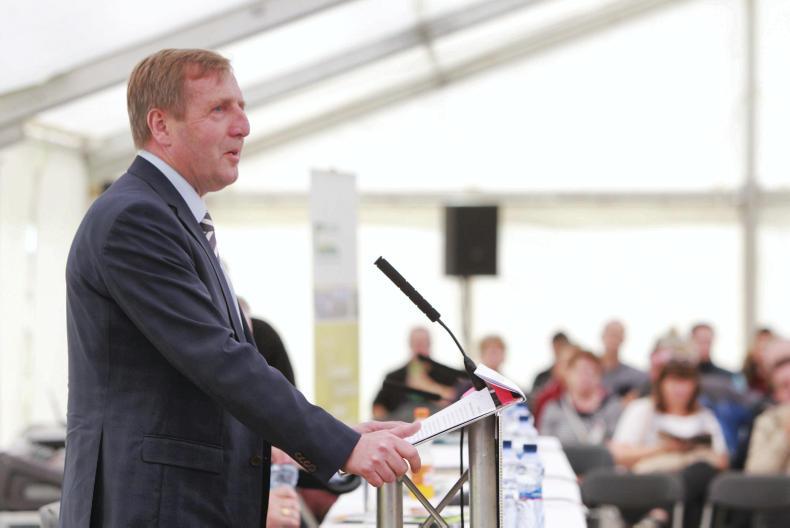
Minister for Agriculture Michael Creed’s low-cost loans may not now be available until April at the earliest.
While all three pillar banks (Bank of Ireland, AIB and Ulster Bank) have agreed in principle to rolling out the scheme, as banks work through the small print there are some issues surrounding the three-year interest-only option and the fixed-interest arrangement of the loans.
In light of this, the SBCI has put a call out seeking lending partners including banks and other financial institutions (which could include credit unions) to apply to distribute the low cost loans by 25 November – a full six weeks after the minister’s announcement.
It appears that the mechanisms to roll out the scheme were not as advanced as they could have been, leaving many of the banks in the dark as to the details.
It is understood that one of the key areas of concern surrounds the sustainability of offering an interest-only option for up to three years. While welcome in the short term, it could put undue pressure on farms in the longer term, especially given the unpredictable and volatile milk, meat and grain prices.
The scheme will offer unsecured loans at 2.95% to farmers, up to €150,000 for up to six years, with an interest-only period of up to three years. This is at a 0.5% to 1% discount to what’s on offer at the moment.
It was hoped this money would be available to farmers in January 2017. However, it may now be “sometime in quarter one”, according to some industry sources. This means that it may be April at the earliest before money flows into farmers’ bank accounts to aid cashflow.
As the scheme is to run only until September 2017, the window for applications now looks set to be tight and there are questions about whether the full €150m fund will be drawn down. The total amount is significant in that it represents around 25% of the money that is drawn down in loans by farmers each year.
The fund was created by leveraging the €11m made available under the EU’s exceptional adjustment aid for dairy and other livestock farmers along with €14m in national funding.
If the full €150m is not drawn down, or does not get off the ground running, it may not only be embarrassing for the Government but also raises the question of how farmers might get the balance of their aid due from the EU.


SHARING OPTIONS