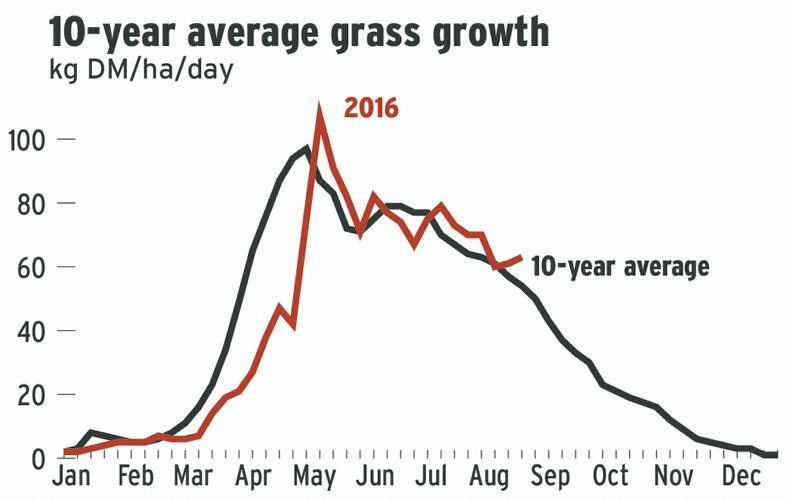
Most of our farmers are reporting that ground conditions have improved greatly in the last week. Those on heavier farms are now getting to utilise more and more of what they’re growing. Average growth rate across the country is back around 10% on last week, but still ahead of the norm for late August.
Building covers for the winter has been easy this year, though farmers shouldn’t be skimping on fertiliser. Farms stocked between 1.8 and 2.3 LU/ha should be aiming to get around 27 units of N out across the farm in late August/early September. On lower-stocked farms, you’ll get away without N if there are 25 or more grazing days ahead of stock.
If you haven’t been measuring grass this year, now is a good time to walk the farm. The clock is ticking for fertiliser spreading. Low-stocked farms that don’t spread a lot of fertiliser can get easily caught out in the back end grass-wise. If you’ve got less than 25 grazing days, go in with nitrogen. You might seem alright now, but grass will begin to stall – it’s happening already.
This will have repercussions too next spring – there’ll be nothing for cattle to eat. On drier farms especially, it’s really important to manage grass well at this time of the year. These are the farms that need to be targeting an early turnout in the spring. To make this possible, we absolutely need to create a wedge in the winter time. This involves starting to close up paddocks in mid-October and resisting the urge to graze out the whole farm.
Work out your field sizes – there are good free smartphone apps for doing this; work out how much grass is in each plot – every cm above 4cm = 250kg DM/ha (eg 10cm of grass = 6 x 250 = 1,500kg DM/ha) and work out your herd’s demand for grass daily (2% of liveweight).
Grass growth 63kg DM/ha/day.Ground conditions improving which is facilitating good utilisation.Target 25 days of grazing at present.Moderate-to-highly stocked farms should be spreading 27 units of N.Low-stocked farms should be walked this week and base fertiliser on grass cover.Liam McWeeney, Derrypatrick Herd
Farming system: Suckler to beef
Land type: Dry to heavy
Grass growth was back a bit this week and is now at 45kg DM/ha/day, which is bang on our demand. Having said that, we have a farm cover of 1,100kg DM/ha, so there’s 24 grazing days on the farm. Calves were weighed and dosed last week, with bulls growing at 1.3kg daily since birth and heifers at 1.16kg.
We have 15 Angus-cross bullocks and heifers picked out for slaughter in the coming week. They’ll be fit from a grass-only diet and should come into good weights. Average slaughter age will be around 18 months.
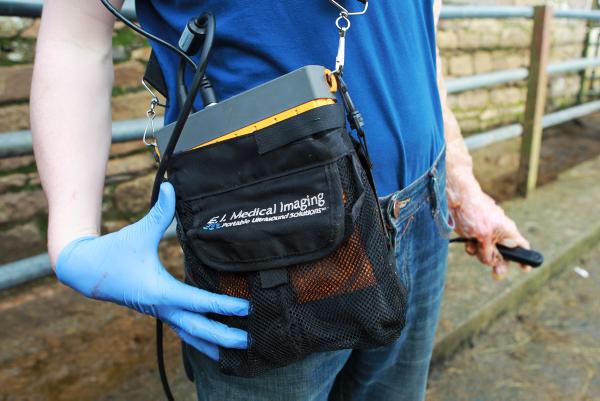
With 30 out of 31 in calf, we’re delighted with our heifers’ scanning results. On the cow side, we’ve yet to do the final scan and there has been small levels of activity, but you’ll get that as cows age. There are plenty of heifers coming in to replace empty cows. We’re sowing two paddocks today. The plough-till-sow method was used this time. Annual reseeding is an important part of grassland management. There are five acres in it altogether.
James Madigan, Co Kilkenny
Farming system: Suckler to beef
Land type: Dry
There is a good supply of grass here currently. In an autumn-calving herd, it can be frustrating in the summer time when grass is tearing ahead at the very time when you’re trying to keep condition off of cows. I find that you make a lot of bales in a good year with an autumn-calving herd. Now it’s a little easier – I’m three-quarters of the way through calving and turning cows straight to good grass. The fact that grass growth is still booming at this late stage is a welcome boost. The weather in these parts has been ideal for turning out young calves. That said, this is the type of farm that needs a bit of rain every week – it’s very dry. I’m going to house my spring 2015 bullocks for finishing in the next fortnight. They’re currently getting 3kg of a beef nut at grass. I normally slaughter them at 24 months and this would be a little early to house, but I feel that they get too heavy if I leave them out much longer.
David Mitchell, Co Monaghan
Farming system: Suckler to beef
Land type: Very heavy
I have in excess of 20 days of grazing ahead of stock at present. Second-cut silage ground coming back into the rotation is a big boost of course. We’re taking a paddock out for bales today. I hadn’t intended to be removing surplus bales this late in the season, but it’s a sign of the unique grazing season we’re having. What’s great is that we’re getting to utilise the grass at present. We’ve had seven to 10 days of decent weather. Before that we were having to move stock on early to save ground.
The good spell has been welcome, but Saturday’s forecast is looking sinister – things can turn quickly here. Hopefully it isn’t too bad. I’m putting out my last round of fertiliser at present. It’s mostly in the form of CAN, with some compound on certain paddocks with low index values.
It’s an exciting time for the farm enterprise. We recently started work on a new slatted house under TAMS II with the plan being to increase cow numbers.
Heinz Eggert, Co Kildare
Farming system: Suckler to beef
Land type: Heavy
Grass growth here is at 66kg DM/ha/day. Average farm cover is just over 800kg DM/ha, which translates into 24 grazing days ahead of stock. I am still spreading half a bag of CAN after stock and targeting 18-6-12 on low-index paddocks. I will park the fertiliser spreader in a week to ten days.
I have 70 extra bales in the yard and over 1,000t of silage pitted, so we should be comfortable for the winter. Second cut actually yielded better than our first cut and I’m confident that both will have high feeding value. Finishing bulls have been in since the middle of June and are nearly fit to go. I’ll walk them across the weighing scales before they depart. Our pregnancy scan showed a 92% in-calf rate, which I’m happy with.
We had a great week at the recent Limousin congress. It’s fantastic to talk with farmers from across the globe who share a passion for the breed and producing quality stock.
Read more
Grass+ Dairy: High soil temperatures driving on grass
Most of our farmers are reporting that ground conditions have improved greatly in the last week. Those on heavier farms are now getting to utilise more and more of what they’re growing. Average growth rate across the country is back around 10% on last week, but still ahead of the norm for late August.
Building covers for the winter has been easy this year, though farmers shouldn’t be skimping on fertiliser. Farms stocked between 1.8 and 2.3 LU/ha should be aiming to get around 27 units of N out across the farm in late August/early September. On lower-stocked farms, you’ll get away without N if there are 25 or more grazing days ahead of stock.
If you haven’t been measuring grass this year, now is a good time to walk the farm. The clock is ticking for fertiliser spreading. Low-stocked farms that don’t spread a lot of fertiliser can get easily caught out in the back end grass-wise. If you’ve got less than 25 grazing days, go in with nitrogen. You might seem alright now, but grass will begin to stall – it’s happening already.
This will have repercussions too next spring – there’ll be nothing for cattle to eat. On drier farms especially, it’s really important to manage grass well at this time of the year. These are the farms that need to be targeting an early turnout in the spring. To make this possible, we absolutely need to create a wedge in the winter time. This involves starting to close up paddocks in mid-October and resisting the urge to graze out the whole farm.
Work out your field sizes – there are good free smartphone apps for doing this; work out how much grass is in each plot – every cm above 4cm = 250kg DM/ha (eg 10cm of grass = 6 x 250 = 1,500kg DM/ha) and work out your herd’s demand for grass daily (2% of liveweight).
Grass growth 63kg DM/ha/day.Ground conditions improving which is facilitating good utilisation.Target 25 days of grazing at present.Moderate-to-highly stocked farms should be spreading 27 units of N.Low-stocked farms should be walked this week and base fertiliser on grass cover.Liam McWeeney, Derrypatrick Herd
Farming system: Suckler to beef
Land type: Dry to heavy
Grass growth was back a bit this week and is now at 45kg DM/ha/day, which is bang on our demand. Having said that, we have a farm cover of 1,100kg DM/ha, so there’s 24 grazing days on the farm. Calves were weighed and dosed last week, with bulls growing at 1.3kg daily since birth and heifers at 1.16kg.
We have 15 Angus-cross bullocks and heifers picked out for slaughter in the coming week. They’ll be fit from a grass-only diet and should come into good weights. Average slaughter age will be around 18 months.
With 30 out of 31 in calf, we’re delighted with our heifers’ scanning results. On the cow side, we’ve yet to do the final scan and there has been small levels of activity, but you’ll get that as cows age. There are plenty of heifers coming in to replace empty cows. We’re sowing two paddocks today. The plough-till-sow method was used this time. Annual reseeding is an important part of grassland management. There are five acres in it altogether.
James Madigan, Co Kilkenny
Farming system: Suckler to beef
Land type: Dry
There is a good supply of grass here currently. In an autumn-calving herd, it can be frustrating in the summer time when grass is tearing ahead at the very time when you’re trying to keep condition off of cows. I find that you make a lot of bales in a good year with an autumn-calving herd. Now it’s a little easier – I’m three-quarters of the way through calving and turning cows straight to good grass. The fact that grass growth is still booming at this late stage is a welcome boost. The weather in these parts has been ideal for turning out young calves. That said, this is the type of farm that needs a bit of rain every week – it’s very dry. I’m going to house my spring 2015 bullocks for finishing in the next fortnight. They’re currently getting 3kg of a beef nut at grass. I normally slaughter them at 24 months and this would be a little early to house, but I feel that they get too heavy if I leave them out much longer.
David Mitchell, Co Monaghan
Farming system: Suckler to beef
Land type: Very heavy
I have in excess of 20 days of grazing ahead of stock at present. Second-cut silage ground coming back into the rotation is a big boost of course. We’re taking a paddock out for bales today. I hadn’t intended to be removing surplus bales this late in the season, but it’s a sign of the unique grazing season we’re having. What’s great is that we’re getting to utilise the grass at present. We’ve had seven to 10 days of decent weather. Before that we were having to move stock on early to save ground.
The good spell has been welcome, but Saturday’s forecast is looking sinister – things can turn quickly here. Hopefully it isn’t too bad. I’m putting out my last round of fertiliser at present. It’s mostly in the form of CAN, with some compound on certain paddocks with low index values.
It’s an exciting time for the farm enterprise. We recently started work on a new slatted house under TAMS II with the plan being to increase cow numbers.
Heinz Eggert, Co Kildare
Farming system: Suckler to beef
Land type: Heavy
Grass growth here is at 66kg DM/ha/day. Average farm cover is just over 800kg DM/ha, which translates into 24 grazing days ahead of stock. I am still spreading half a bag of CAN after stock and targeting 18-6-12 on low-index paddocks. I will park the fertiliser spreader in a week to ten days.
I have 70 extra bales in the yard and over 1,000t of silage pitted, so we should be comfortable for the winter. Second cut actually yielded better than our first cut and I’m confident that both will have high feeding value. Finishing bulls have been in since the middle of June and are nearly fit to go. I’ll walk them across the weighing scales before they depart. Our pregnancy scan showed a 92% in-calf rate, which I’m happy with.
We had a great week at the recent Limousin congress. It’s fantastic to talk with farmers from across the globe who share a passion for the breed and producing quality stock.
Read more
Grass+ Dairy: High soil temperatures driving on grass






SHARING OPTIONS