This year may not be remembered for fantastic profits for farmers and the machinery trade alike. Political uncertainty will no doubt create challenges in the year ahead across the world. Farmers can only concentrate on the job in hand and get the best margins they can.
Looking at 2016, there is one common theme among all manufacturers. Agri-technology is developing at a frantic pace. Investment by machinery companies in high-tech agricultural solutions over the last few years is now delivering on farms. The question is how far will it go and will it benefit the industry as a whole? Approaches by the leading manufacturers are slightly different. The CNH group unveiled the driverless tractor concept, while John Deere concentrates on making life easier and more productive for the operator in the cab.
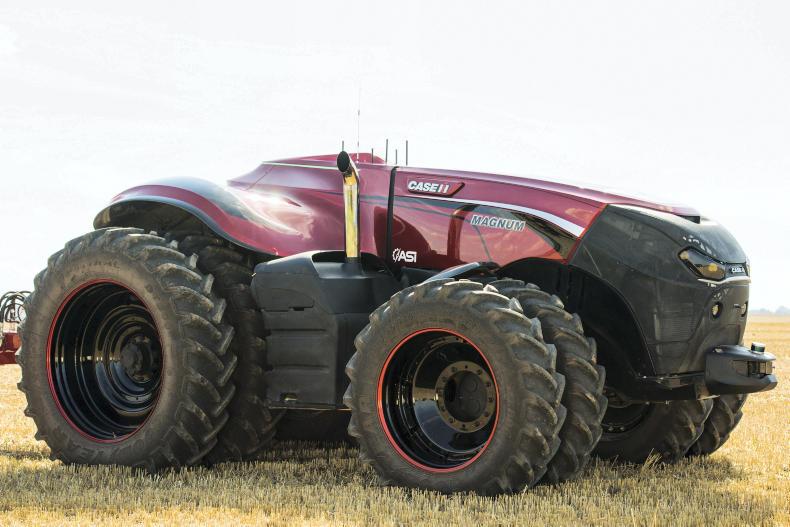
Case IH Autonomous
Magnum cabless tractor
Case IH created quite a stir during the year with a driverless version of the Magnum. Case IH believes this tractor can reduce the demand for labour without compromising on performance in the field. It is a cabless wheeled tractor that can operate autonomously in the field, with a wide range of ISOBUS tools. Case IH says this tractor combines the latest breakthroughs in orientation mapping, telemetry, data sharing and agronomic management to provide managers of agricultural enterprises with additional working capacity. The autonomy of the tractor and the associated ISOBUS toolkit makes it possible to work independently, day or night. With interactive interface for PC or tablet, the operator can remotely supervise pre-programmed operations.
Japanese technology
made in Europe
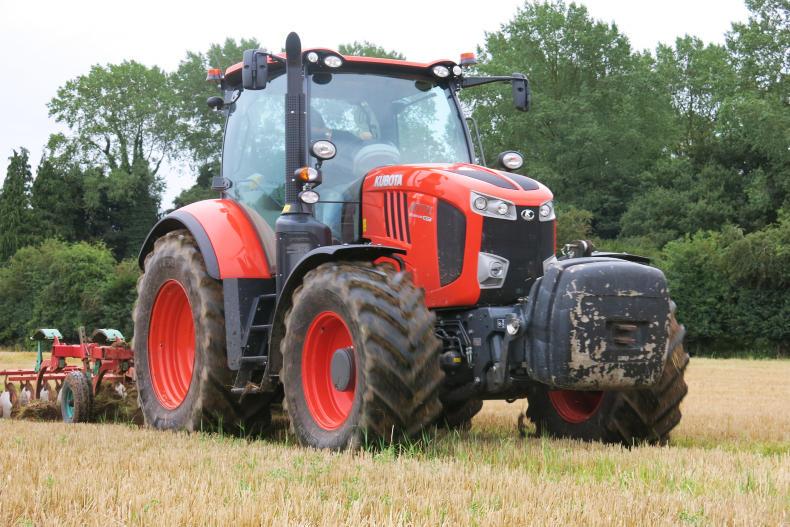
The tractor on test was the top-of-the-range Kubota M7171 KVT model. This sees the tractor’s Kubota engine married to a ZF CVT transmission with a Dana front axle. Add to that some electronic screens from Kverneland and a new cabin from Kubota coupled with 9.4t lift capacity at the back end. The tractor has all the right ingredients to make it in the big league. It is also available with a powershift transmission, a smaller control monitor and mechanical spools in the S specification. The tractor on test came with the large control display and electric spools. The tractor looks and feels like a heavyweight challenger. Easy-to-use controls, functionality and performance are all areas that this tractor performed well. A little more attention needed in the cab for refinement, and this package may well make the leap to the big league.

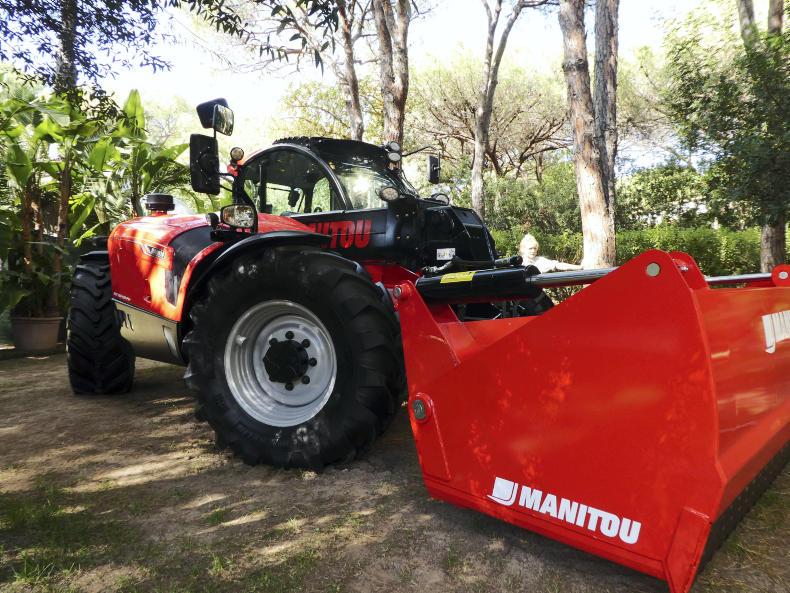
New era for telehandler transmissions
The new range sees Manitou add several clever features that make a lot of sense for the operator. Improved comfort levels and vision from the new cabin are the most notable features. Also the MLT can now have four transmission options including a CVT gearbox on the next generation of telehandlers. Overall, there are eight new patents on the new MLT range. The M-Varioshift is a hydrostatic transmission that is new to this model and is designed to meet all tasks. The joystick switch and move enables transition from a low speed to a high speed via two gears, as found on the previous models. The first gear drives up to 18km/h while matching the torque output. The second gear gives a top speed of 40km/h. Manitou says the machine’s fuel consumption is also managed better, with the Eco Mode system that reduces engine rpm. The M-Varioshift transmission is available on the MLT 630-105 V CP and MLT 630-105 V models. The M-Vario Plus transmission is a complete CVT with a single gear from 0-40km/h. Manitou says the Varoshift is aimed at farmers who have to travel a lot on the roads for straw or muck loading. The transmission developed by ZF uses a radial motor, reducing the rpm and oil demands on the transmission.
Eurotec Bale Chaser
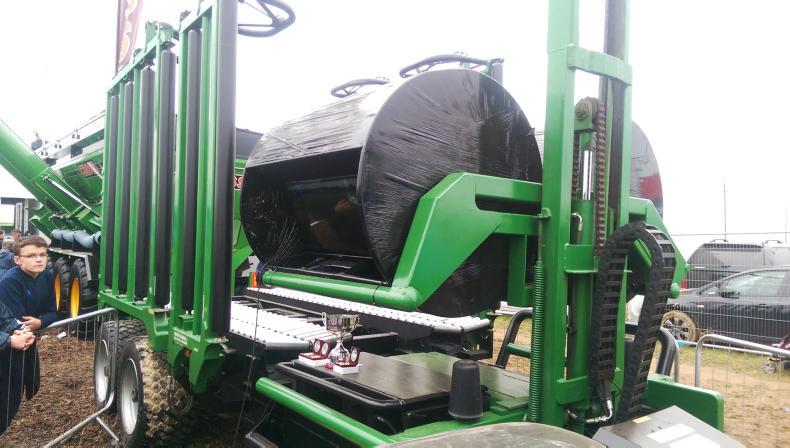
This machine just about won the clean sweep at the Innovation Arena at this year’s National Ploughing Championships. This design is linked closely to the large square bale chasers with clever innovations. Tom Carrigan, who designed and built the machine, says it is able to collect, carry and stack wrapped round bales of silage. The hydraulically operated machine can handle 16 bales of 1.2m in diameter or a little more. The main aim of the design is to cut down on manpower and machinery while increasing the speed of bale collection. Tom believes the machine is capable of lifting and stacking more than 50 bales per hour on a reasonable travel time. This speed would allow two McHale Fusions to work in front of the machine and still stay with them. Bales are loaded on to the trailer with a swingout arm similar to a wrapper loading arm.
John Deere 6230R and 6250R
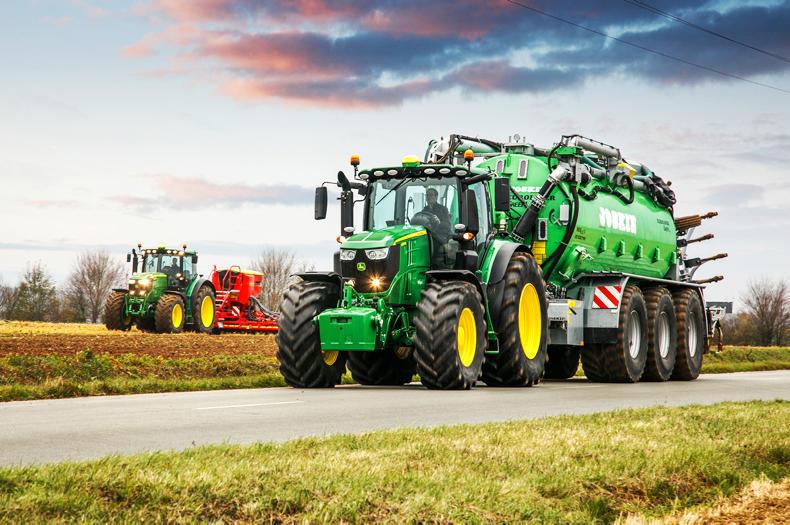
John Deere joined the lightweight 300hp tractor market this year with the 6230R and 6250R. The tractors have standard power outputs of 230hp and 250hp respectively. These additions extend the 6R series to a total of 11 models, offering customers an option to suit various requirements. Underneath the bonnet sits a 6.8-litre PowerTech PSS engine, fitted with dual turbochargers. This is the same power unit used in the larger 6R series, but has been strengthened in numerous places, such as the crankshaft and pistons, to handle the increased power, making it similar to the engine used in 7R series.
The Rauch Axent
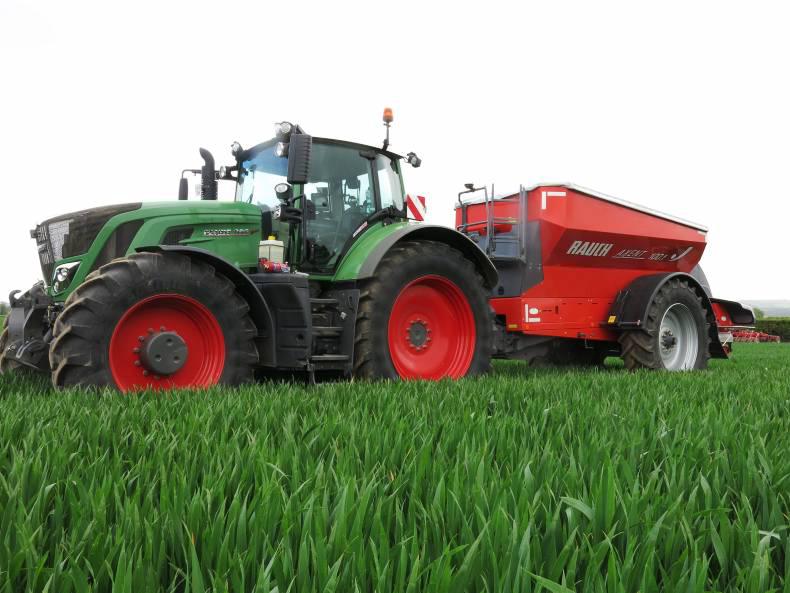
Unlike many bulk fertiliser spreaders, the Axent is designed with a main bulk storage hopper, and rear-mounted fertiliser pack. The fertiliser flows from the hopper via a hydraulic belt drive into the customised Axis-PowerPack spreading unit. The V-shaped hopper channels the fertiliser down to the belt running along the bottom. The cleaning flap on the front area makes for easy cleaning. The flow rate is determined by the application rate set by the operator. All of the drives are hydraulic on the machine. The Axent’s rear spreading unit uses EMC technology developed by Rauch. How does it work? In contrast to weighing with weigh cells used in classical weighing spreaders, Axis EMC controls the fertiliser flow separately for both metering shutters on each side of the machine.
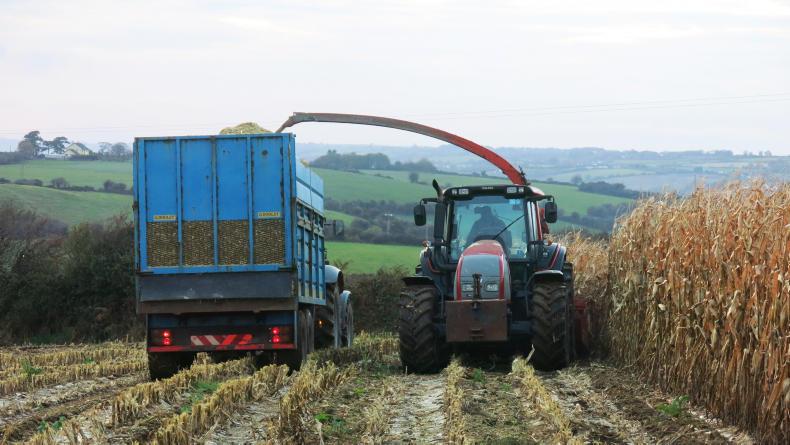
Amazing Maize
The Bryans’ maize harvest is slightly different from the norm, in that all the maize harvested ends up in a clear plastic-wrapped bale ready for delivery by the brothers. The harvester is a used rear-mounted Kemper Champion C3000. The machine came from a UK farm eight years ago. The farmer who owned the harvester migrated to Canada to farm. James recalls it cost around £4,500.
James added it paid for itself in the first season, replacing a contractor who used to harvest, the maize for their baling operation. “It’s a really cost-effective solution for us,” says James. “We could not justify the investment in a self-propelled harvester for six weeks work out of the year. The harvester suits our operation. It matches the output of the baler in the yard.”
Read more
High-tec machines from 2016
This year may not be remembered for fantastic profits for farmers and the machinery trade alike. Political uncertainty will no doubt create challenges in the year ahead across the world. Farmers can only concentrate on the job in hand and get the best margins they can.
Looking at 2016, there is one common theme among all manufacturers. Agri-technology is developing at a frantic pace. Investment by machinery companies in high-tech agricultural solutions over the last few years is now delivering on farms. The question is how far will it go and will it benefit the industry as a whole? Approaches by the leading manufacturers are slightly different. The CNH group unveiled the driverless tractor concept, while John Deere concentrates on making life easier and more productive for the operator in the cab.
Case IH Autonomous
Magnum cabless tractor
Case IH created quite a stir during the year with a driverless version of the Magnum. Case IH believes this tractor can reduce the demand for labour without compromising on performance in the field. It is a cabless wheeled tractor that can operate autonomously in the field, with a wide range of ISOBUS tools. Case IH says this tractor combines the latest breakthroughs in orientation mapping, telemetry, data sharing and agronomic management to provide managers of agricultural enterprises with additional working capacity. The autonomy of the tractor and the associated ISOBUS toolkit makes it possible to work independently, day or night. With interactive interface for PC or tablet, the operator can remotely supervise pre-programmed operations.
Japanese technology
made in Europe
The tractor on test was the top-of-the-range Kubota M7171 KVT model. This sees the tractor’s Kubota engine married to a ZF CVT transmission with a Dana front axle. Add to that some electronic screens from Kverneland and a new cabin from Kubota coupled with 9.4t lift capacity at the back end. The tractor has all the right ingredients to make it in the big league. It is also available with a powershift transmission, a smaller control monitor and mechanical spools in the S specification. The tractor on test came with the large control display and electric spools. The tractor looks and feels like a heavyweight challenger. Easy-to-use controls, functionality and performance are all areas that this tractor performed well. A little more attention needed in the cab for refinement, and this package may well make the leap to the big league.
New era for telehandler transmissions
The new range sees Manitou add several clever features that make a lot of sense for the operator. Improved comfort levels and vision from the new cabin are the most notable features. Also the MLT can now have four transmission options including a CVT gearbox on the next generation of telehandlers. Overall, there are eight new patents on the new MLT range. The M-Varioshift is a hydrostatic transmission that is new to this model and is designed to meet all tasks. The joystick switch and move enables transition from a low speed to a high speed via two gears, as found on the previous models. The first gear drives up to 18km/h while matching the torque output. The second gear gives a top speed of 40km/h. Manitou says the machine’s fuel consumption is also managed better, with the Eco Mode system that reduces engine rpm. The M-Varioshift transmission is available on the MLT 630-105 V CP and MLT 630-105 V models. The M-Vario Plus transmission is a complete CVT with a single gear from 0-40km/h. Manitou says the Varoshift is aimed at farmers who have to travel a lot on the roads for straw or muck loading. The transmission developed by ZF uses a radial motor, reducing the rpm and oil demands on the transmission.
Eurotec Bale Chaser
This machine just about won the clean sweep at the Innovation Arena at this year’s National Ploughing Championships. This design is linked closely to the large square bale chasers with clever innovations. Tom Carrigan, who designed and built the machine, says it is able to collect, carry and stack wrapped round bales of silage. The hydraulically operated machine can handle 16 bales of 1.2m in diameter or a little more. The main aim of the design is to cut down on manpower and machinery while increasing the speed of bale collection. Tom believes the machine is capable of lifting and stacking more than 50 bales per hour on a reasonable travel time. This speed would allow two McHale Fusions to work in front of the machine and still stay with them. Bales are loaded on to the trailer with a swingout arm similar to a wrapper loading arm.
John Deere 6230R and 6250R
John Deere joined the lightweight 300hp tractor market this year with the 6230R and 6250R. The tractors have standard power outputs of 230hp and 250hp respectively. These additions extend the 6R series to a total of 11 models, offering customers an option to suit various requirements. Underneath the bonnet sits a 6.8-litre PowerTech PSS engine, fitted with dual turbochargers. This is the same power unit used in the larger 6R series, but has been strengthened in numerous places, such as the crankshaft and pistons, to handle the increased power, making it similar to the engine used in 7R series.
The Rauch Axent
Unlike many bulk fertiliser spreaders, the Axent is designed with a main bulk storage hopper, and rear-mounted fertiliser pack. The fertiliser flows from the hopper via a hydraulic belt drive into the customised Axis-PowerPack spreading unit. The V-shaped hopper channels the fertiliser down to the belt running along the bottom. The cleaning flap on the front area makes for easy cleaning. The flow rate is determined by the application rate set by the operator. All of the drives are hydraulic on the machine. The Axent’s rear spreading unit uses EMC technology developed by Rauch. How does it work? In contrast to weighing with weigh cells used in classical weighing spreaders, Axis EMC controls the fertiliser flow separately for both metering shutters on each side of the machine.
Amazing Maize
The Bryans’ maize harvest is slightly different from the norm, in that all the maize harvested ends up in a clear plastic-wrapped bale ready for delivery by the brothers. The harvester is a used rear-mounted Kemper Champion C3000. The machine came from a UK farm eight years ago. The farmer who owned the harvester migrated to Canada to farm. James recalls it cost around £4,500.
James added it paid for itself in the first season, replacing a contractor who used to harvest, the maize for their baling operation. “It’s a really cost-effective solution for us,” says James. “We could not justify the investment in a self-propelled harvester for six weeks work out of the year. The harvester suits our operation. It matches the output of the baler in the yard.”
Read more
High-tec machines from 2016






SHARING OPTIONS