


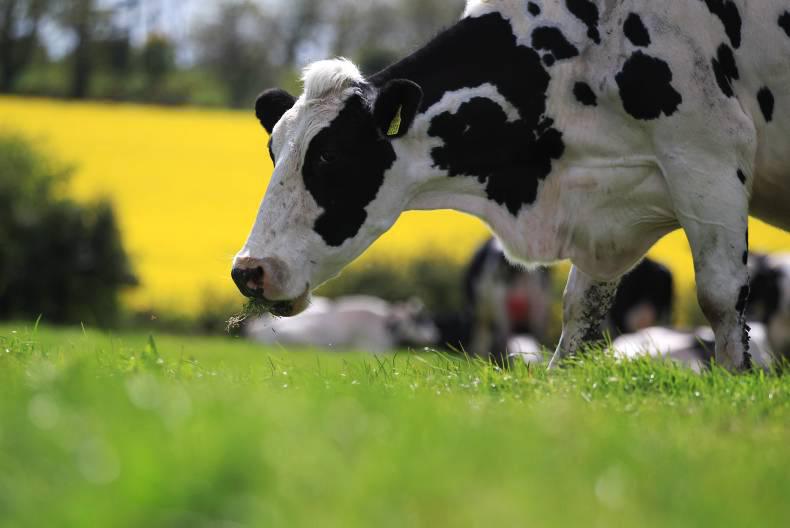
So, the dairy quota system comes to an end.
The European Commission introduced quotas after years of struggling with restraining the price increases and trying to reduce the rigidity of the intervention system – all those attempts to no avail.
After 31 years, has it worked? When it was introduced, an Irishman, Tom O’Dwyer was head of the Commission’s dairy division in Brussels. He subsequently went on to become the director of livestock products in the Commission and director general of the EU educational portfolio. On his retirement from the Commission, he became chairman of Teagasc.
At that time in 1984, the EU’s milk policy alone was costing 25% of the entire EU budget. What most people do not realise is that a quota policy had first come under the microscope as much as eight years previously.
Canada had already introduced its own milk quota regime a few years before that. As reported in the Irish Farmers Journal the week before last, the dairy quota continues in Canada. The European system set up in the face of mounting surpluses was similar to Canada’s, but it was perceived as particularly tough on Ireland which had only 11 years of EU membership before its most competitive agricultural sector was blocked off.
The other option facing policymakers during the early 80s was a dramatic reduction in the guaranteed price for dairy products by about 30%. Such a reduction would have demolished dairy farm incomes and forced dairying out of large swathes of Europe.
However, European prices stayed at double world price levels for another 26 years. It was not until 2010 that world prices rose to match EU prices. This equalisation of prices came about by a surge in dairy product demand, especially from China.
Restrictive
Once prices equalised, there was little point in sticking with a restrictive quota regime and so, we look at this week’s ending of a regime.
There is little doubt that it accomplished its main objective of both stabilising markets and farm incomes. Ireland’s case for special treatment was recognised when the basic quantitative allocations were made in 1984 with an allowance for approximately 11% growth from the 1983 level of output versus an 8% reduction for The Netherlands.
The key players in this arrangement were the then Taoiseach, Garret FitzGerald and Tom O’Dwyer – the Department of Agriculture and the IFA also had a real and positive input.
The ending of quotas is certainly the end of one chapter – one where output was artificially restricted. The key question for Ireland is can we take on not just Europe but the rest of the world.
Products
Looking at the number of international dairy products, including infant formula whose manufacturers are based here, the answer seems to be an unequivocal yes.
We are at the start of a new chapter. We must attempt to ensure that as many of the gains that look possible stay with farmers who do the actual work.




SHARING OPTIONS