



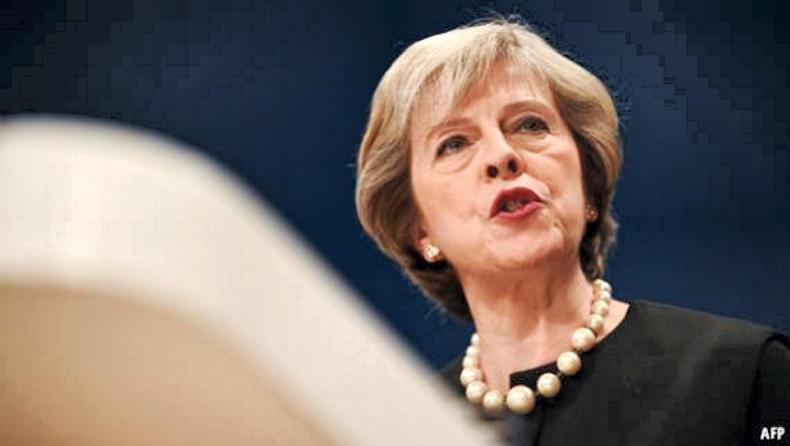
Following last week’s defeat in the House of Lords, the UK government returns to the House of Commons on Monday to get the vote that effectively overrules the House of Lords and will give the Theresa May the authority to trigger the Article 50 procedure for the UK to withdraw from the EU.
It is thought the Prime Minister could do this as early as Tuesday thereby starting the countdown on the two years to the UK leaving the EU.
Relationships
The different types of potential relationship the UK will have with its former EU colleagues post-Brexit has been well documented.
However, as the moment draws closer, it is clear that the mood in the UK is for getting out and the future relationship with the EU is a distant second priority.
It has been only a handful of the most pro-EU MPs and former senior politicians like fromer prime ministers Tony Blair and John Major along with Michael Heseltine to make a case for future relationship and they are viewed as yesterday’s men.
No deal is better than a bad deal
Aside from debate in British politics this weekend about a broken election promise on taxes, the main topic of debate on the politics chat shows has been around what if any plan B the UK government has in the event no deal with the EU at the end of negotiations.
After an initial admission that there is not any, the minister in charge of Brexit, David Davis, has now committed to putting one in place.
This follows from prime minister May’s assertion that she is prepared to walk away from negotiations if they are not progressing satisfactorily with the backstop that “no deal is better than a bad deal”.
There is confidence among the senior ministers that there will be a favourable deal because the EU sells more to the UK than the UK sells to the EU.
Of course that is factually correct but that disguises the fact that the EU exposure is spread across 27 countries, though not very evenly.
Therefore, some countries that do little business with the UK will be more politically motivated than economically whereas others like Ireland with huge exposure in its agriculture sector will want a deal that keeps trade as seamless as possible.
Wake-up call
Within the EU, it is clear that the Brexit decision has been a wake-up call on the need to get outside its bubble and back in contact with its populations.
A celebration is planned in a couple of weeks to commemorate the original treaty of Rome that set up the beginnings of the EU.
President of the European Commission Jean Claude Junker has published a future scoping document that considers the future shape and direction of travel for the EU.
This includes options like loosing of the relationship, a further coming together and the controversial issue of a two speed EU.
This is particularly controversial among the central and eastern EU countries who would feel left behind yet the reality is that what works for the mature developed economies doesn’t work as well with the developing economies.
Finding a way to reconcile these positions will be the first post Brexit challenge.
Phelim O’Neill will be in Brussels this week reporting on the fallout from the expected triggering of Brexit talks




SHARING OPTIONS