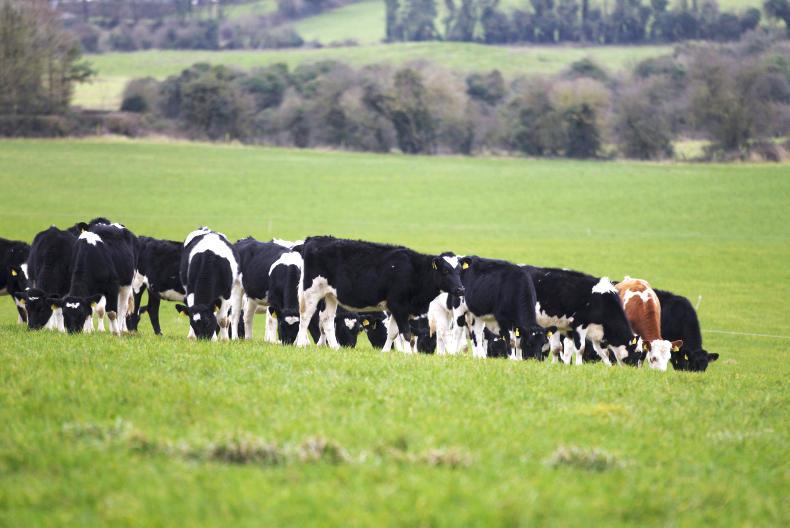
After a weekend of widespread and heavy rain, grazing conditions have deteriorated since last week. It’s always hard to get a good cleanout at this time of year, especially when grazing high covers with variable weather and ground conditions.
Feeding high levels of supplements (meal and silage) tends to make it harder to get a good cleanout and avoid wasting grass. It’s easy to say we should reduce supplement use, but some level of feeding is almost unavoidable. The objective is to keep grass in the diet for as long as possible and supplementary feeding is a good way to achieve this.
The amount of supplement to be fed depends on your rotation length. Work out how many days of grazing you have left.
How much supplement you need to feed depends on the cover of grass in this section and how many cows will be eating it
For farmers on dry land, there are probably 20 days of grass left. Divide this into the area left to be grazed in this rotation. At this stage, about 30% to 40% of the farm should be closed for spring, so most farms have about 60% to 70% of the farm left for grazing.
This will give you the area you can graze per day. How much supplement you need to feed depends on the cover of grass in this section and how many cows will be eating it.
For example, if you have 100 cows grazing 1ha/day with a cover 1,000kg DM/ha, then they will be getting 10kg of grass per day. Total allowance at this time of year should be around 15kg to 17kg per cow, so in this example there is a shortfall of 5kg to 7kg per cow.
Silage buffers
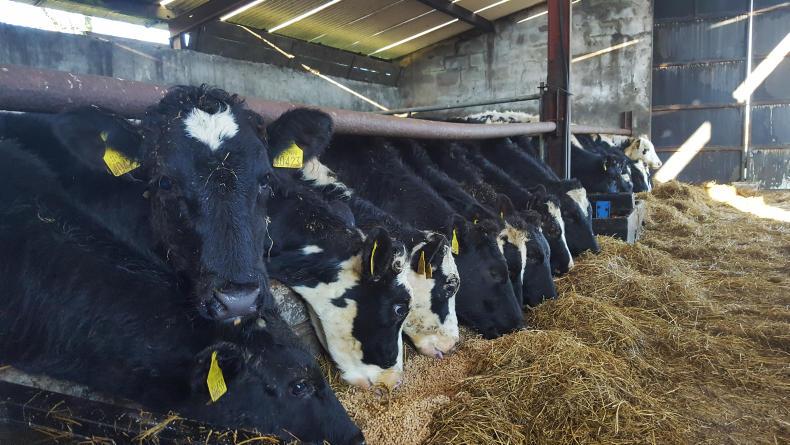
Some farmers will decide to feed the grass by day or night and give them silage inside. If this is the case, then there is no need for any meal to be fed.
Alternatively, they could feed 3kg or 4kg of silage before milking along with 2kg or 3kg of meal in the parlour. The trick is not to feed more supplement than the cow requires, otherwise she will leave grass behind in the field.
Because about one-third of the diet needs to be supplement in this example, you could decide to fully house one-third of the cows and leave the rest outside, on a grass-only diet. The cows to be housed could be rotated daily. This would have the same effect as feeding supplement to all the cows but might be less work.
Grass-based decisions
The important thing is to make decisions based on grass supply. Feeding too much supplement is a waste of money and it wastes grass.
Of course, you must keep an eye on grass covers. Average farm cover at this stage should be around 800kg/ha to 900kg/ha.
The closing covers in mid-November should be around 600kg to 700kg.
Twelve-hour grass allocations will help to ensure a good cleanout when feeding supplement.
Read more
10 options for managing heavy grass before winter
After a weekend of widespread and heavy rain, grazing conditions have deteriorated since last week. It’s always hard to get a good cleanout at this time of year, especially when grazing high covers with variable weather and ground conditions.
Feeding high levels of supplements (meal and silage) tends to make it harder to get a good cleanout and avoid wasting grass. It’s easy to say we should reduce supplement use, but some level of feeding is almost unavoidable. The objective is to keep grass in the diet for as long as possible and supplementary feeding is a good way to achieve this.
The amount of supplement to be fed depends on your rotation length. Work out how many days of grazing you have left.
How much supplement you need to feed depends on the cover of grass in this section and how many cows will be eating it
For farmers on dry land, there are probably 20 days of grass left. Divide this into the area left to be grazed in this rotation. At this stage, about 30% to 40% of the farm should be closed for spring, so most farms have about 60% to 70% of the farm left for grazing.
This will give you the area you can graze per day. How much supplement you need to feed depends on the cover of grass in this section and how many cows will be eating it.
For example, if you have 100 cows grazing 1ha/day with a cover 1,000kg DM/ha, then they will be getting 10kg of grass per day. Total allowance at this time of year should be around 15kg to 17kg per cow, so in this example there is a shortfall of 5kg to 7kg per cow.
Silage buffers
Some farmers will decide to feed the grass by day or night and give them silage inside. If this is the case, then there is no need for any meal to be fed.
Alternatively, they could feed 3kg or 4kg of silage before milking along with 2kg or 3kg of meal in the parlour. The trick is not to feed more supplement than the cow requires, otherwise she will leave grass behind in the field.
Because about one-third of the diet needs to be supplement in this example, you could decide to fully house one-third of the cows and leave the rest outside, on a grass-only diet. The cows to be housed could be rotated daily. This would have the same effect as feeding supplement to all the cows but might be less work.
Grass-based decisions
The important thing is to make decisions based on grass supply. Feeding too much supplement is a waste of money and it wastes grass.
Of course, you must keep an eye on grass covers. Average farm cover at this stage should be around 800kg/ha to 900kg/ha.
The closing covers in mid-November should be around 600kg to 700kg.
Twelve-hour grass allocations will help to ensure a good cleanout when feeding supplement.
Read more
10 options for managing heavy grass before winter







SHARING OPTIONS