With cows housed, either dry or still milking, the big risk is mastitis, as exposure to bugs and bacteria increases in the shed compared with cows grazing outside.
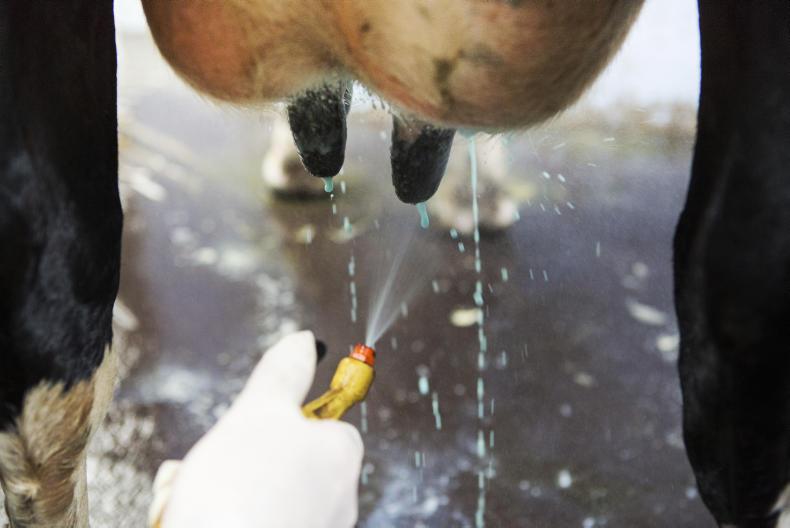
Teat spraying kills bacteria on the teat surface. Photo: Donal O'Leary
ADVERTISEMENT
Milking cows are at most risk because their teat canal remains open after milking – giving bacteria a chance to enter and infect the udder.
Post-milking, teat spraying kills bacteria on the teat surface. Some farmers will stand milking cows off for an hour after milking before letting them back into the shed to give time for the teat canals to close.
Cubicle hygiene
ADVERTISEMENT
Keeping cubicle beds clean and dry is a big help, and not just for milking cows. Dry cows are also at risk, especially in the first few weeks after drying off, as the natural teat seal or plug might not be fully formed.
Clean down cubicle beds twice a day. Many farmers use lime to clean beds, but only hydrated lime is a disinfectant. Ordinary ground limestone cubicle lime will increase the pH to 8.3, but this is not high enough to prevent the growth of most bacteria. Hydrated lime increases the pH to 12.4, which is above the tolerance for streptococcal and staphylococcal bacteria. These are the common causes of mastitis.
Hydrated lime is safe to use with iodine-based teat dips, but no more than 170g per cubicle bed should be used. This is equivalent to one fistful of lime per cubicle.
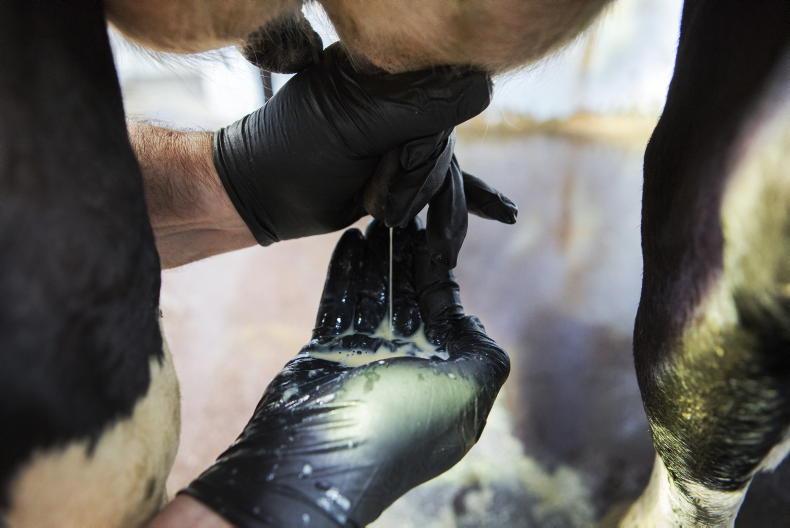
Keep an eye on dried-off cows for signs of mastitis. Look out for swollen or hard quarters and treat accordingly.
This content is available to digital subscribers and loyalty code users only. Sign in to your account, use the code or subscribe to get unlimited access.
The reader loyalty code gives you full access to the site from when you enter it until the following Wednesday at 9pm. Find your unique code on the back page of Irish Country Living every week.
CODE ACCEPTED
You have full access to the site until next Wednesday at 9pm.
CODE NOT VALID
Please try again or contact support.
Milking cows are at most risk because their teat canal remains open after milking – giving bacteria a chance to enter and infect the udder.
Post-milking, teat spraying kills bacteria on the teat surface. Some farmers will stand milking cows off for an hour after milking before letting them back into the shed to give time for the teat canals to close.
Cubicle hygiene
Keeping cubicle beds clean and dry is a big help, and not just for milking cows. Dry cows are also at risk, especially in the first few weeks after drying off, as the natural teat seal or plug might not be fully formed.
Clean down cubicle beds twice a day. Many farmers use lime to clean beds, but only hydrated lime is a disinfectant. Ordinary ground limestone cubicle lime will increase the pH to 8.3, but this is not high enough to prevent the growth of most bacteria. Hydrated lime increases the pH to 12.4, which is above the tolerance for streptococcal and staphylococcal bacteria. These are the common causes of mastitis.
Hydrated lime is safe to use with iodine-based teat dips, but no more than 170g per cubicle bed should be used. This is equivalent to one fistful of lime per cubicle.
Keep an eye on dried-off cows for signs of mastitis. Look out for swollen or hard quarters and treat accordingly.
If you would like to speak to a member of our team, please call us on 01-4199525.
Link sent to your email address
We have sent an email to your address. Please click on the link in this email to reset your password. If you can't find it in your inbox, please check your spam folder. If you can't find the email, please call us on 01-4199525.
ENTER YOUR LOYALTY CODE:
The reader loyalty code gives you full access to the site from when you enter it until the following Wednesday at 9pm. Find your unique code on the back page of Irish Country Living every week.







SHARING OPTIONS