



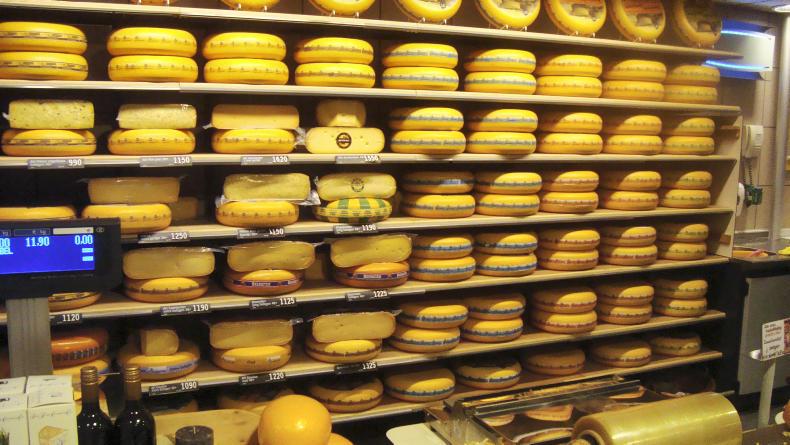
Ireland needs to find multiple markets to replace the 16 container loads of cheddar cheese that is shipped to the UK weekly, the CEO of Ornua, Kevin Lane, has said.
Lane was speaking at a panel discussion on Brexit and Irish dairying at the Moorepark open day this week.
“[We need to] reduce our dependence on cheddar cheese and there are other parts of the cheese world that are growing quite significantly, food service in particular.
“We have to give consumers [in other markets] what they want, which isn’t cheddar cheese.
“We have to give them what they want, as opposed to what we’re historically used to manufacturing. We need to be in the mainstream market.
“To try to replace the 90,000-100,000t of cheddar that goes to the UK every year – that’s 16 containers of cheese a week – it’s going to take a lot of work and investment, along with multiple markets,” Lane said.
Brexit has ‘already happened’
“From our point, people talk about Brexit as if it’s this thing that’s going to happen over the next two-to-five years.
“In our case, Brexit has already happened. As a business, we’re trying to cope with a 15% move of currency, trying to recover that with customers at this point in time isn’t easy.
“We’ve had to look very carefully at all of our businesses, we’ve five manufacturing facilities in the UK and to make sure they’re fit for purpose and doing the right thing.
“But, more importantly, in the UK now we’re starting to see significant food inflation.”
When that happens with consumers, volumes drop off very significantly, the Ornua CEO said.
’A reality inflicted upon us’
Also speaking at the panel discussion was the Minister for Agriculture Michael Creed, who said that Brexit isn’t a problem of our making, but it’s a reality that has been inflicted upon us.
Minister Creed said that it’s understandable that the UK should be out best market and that the consequences of it are quite significant.




SHARING OPTIONS