



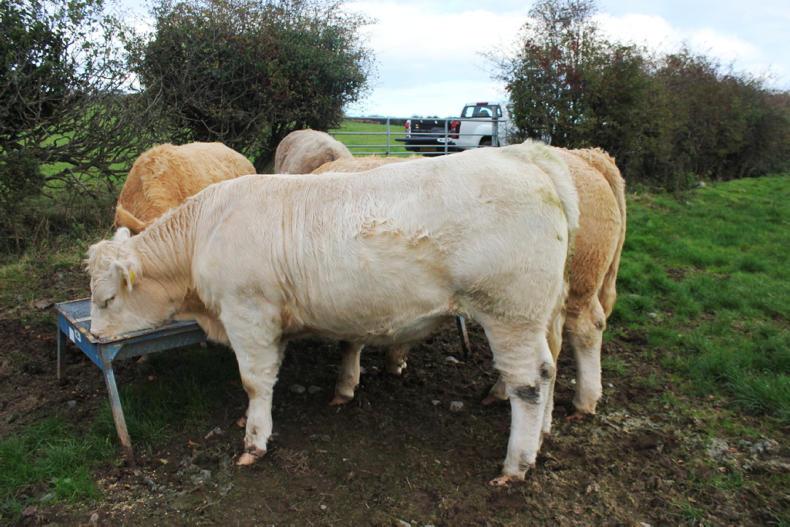
The prime cattle kill in NI looks set to rise by 15,000 head in 2017, according to forecasts by economists from the Livestock and Meat Commission.
For 2017, the prime kill is expected to see almost 331,000 head of cattle come on to the domestic finishing market, which would be ahead of the projected kill for 2016, which is expected to reach 316,000 by the year end.
Higher numbers of beef cattle coming from the dairy herd will be a key factor in the larger kill next year, with record numbers of dairy cows recorded on farms in June 2016.
The cow kill could see a further 3,000 head slaughtered next year also. Just over 99,000 cows were initially forecast to be slaughtered in 2017.
However, this forecast may well be revised downward if there is a continued recovery in dairy markets.
The first six months of 2017 is expected to see the bulk of these additional cattle come onto the market.
For the first quarter, forecasts indicate that just over 6,000 additional prime cattle will be slaughtered when compared with 2016. In the second quarter, an extra 4,200 head of cattle is expected to come to market.
In recent years, the first quarter has always seen difficult trading conditions for beef, although the strong trade in recent weeks perhaps gives cause for more optimism in 2017. Prices and market demand will depend heavily on the trade in Britain. The strength of sterling against the euro will also be a factor.
As of October 2016, the number of beef-sired male cattle between the ages of 12 and 18 months is almost 6% higher than last year. This will result in an additional 7,800 male cattle slaughtered during the first half of 2017.
For dairy-sired male cattle in the same age group, there are 10.9% more cattle on the ground when compared with 2015. This will see another 2,000 head of cattle coming forward for slaughter.
For male cattle aged six to 12 months, the number of beef-sired calves is up 12.5% on 2015 levels. Only a portion of these will be finished in 2017 as young bulls.
For dairy-sired male calves in the same age range, calf numbers have dropped 13% when compared to 2015 levels.
Dairy-sired male calves under six months of age are also down 14.2% on last year, indicating tighter numbers of male cattle coming forward for slaughter in late 2017 and into early 2018.
Quotes
Meanwhile, reports suggest that farmers have been contacting the LMC to voice their frustration with the difference between beef quotes communicated by the LMC in their text message and bulletin, and the actual prices being paid by meat plants.
As a result, it is understood that the LMC has been in contact with factory buyers asking them to provide them with quotes that more closely reflect what they are actually paying. It has led to a significant increase in base quotes at some plants this week.



SHARING OPTIONS