Since its launch on 1 February, only 104 claims have been made for money available to incentivise the humane destruction of calves persistently infected (PI) with bovine viral diarrhoea (BVD).
The total amount claimed under the BVD Incentive Scheme amounts to £15,080 and includes:
£12,160 payable on 76 beef calves.£2,470 payable on 19 dairy female calves.£450 payable on nine dairy male calves.The funding for the scheme comes under the £4m EU Exceptional Aid package.
Less than 50% of herdowners who are eligible to apply under the scheme have actually submitted a claim.
Payment rates are set at £160 for beef calves, £130 for dairy heifers and £50 for dairy bull calves. Only calves destroyed after 1 February 2017 are eligible under the scheme rules.
With such a low uptake, UFU deputy president Victor Chestnutt has encouraged more livestock farmers to make use of the limited funding provided through the scheme.
“The support is expected to be available up to the end of September, but to date, uptake has been modest,” said Chestnutt. He added: “For some time, the UFU has been pressing for measures to encourage farmers to remove PI animals quickly. This is about eliminating BVD from NI, and with this financial incentive in place, those reluctant to cull PI animals have no reason to retain them.”
Once a PI calf is identified, the herdowner is issued with a notification letter, along with a claim form to apply for the funding.
Scheme update
With the first year of compulsory BVD testing now complete, according to figures from Animal Health and Welfare Northern Ireland (AWHNI) a total of 18,091 herds have undertaken BVD testing of cattle on farm.
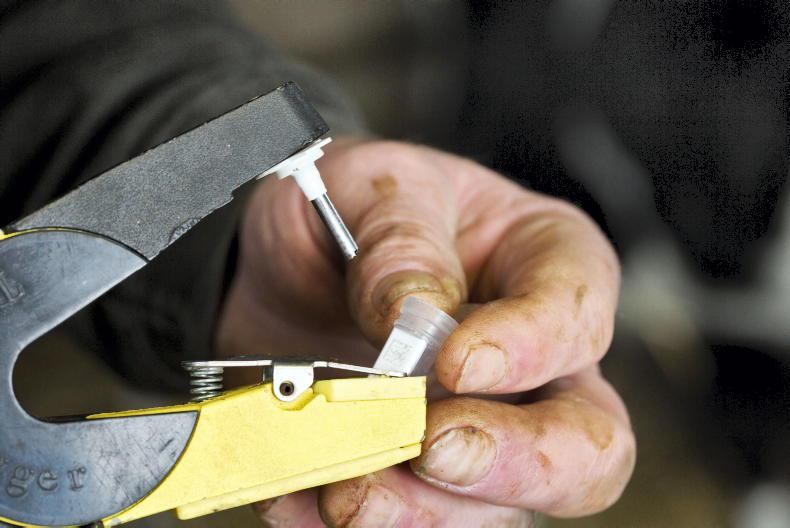
A breakdown of this figure shows that 19% of herds are dairy, 52% beef and 29% dual-purpose. Last year, 667,043 tissue tags were ordered which is sufficient to cover the entire NI calf crop.
The number of PI calves identified was 3,500 representing 0.68% of all calves tested, but farmers have been slow to remove these animals from farms. In December 2016, it was estimated that just 50% of PI calves had been removed.
In total, 517,819 tests were completed in the first year of compulsory testing with 97.81% of results returned inside seven working days, increasing to 98.76% inside 10 working days.
For calves that were initially identified as being PI animals and retested, nine out of 10 animals were confirmed as being BVD positive.
A single PI calf was identified in 71% of positive herds while less than four PI calves were identified on 96% of positive herds.
ROI results
Meanwhile, speaking at the AFBI research conference this week, Joe O’Flaherty from Animal Health Ireland said that the industry there was on course to be free of BVD by 2020. For 2017 to date, only 0.11% of calves tested PI.
However, he said that if some farmers had not retained PI calves in the early years of the programme, then eradication would have been achieved in 2018.
“There was a greater degree of retention than we had anticipated. Hopefully there are lessons for NI in that,” O’Flaherty said.
Since its launch on 1 February, only 104 claims have been made for money available to incentivise the humane destruction of calves persistently infected (PI) with bovine viral diarrhoea (BVD).
The total amount claimed under the BVD Incentive Scheme amounts to £15,080 and includes:
£12,160 payable on 76 beef calves.£2,470 payable on 19 dairy female calves.£450 payable on nine dairy male calves.The funding for the scheme comes under the £4m EU Exceptional Aid package.
Less than 50% of herdowners who are eligible to apply under the scheme have actually submitted a claim.
Payment rates are set at £160 for beef calves, £130 for dairy heifers and £50 for dairy bull calves. Only calves destroyed after 1 February 2017 are eligible under the scheme rules.
With such a low uptake, UFU deputy president Victor Chestnutt has encouraged more livestock farmers to make use of the limited funding provided through the scheme.
“The support is expected to be available up to the end of September, but to date, uptake has been modest,” said Chestnutt. He added: “For some time, the UFU has been pressing for measures to encourage farmers to remove PI animals quickly. This is about eliminating BVD from NI, and with this financial incentive in place, those reluctant to cull PI animals have no reason to retain them.”
Once a PI calf is identified, the herdowner is issued with a notification letter, along with a claim form to apply for the funding.
Scheme update
With the first year of compulsory BVD testing now complete, according to figures from Animal Health and Welfare Northern Ireland (AWHNI) a total of 18,091 herds have undertaken BVD testing of cattle on farm.
A breakdown of this figure shows that 19% of herds are dairy, 52% beef and 29% dual-purpose. Last year, 667,043 tissue tags were ordered which is sufficient to cover the entire NI calf crop.
The number of PI calves identified was 3,500 representing 0.68% of all calves tested, but farmers have been slow to remove these animals from farms. In December 2016, it was estimated that just 50% of PI calves had been removed.
In total, 517,819 tests were completed in the first year of compulsory testing with 97.81% of results returned inside seven working days, increasing to 98.76% inside 10 working days.
For calves that were initially identified as being PI animals and retested, nine out of 10 animals were confirmed as being BVD positive.
A single PI calf was identified in 71% of positive herds while less than four PI calves were identified on 96% of positive herds.
ROI results
Meanwhile, speaking at the AFBI research conference this week, Joe O’Flaherty from Animal Health Ireland said that the industry there was on course to be free of BVD by 2020. For 2017 to date, only 0.11% of calves tested PI.
However, he said that if some farmers had not retained PI calves in the early years of the programme, then eradication would have been achieved in 2018.
“There was a greater degree of retention than we had anticipated. Hopefully there are lessons for NI in that,” O’Flaherty said.





SHARING OPTIONS