


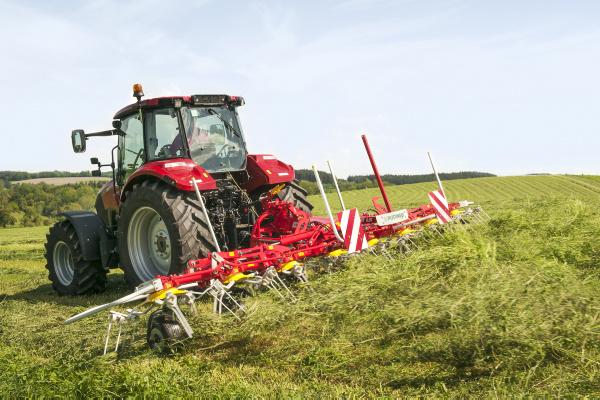
Farm machinery companies are looking at new strategies to incorporate more electric drive systems in machines to replace hydraulic and shaft drives. Pöttinger is working with the Vienna University of Technology to incorporate some of these new electric motor tubular drives into silage and haymaking machinery.
They are looking for new ways to make the machines more energy efficient and deliver fuel savings. The research also focuses on the demand for flexible and versatile systems which are easy to control and provide as much feedback to the machine operator as possible.
Pöttinger and the university team are aiming to design a new electric motor, designed as an outer-runner permanent magnet synchronous motor. The motor will be tubular in design so that it can be easily integrated into the design of the rotating parts of the machinery, such as tubes, drums and cylinders.
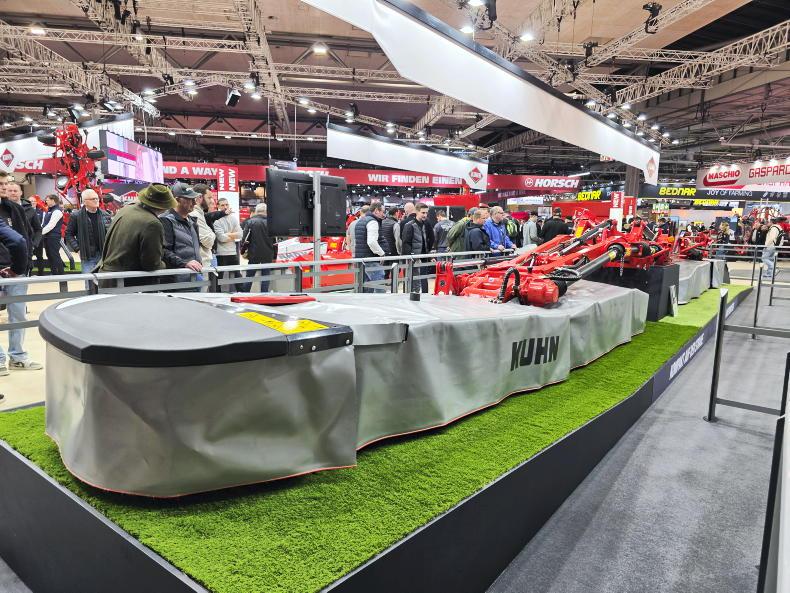
Pöttinger worked with the university to develop and manufacture the motor so that it could be integrated into the drive of a mower conditioner. The motor was developed with a nominal torque of 100Nm and a nominal speed of 1,000rpm. This allowed it to produce a nominal power of about 10.5kW (14hp) with compact dimensions for agricultural applications.
The designers believe that, as there is no gear unit required in an electric motor drive, it is possible to incorporate a more robust drive that can be more easily controlled. This reduces the need for sensors and eliminates another source of error in operating the machine.
The initial measurements have shown clearly that the electric tubular motor can perform the necessary machine functions with ease. It can handle the required load conditions in terms of speed, torque, torque dynamics and overload capability.
For the designers, the issue remains of managing the problems of high temperatures that these motors develop under full load conditions. This may be even a bigger problem in Irish conditions, where the mowers are subjected to heavier constant loads due to the weight and density of our grass crops.
They feel that the issue of excess heat can, on the one hand, be solved by a reduction of the produced losses in the rotor and, on the other hand, by an improvement of the actual cooling situation of the rotor.



SHARING OPTIONS